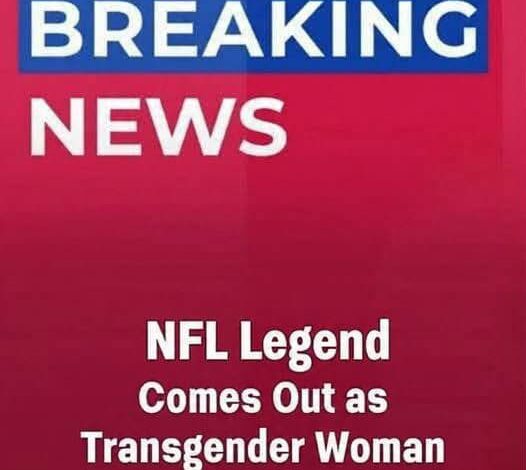
For years, she made a career out of absorbing collisions that would leave most people breathless. Every game demanded courage, discipline, and a willingness to endure pain without complaint. Fans celebrated her toughness, teammates trusted her under pressure, and opponents respected the relentless determination that made her one of the sport’s defining competitors. Yet the hardest battle she ever fought unfolded far from stadium lights. It wasn’t against another team or another player. It was against the exhausting weight of hiding the most personal part of who she was.
Success can create an illusion of certainty.
From the outside, her life appeared complete. Championship celebrations, record-breaking performances, endorsement deals, and national recognition painted the picture of an athlete living the dream. Interviews focused on training routines, leadership, and future goals. Headlines praised her competitive spirit and ability to perform when everything was on the line.
But there was one subject she carefully avoided.
Not because she was ashamed of herself, but because she understood the risks.
Professional sports have changed dramatically over the past several decades, yet many athletes still grow up hearing that certain parts of themselves should remain hidden. Locker rooms can become places where silence feels safer than honesty, where acceptance is never guaranteed, and where one deeply personal truth can suddenly overshadow years of hard-earned accomplishments.
She learned early how to separate public life from private reality.
Every interview became an exercise in choosing words carefully.
Every question about relationships required a calculated response.
Every celebration carried a quiet reminder that part of her story remained untold.
The burden wasn’t constant in dramatic ways. Instead, it settled into everyday moments—small hesitations, guarded conversations, and the emotional exhaustion that comes from constantly monitoring what you say, what you reveal, and how others might interpret it.
Winning championships never removed that weight.
Neither did awards.
Nor records.
Athletic greatness can silence critics on the field, but it cannot always quiet the fear of rejection beyond it.
Over time, however, something slowly changed.
As younger athletes began speaking more openly about identity and mental health, the landscape around professional sports started evolving. Conversations that once seemed impossible gradually became more common. Fans, teammates, coaches, and organizations began recognizing that authenticity and excellence were never opposites.
Watching those changes unfold forced her to confront a difficult question.
How much longer was she willing to live divided between the person everyone celebrated and the person she truly was?
The answer didn’t arrive overnight.
There was no dramatic moment that instantly erased years of uncertainty.
Instead, it emerged through countless quiet conversations with trusted friends, family members, mentors, and teammates who reminded her that living honestly wasn’t abandoning the person she’d become—it was finally allowing the world to meet her completely.
When she eventually chose to come out publicly, the announcement surprised many people.
Not because it changed who she was.
Because it confirmed who she had always been.
There was no reinvention.
No carefully manufactured image.
No attempt to become someone different.
She simply stopped carrying a secret that had grown heavier with every passing season.
The response arrived almost immediately.
Support poured in from every direction.
Former teammates called to tell her they were proud.
Coaches who had watched her grow from a promising young player into a respected veteran reminded her that nothing about her accomplishments had changed.
Perhaps most surprising were the messages from longtime rivals.
Women she had battled fiercely on the field reached out privately, offering kindness instead of competition. Years of mutual respect suddenly expanded into something deeper. The games they had played against one another mattered, but so did the shared understanding of how difficult life in elite sports could become.
Many admitted they admired her courage.
Others simply thanked her for trusting people enough to tell the truth.
Then came the letters that affected her most.
Young athletes from across the country—and around the world—began writing.
Some were still in high school.
Others had only recently started playing organized sports.
Many shared the same fear: that being honest about who they were might cost them teammates, scholarships, opportunities, or lifelong dreams.
For years, they had searched for someone who proved those fears did not have to define the future.
Now they believed they had found that person.
One teenager wrote that she had almost quit the sport because she felt there was no place for someone like her.
Another explained that seeing an admired athlete speak openly made her believe she could continue competing without pretending to be someone else.
Parents sent messages, too.
Many thanked her for giving their children something they themselves had struggled to provide—hope.
The realization humbled her.
She had spent years believing her announcement was only about her own life.
Instead, it became something much larger.
Her story didn’t erase championships.
It didn’t replace records.
It didn’t diminish the countless hours spent training, recovering from injuries, or sacrificing personal comfort in pursuit of excellence.
It simply added another chapter.
One that revealed courage takes many forms.
Sometimes it looks like diving for a loose ball, finishing a race despite injury, or standing back up after a crushing defeat.
Other times it means standing before millions of strangers and saying, “This is who I am.”
The second kind of courage often demands even more.
Because athletic competition eventually ends.
Public honesty continues long after the final whistle.
Her decision also sparked important conversations throughout the sports community.
Teams revisited policies designed to support inclusion.
Youth organizations discussed how to create environments where every athlete could focus on developing talent instead of hiding identity.
Veteran players spoke openly about the importance of mentorship and respect within locker rooms.
The discussion expanded beyond one athlete’s announcement.
It became a reflection on what belonging should truly mean.
Fans, too, responded in deeply personal ways.
Many admitted they had never fully considered the emotional cost of hiding one’s identity while living under constant public attention.
Others shared their own experiences with secrecy, fear, and eventual acceptance, recognizing pieces of themselves in someone whose life had once seemed completely different from their own.
Not every reaction was positive.
Public life rarely unfolds that way.
Criticism inevitably appeared alongside support.
Yet compared with the overwhelming wave of encouragement, those voices grew noticeably smaller.
The compassion of teammates, competitors, fans, and young athletes ultimately became the defining story.
Looking back, she now describes that day not as the moment she changed, but the moment she stopped pretending.
The athlete who inspired crowds had always existed.
So had the woman beneath the uniform.
The difference was that the two no longer needed to live separate lives.
Her legacy will always include championships, unforgettable performances, and the records she earned through extraordinary talent and relentless work.
But it now carries something equally meaningful.
She showed an entire generation that authenticity is not a distraction from greatness.
It is often one of its highest expressions.
Because the courage that wins games inspires admiration.
The courage to tell the truth about yourself, despite uncertainty, creates something even more lasting.
It opens doors that others once believed were permanently closed.
It reminds young athletes that success never requires abandoning who they are.
And it proves that the greatest victories are not always measured by scoreboards, trophies, or statistics.
Sometimes they are measured by the freedom to finally live without hiding—and by the countless lives forever changed because one person found the strength to tell the truth.