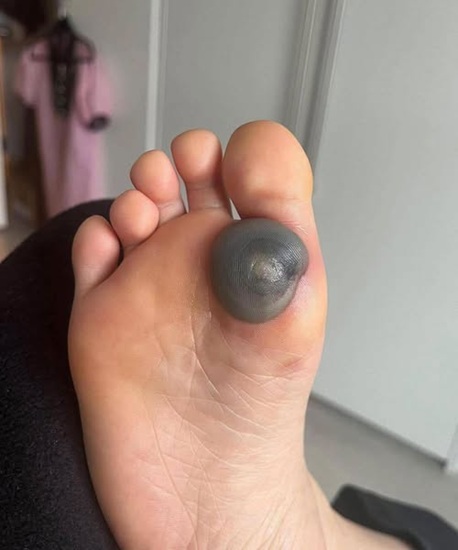
My Daughter Woke Up With a Large Spot on Her Foot and Is in Pain — I’m Not Sure What It Could Be

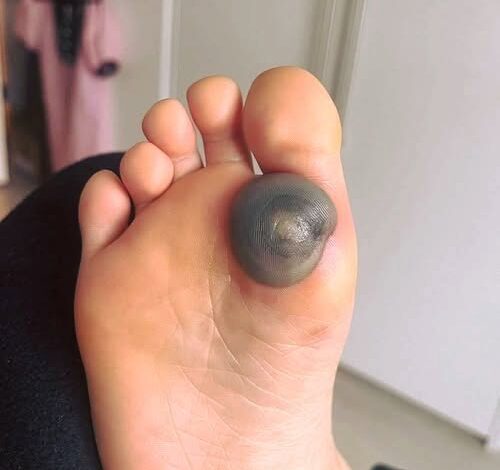
Few skin conditions attract attention as quickly as a blood blister.
One moment, your skin looks perfectly normal. The next, a dark red, purple, or nearly black bubble appears seemingly out of nowhere, looking far more alarming than an ordinary blister. For many people, the sight is enough to spark immediate concern. Is it serious? Is it infected? Should it be popped?
Fortunately, blood blisters are usually much less dangerous than they appear.
In most cases, they are simply the body’s natural response to a minor injury. While their dark color can make them look dramatic, they often heal on their own without requiring medical treatment. Understanding what causes them, how they develop, and when they may require attention can help remove much of the anxiety surrounding these unusual-looking skin injuries.
A blood blister forms when small blood vessels beneath the skin become damaged while the outer layer of skin remains intact.
Normally, when skin experiences friction or pressure, a regular blister may develop and fill with clear fluid. A blood blister follows a similar process, except the injury is severe enough to rupture tiny blood vessels known as capillaries. Since the skin itself remains largely unbroken, the blood has nowhere to escape and becomes trapped beneath the surface.
As the blood collects, a raised pocket begins to form.
This creates the characteristic swollen appearance associated with blood blisters. Depending on how much blood is trapped, the blister may appear dark red, deep purple, maroon, or even black. The color often changes gradually as the body reabsorbs the blood during the healing process.
While blood blisters can develop almost anywhere, certain parts of the body are much more vulnerable than others.
The hands and feet are by far the most common locations.
These areas endure constant pressure, friction, and repetitive movement throughout the day. A pair of shoes that rub against the same spot for hours, a long run, a day spent hiking, or repetitive work involving tools can all create the perfect conditions for a blood blister to form.
Athletes frequently encounter them on their feet after extended activity.
Construction workers, mechanics, gardeners, and others who use their hands extensively may develop them on their fingers or palms. Even something as simple as pinching a finger in a drawer or accidentally slamming it in a door can create enough trauma to rupture blood vessels beneath the skin.
Not all blood blisters occur on the hands or feet, however.
Some develop inside the mouth.
These oral blood blisters may appear on the tongue, inner cheeks, gums, or roof of the mouth. They are often caused by accidentally biting the inside of the mouth while eating, irritation from dental appliances such as braces, or minor injuries caused during dental procedures.
Although they can be uncomfortable, they usually heal just as successfully as blood blisters found elsewhere on the body.
The symptoms of a blood blister are generally straightforward.
Most people first notice a raised bump accompanied by tenderness or discomfort. The area may feel tight, sensitive, or sore when pressure is applied. Mild swelling often develops around the injury, particularly if the trauma was significant.
The most distinctive feature, however, remains its appearance.
Unlike ordinary blisters that contain clear fluid, blood blisters contain blood trapped beneath the skin. This creates the dark coloration that often causes concern. Depending on the stage of healing, the blister may gradually change color much like a bruise, transitioning from dark red to purple, brown, or yellowish shades before eventually disappearing.
The good news is that most blood blisters heal naturally.
In many cases, the best treatment is surprisingly simple: leave them alone.
Medical professionals generally recommend avoiding the temptation to pop or drain a blood blister. While it may seem logical to release the trapped fluid, doing so can increase the risk of infection. The skin covering the blister acts as a natural protective barrier, shielding the injured area from bacteria and other contaminants.
When left intact, the body slowly reabsorbs the trapped blood.
Over the course of one to two weeks, the swelling gradually decreases and the blister disappears. Larger blood blisters may take slightly longer, but the healing process is usually straightforward.
During recovery, reducing pressure on the affected area can make a significant difference.
If the blister is on the foot, wearing comfortable shoes with adequate room can help prevent additional irritation. If it is on the hand, avoiding repetitive activities that place stress on the area may speed healing and reduce discomfort.
Some people also find relief from cold compresses.
Applying a cold pack for short periods—typically ten to fifteen minutes at a time—may help reduce swelling and ease tenderness, particularly during the first day or two after the injury occurs.
Occasionally, a blood blister may rupture on its own.
If this happens, keeping the area clean becomes important. Gentle washing with mild soap and water is usually sufficient. Applying an antiseptic and covering the area with a sterile bandage can provide additional protection while the skin heals underneath.
Blood blisters inside the mouth require slightly different care.
Because the mouth is constantly exposed to food, beverages, and bacteria, irritation can persist if precautions are not taken. Rinsing with warm saltwater often helps maintain cleanliness and reduce discomfort. Many healthcare providers also recommend temporarily avoiding spicy, acidic, crunchy, or sharp foods that could aggravate the injured area.
Most oral blood blisters heal quickly once the source of irritation is removed.
Although blood blisters are generally harmless, there are situations where medical evaluation is appropriate.
A blister that becomes increasingly painful rather than improving may indicate a problem. Signs of infection—including excessive redness, warmth, swelling, pus, or fever—should also be taken seriously. Similarly, any blister that fails to heal after two weeks may warrant professional assessment.
Repeated or unexplained blood blisters deserve attention as well.
While uncommon, recurring blood blisters can occasionally be linked to underlying medical conditions affecting circulation, blood vessels, clotting, or skin integrity. Individuals with diabetes or circulation disorders should be particularly attentive to wounds involving the feet, as healing complications can occur more easily.
Fortunately, prevention is often straightforward.
Wearing properly fitted footwear remains one of the most effective ways to avoid blood blisters on the feet. Socks designed to reduce friction can also help during sports and physical activity. For individuals who regularly perform manual labor or use tools, protective gloves can significantly reduce the risk of hand injuries.
Paying attention to repetitive pressure points before irritation develops can often prevent a blister from forming in the first place.
What makes blood blisters so interesting is the contrast between their appearance and their actual severity.
They often look dramatic enough to cause alarm, yet they are usually nothing more than evidence that the body is doing exactly what it is supposed to do after a minor injury. The trapped blood, swelling, and tenderness are all part of a natural healing response designed to protect damaged tissue while recovery takes place.
In the vast majority of cases, time is the best medicine.
With a little patience and proper care, the body quietly repairs the injury, reabsorbs the trapped blood, and restores the skin to normal. What initially seemed alarming gradually fades away, leaving little or no trace behind.
So while a blood blister may look concerning when it first appears, understanding what it is—and what it isn’t—can provide valuable peace of mind. Most are temporary, uncomplicated, and entirely manageable. The key is knowing when to let nature take its course and when to seek medical advice if something doesn’t seem right.
Sometimes, the most intimidating-looking injuries are actually among the simplest to heal.