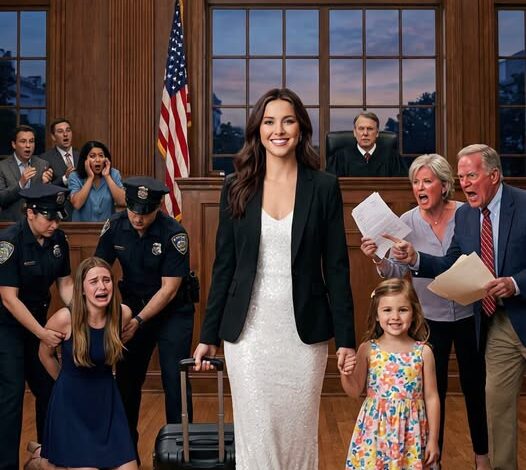
For years, my family insisted that loyalty mattered more than the truth. They protected the image they wanted the world to see, even when that image demanded a sacrifice. I became that sacrifice. Every accusation found its way to me, every failure somehow became my responsibility, and every family gathering felt less like a reunion than another trial where the verdict had already been decided before I spoke a single word.
Chris was always the exception.
No matter what happened, excuses appeared before questions did. If something went wrong, someone else was blamed. If evidence surfaced, it was explained away. If doubts emerged, they were dismissed as jealousy, misunderstanding, or betrayal. In their eyes, Chris wasn’t simply a son or a brother—he was the family’s golden child, the one whose reputation had to be protected at any cost.
That cost became my life.
I spent years defending myself against accusations that never should have existed. Conversations became interrogations. Holidays became public performances where every glance carried judgment. I learned to measure every sentence carefully because anything I said could be twisted into fresh proof that I was the problem.
Eventually, I stopped trying to convince them.
Truth has a strange relationship with time.
It can be buried.
Ignored.
Mocked.
But it has a habit of resurfacing when least expected.
The investigation began quietly.
At first, no one believed it would amount to much. My family certainly didn’t. They were convinced the same confidence that had protected Chris for years would continue to shield him. They treated every new development as another inconvenience that would disappear once the attention faded.
But this time, attention didn’t fade.
It intensified.
Evidence began arriving piece by piece.
A forensic document examiner concluded that signatures on a disputed contract had been forged. What had once been dismissed as a misunderstanding suddenly became something that demanded serious explanation.
Then investigators reviewed security footage.
The video captured details that no amount of storytelling could erase. Every frame narrowed the gap between suspicion and certainty, replacing assumptions with facts that could be examined repeatedly from every angle.
Expert witnesses followed.
Financial analysts reconstructed transactions.
Digital specialists authenticated records.
Independent reports confirmed details that I had spent years trying to explain to people who never wanted to listen.
Watching it unfold inside the courtroom felt surreal.
For so long, I had carried these truths alone, constantly questioning whether anyone would ever believe me. Now professionals with no personal stake in the outcome were presenting the same facts under oath.
The evidence spoke with a clarity I never could.
Across the courtroom, I watched the jurors.
Early in the trial, many of their expressions reflected understandable skepticism. They listened carefully, weighing every witness and every document without revealing where they stood.
As the days passed, subtle changes became impossible to miss.
Raised eyebrows.
Concerned glances exchanged between jurors.
Longer notes scribbled into notebooks.
The confidence that had once surrounded Chris slowly dissolved as each new exhibit added another piece to the larger picture.
The emotional shift was unmistakable.
Disbelief gave way to concern.
Concern became disappointment.
Eventually, disappointment settled into outrage.
It was strangely familiar.
Those emotions mirrored the journey I had traveled privately for years.
First confusion.
Then denial.
Then the painful realization that the people I loved had chosen comfort over truth.
Throughout the proceedings, my family remained convinced that something would rescue the narrative they had defended for so long.
Perhaps another explanation would emerge.
Perhaps a witness would falter.
Perhaps the evidence would somehow collapse under scrutiny.
It never did.
Facts don’t change simply because they’re inconvenient.
Documents remain what they are.
Video records what happened.
Expert testimony doesn’t bend to family loyalty.
When closing arguments ended, the courtroom seemed unusually still.
Every person understood that the story everyone had been telling themselves for years was about to collide with reality.
The jury returned.
The foreperson stood.
The verdict was read.
For a brief instant, no one moved.
Then officers stepped forward.
The metallic click of handcuffs echoed softly through the courtroom.
It wasn’t loud.
It wasn’t dramatic.
Yet that quiet sound carried more weight than years of arguments ever had.
The child my family had spent years shielding was no longer protected by excuses.
He was accountable.
For the first time, responsibility belonged to the person who had earned it.
My parents looked around the courtroom as though searching for another explanation.
Another villain.
Another person to blame.
Their expressions suggested they expected someone to interrupt the inevitable, to reveal a misunderstanding that would restore the version of reality they had defended for so long.
No interruption came.
There was no hidden twist.
No final revelation.
Only silence.
In that silence, something inside me changed.
Not because Chris had been convicted.
Not because anyone had “won.”
Courtrooms don’t create happy endings.
They simply establish legal conclusions.
What changed was the weight I had been carrying.
For years, I had lived beneath accusations that weren’t mine.
I had apologized for things I hadn’t done, questioned my own memories, and accepted burdens that belonged to someone else because the people closest to me insisted they did.
That burden disappeared.
Not all at once.
But enough for me to feel the difference.
There was no longer a role for me to perform.
No endless defense to prepare.
No desperate hope that one more conversation might finally persuade people determined not to listen.
The truth no longer depended on my ability to explain it.
It stood on its own.
As I walked out of the courthouse, I realized something unexpected.
Vindication isn’t always loud.
It isn’t revenge.
It isn’t triumph.
Sometimes it arrives as something much quieter.
The absence of shame that never belonged to you.
The freedom to stop defending your own reality.
The peace that comes when facts finally speak louder than family mythology.
For years, I had been forced to live inside a story written by other people.
That story ended in a courtroom—not because every wound had healed, but because the lies could no longer survive contact with the truth.
And in the clean, echoing silence that followed, I finally understood what freedom felt like.
It wasn’t the sound of handcuffs closing.
It was the sound of no longer carrying someone else’s guilt.