Sinister meaning behind ‘8647’ message after numbers are found carved into National Mall grass

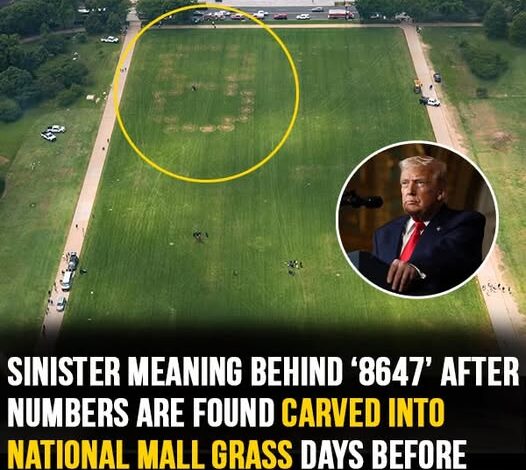
What was meant to be a triumphant celebration of American history has instead become overshadowed by a mystery etched into the nation’s most symbolic landscape. As preparations intensify for a highly publicized Independence Day event marking the 250th anniversary of the Declaration of Independence, attention has shifted away from the patriotic spectacle and toward a troubling message carved into the grass between the Capitol and the Lincoln Memorial. The numbers “8647,” cut into the earth in large, unmistakable figures, have become the center of a growing political storm.
The timing has amplified the controversy. With millions expected to watch the anniversary celebration and President Donald Trump preparing to take center stage during the nationally televised event, the discovery has transformed from a simple act of vandalism into a flashpoint in an already deeply divided political climate. From the air, the numbers are clearly visible, creating an image that many believe was designed specifically to attract maximum attention during one of the most significant public events of the year.
To Trump supporters, the display represents more than damaged grass. Many view it as a deliberate insult directed at both the president and the historic celebration itself. Social media quickly filled with outrage, with critics of the act describing it as a desecration of public space and a calculated attempt to inject political hostility into what was intended to be a moment of national unity. For them, the location and timing suggest a message crafted to provoke, distract, and divide.
Others, however, interpret the incident differently. Among some of Trump’s opponents, the numbers have been discussed as a form of symbolic protest—an expression of resistance against a political figure who continues to dominate American public life. Yet even many critics of the president have questioned whether the act crossed a line, arguing that political disagreement should not be expressed through damage to public property or messages that can be interpreted in threatening ways.
Investigators now face the challenge of determining exactly what the numbers were intended to communicate. The phrase “8647” carries multiple interpretations, each adding another layer of uncertainty. Some point to restaurant slang, where “86” traditionally means to remove or get rid of something. Others connect it to internet memes and political messaging that have circulated in recent years. The ambiguity is precisely what makes the incident so controversial: no single explanation has been confirmed, leaving room for speculation, fear, and competing narratives.
Federal authorities are treating the matter seriously. Park Police have launched an investigation, examining the damaged area and collecting evidence while attempting to determine who was responsible and how the message was created. At the same time, security agencies are reviewing the broader implications of the display, particularly given the enormous public gathering expected for the Independence Day celebration. While officials have not publicly linked the incident to any specific threat, security measures around the event have reportedly received additional scrutiny.
As helicopters pass overhead and workers continue preparing for the historic anniversary festivities, the carved numbers remain a stark reminder of the nation’s political tensions. What was intended to be a celebration of freedom, unity, and national identity has become entangled with questions about symbolism, protest, and the limits of political expression.
Whether the message ultimately proves to be vandalism, political theater, or something more troubling, one fact is difficult to ignore: whoever placed those numbers chose their moment carefully. They selected one of the most visible locations in America and one of the most significant weeks in the nation’s recent history. In doing so, they ensured that a patch of damaged grass would become part of a much larger conversation—one that extends far beyond the National Mall and into the ongoing struggle over politics, symbolism, and public discourse in modern America.