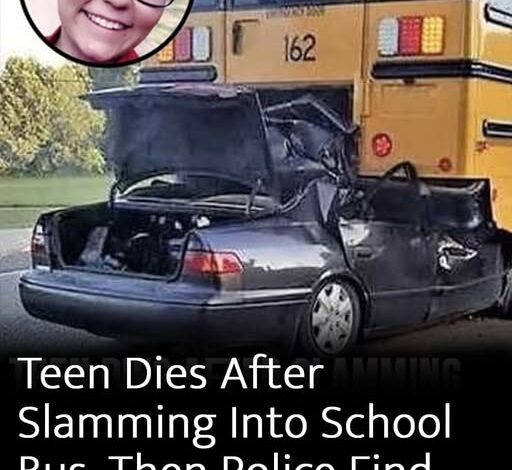
The morning began the way thousands of ordinary mornings do across small towns and quiet highways every single day.
Gray skies.
Coffee cooling too quickly on kitchen counters.
Parents rushing through routines half-awake while trying to keep life moving on schedule.
Nothing about that September morning suggested catastrophe.
Nothing warned Shelia Ray that the short phone conversation she had with her daughter would become the final one they would ever share.
Katelyn had always been dependable that way.
If someone needed help, she showed up.
That morning, her older sister needed a ride home from work, and Shelia asked Katelyn if she could pick her up. It was the kind of everyday favor families exchange without ceremony or second thought.
“Can you go get your sister?”
“Sure, Mom.”
Simple.
Ordinary.
Forgettable.
Until tragedy transforms ordinary moments into permanent memory.
Later, Shelia would replay that conversation endlessly in her mind searching for hidden warnings that never existed.
Did Katelyn sound distracted?
Tired?
Hurried?
Was there something she should have noticed?
Grief does that.
It turns surviving family members into investigators of impossible details, searching desperately for the one tiny change that might have rewritten fate.
But at the time, Katelyn was simply a young woman getting into her car believing she was driving toward another normal day.
The highway stretched ahead beneath dull morning light, traffic moving steadily through familiar routines. School buses traveled their regular routes carrying sleepy children clutching backpacks and lunchboxes. Parents headed toward work. Students stared absently through windows preparing mentally for another school day.
Life moved forward in dozens of separate directions all at once.
Then, somewhere along that road, attention shifted.
Investigators would later piece the timeline together carefully.
A phone in Katelyn’s hand.
A school bus slowing ahead with more than a dozen children aboard.
Seconds passing quietly enough that nobody noticed danger arriving until it already had.
Witnesses later described the crash as sudden and violent.
One moment traffic moved normally.
The next came the scream of twisting metal and exploding glass.
When emergency responders arrived, the scene looked catastrophic.
The front of Katelyn’s vehicle had crumpled almost beyond recognition. Debris scattered across the roadway. The bus sat damaged but upright, children inside crying and confused while adults rushed desperately to account for everyone aboard.
And near the wreckage, investigators quickly noticed something chilling.
There were no skid marks.
No evidence of braking.
No sign she had swerved.
No indication she ever saw the stopped bus in time to react.
Only silence where last-second survival instinct should have existed.
The phone remained inside the vehicle.
That detail became impossible to ignore.
The terrible simplicity of the crash settled heavily over everyone at the scene almost immediately.
This was not recklessness in the dramatic sense people often imagine.
No racing.
No intoxication.
No criminal intent.
Just divided attention.
A few seconds.
That was all.
A glance downward.
A notification.
A message.
A momentary shift away from the road.
And in those few irreversible seconds, an entire future disappeared.
Katelyn died instantly.
Emergency crews worked around the wreckage while schoolchildren sat wrapped in blankets nearby trying to understand what they had just survived. Some cried quietly. Others stared blankly at the flashing lights reflecting across the highway.
The children on the bus survived physically unharmed.
That fact became one of the only mercies anyone could hold onto afterward.
But survival does not erase impact.
Many of those children would later remember the sound of the crash for years.
And meanwhile, miles away, Shelia Ray answered a knock at the door no parent should ever experience.
People often describe those moments the same way afterward:
time stopping,
sound disappearing,
reality becoming physically difficult to process.
One minute you exist inside ordinary life.
The next, officers are standing in your doorway with expressions that already contain the end of your world.
Shelia later admitted she did not fully understand what police were telling her at first.
Not because the words were unclear.
Because the human mind rejects catastrophe instinctively when it arrives too suddenly.
“No,” she reportedly whispered repeatedly. “No, no, no.”
As if repetition alone could reverse what had already happened on that highway.
The days afterward unfolded through shock.
Funeral arrangements.
Phone calls.
Family members arriving with casseroles nobody could eat.
Katelyn’s bedroom remaining untouched because moving anything felt unbearable.
Grief after sudden loss often creates strange contradictions.
You simultaneously cannot believe the person is gone and cannot escape the evidence that they are.
Her shoes still sat near the front door.
Her jacket still hung over the kitchen chair.
Unread text messages still waited inside phones nobody wanted to open.
And underneath all of it sat the question that would not stop echoing inside Shelia’s mind:
What if that phone had been out of reach?
What if the notification arrived thirty seconds later?
What if Katelyn ignored it?
What if someone else drove that route that morning instead?
The cruelty of distracted-driving tragedies lies partly in how preventable they feel afterward.
There is no comforting randomness to hold onto.
Only tiny ordinary choices carrying unimaginable consequences.
Police investigators eventually released their findings publicly.
No alcohol.
No excessive speed.
No mechanical failure.
Only distraction.
The kind millions of people risk every single day while convincing themselves they remain in control.
That reality frightened people more deeply than dramatic recklessness ever could.
Because most drivers do not see themselves in drunk drivers or street racers.
But nearly everyone has glanced at a phone while driving.
Just for a second.
Just at a red light.
Just to check a message.
Just to answer quickly.
Modern life conditions people to believe constant accessibility is normal, even necessary.
Notifications demand immediate attention.
Messages feel urgent.
Phones blur the boundary between presence and distraction so completely that many people no longer recognize the danger until something irreversible happens.
Katelyn’s story cut through that illusion brutally.
Not because she was irresponsible.
Because she was ordinary.
A daughter.
A sister.
A young woman doing a favor for family before her entire life vanished inside seconds of divided attention.
That ordinariness became the warning itself.
Shelia eventually chose to speak publicly about the crash despite the pain because she understood something important:
statistics rarely change behavior.
Stories do.
People hear numbers constantly:
accident rates,
fatalities,
safety campaigns.
But numbers feel distant.
A mother describing her final conversation with her daughter does not.
Shelia began telling audiences about the highway.
The bus.
The absence of skid marks.
The unbearable silence afterward.
And always, she returned to the same message:
“No text is worth this.”
Simple sentence.
Enormous grief behind it.
Distracted driving campaigns often rely on fear.
But what makes stories like Katelyn’s truly devastating is not fear alone.
It is recognition.
Anyone can imagine themselves checking a phone briefly.
Anyone can picture believing “it will only take a second.”
That familiarity forces people to confront how thin the line between ordinary routine and catastrophe sometimes truly is.
Years later, Shelia still describes mornings as the hardest.
Because mornings remind her of the version of life that existed before the highway, before police officers, before funerals replaced future plans.
Some grief never fully settles into the past tense.
It simply becomes part of the landscape families carry forward.
Katelyn’s story now lives beyond the crash itself.
In safety presentations.
In classrooms.
In conversations between parents and teenagers before handing over car keys.
And perhaps that is the only possible meaning tragedy can offer afterward:
the chance that someone else pauses long enough to put their phone down and arrive home safely because they remembered what happened to a young woman who never got that chance herself.
Because in the end, the wreckage on that highway revealed something terrifyingly simple:
it does not take recklessness to destroy a life.
Sometimes it only takes a moment.