The Hidden Reason Your Laundry Smells Musty — And the Simple Kitchen Ingredient That Can Help Fix It


There are few household disappointments stranger than pulling freshly washed clothes from a machine only to realize they do not smell fresh at all.
The expectation is almost automatic.
Clean laundry should carry the subtle reassurance of order restored:
warm fabric,
soft cotton,
the faint scent of detergent,
the quiet feeling that one small part of life has been handled properly.
So when the washing machine finishes its cycle and a damp, sour, almost musty odor rises from the drum instead, the experience feels oddly unsettling for something so ordinary.
Most people react the same way at first.
They blame the detergent.
The clothes.
The weather.
Maybe they assume towels sat too long before washing or that gym clothes simply absorbed stubborn odor.
Rarely does anyone immediately suspect the machine itself.
Yet in many homes, the washing machine quietly becomes the hidden source of the very smells people are trying to remove.
That contradiction feels almost unfair.
A device designed entirely around cleanliness slowly accumulating grime, residue, bacteria, moisture, and odor inside its hidden internal spaces. But modern washing machines, despite their efficiency and convenience, are not self-cleaning systems. In fact, many newer energy-efficient machines create ideal conditions for buildup over time because they use less water, lower temperatures, and tightly sealed designs that trap moisture more easily after cycles finish.
The problem develops gradually enough that most households never notice the beginning.
One load leaves behind a trace amount of detergent.
Another leaves tiny fabric fibers.
Hard water deposits minerals invisibly along internal surfaces.
Moisture settles into rubber seals.
Fabric softener thickens quietly inside narrow compartments.
None of it seems significant individually.
But over weeks, months, and years, those layers accumulate into something larger:
a thin biological residue known commonly as biofilm.
Biofilm sounds technical and harmless until you understand what it really is.
A damp coating of organic material capable of trapping moisture, bacteria, detergent residue, mold spores, and odor inside hidden parts of the machine people rarely inspect directly. Warmth and humidity accelerate the process further. Every completed wash cycle leaves behind microscopic traces of life and residue inside an environment perfectly designed to stay damp.
And dampness changes everything.
Especially in enclosed spaces.
That is why certain washing machines eventually develop a smell difficult to describe precisely but instantly recognizable once encountered:
part mildew,
part stale water,
part trapped moisture.
The odor clings lightly to towels first.
Then workout clothes.
Then entire laundry loads.
At some point, people realize the machine itself smells unpleasant even when empty.
Front-loading washing machines often experience the problem most intensely.
Their design relies heavily on thick rubber door seals to prevent water leakage during cycles. These seals create tight folds where moisture naturally collects after washing finishes. Tiny amounts of water remain trapped there constantly unless manually dried or allowed to evaporate fully.
Over time, those folds can become miniature ecosystems invisible at casual glance.
Dark.
Warm.
Moist.
Ideal conditions for mold and bacterial growth.
Many homeowners discover the problem accidentally while wiping the seal one day and noticing black residue hidden deep inside the rubber folds. Others first notice the smell itself before finding visible mold later.
Either way, the emotional reaction tends to be the same:
disgust mixed with disbelief.
Because people expect dirt outdoors.
Not inside machines meant to clean clothing.
Hard water makes the situation even worse.
In many regions, household water contains naturally occurring minerals like calcium and magnesium. These minerals remain harmless for human consumption, but inside appliances they gradually accumulate as limescale deposits.
Limescale builds slowly along internal machine components:
heating elements,
pipes,
drum surfaces,
water channels.
The process resembles plaque forming inside arteries.
At first the buildup barely affects performance.
Then efficiency drops subtly.
Water heating becomes slower.
Energy use increases.
Internal strain accumulates quietly over time.
Most people never notice the progression until problems become visible:
longer cycles,
reduced cleaning effectiveness,
lingering smells,
or eventual mechanical wear.
Meanwhile, another overlooked area quietly collects residue:
the detergent drawer.
Liquid detergent and fabric softener seem harmless while pouring into the compartment. But repeated use leaves sticky layers coating narrow channels where moisture lingers afterward. Without regular cleaning, the drawer slowly develops thick residue difficult to remove completely.
Sometimes black mold appears around corners.
Sometimes detergent hardens into paste-like buildup.
Again, the irony feels unpleasantly perfect:
products intended for cleanliness slowly creating grime themselves.
That is why maintenance matters far more than most people realize.
Not dramatic maintenance.
Not expensive maintenance.
Consistent small habits.
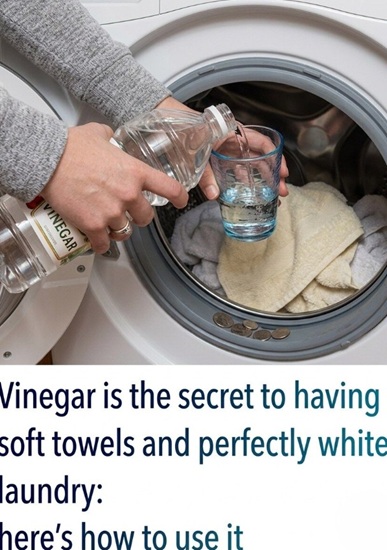
The simplest and most widely recommended cleaning method involves ordinary white vinegar.
Vinegar works effectively because of its mild acidity. The acetic acid helps dissolve mineral deposits while loosening detergent residue and breaking down some forms of buildup inside the machine. Unlike harsh industrial cleaners, white vinegar remains inexpensive, widely available, and relatively gentle when used properly.
The cleaning process itself is surprisingly simple.
An empty washing machine.
Hot water.
Moderate vinegar added either directly into the drum or detergent compartment.
Then a full maintenance cycle allowed to run uninterrupted.
As warm water circulates through the machine, vinegar reaches internal areas impossible to clean manually:
pipes,
water channels,
drainage systems,
hidden surfaces behind the drum.
Gradually, residue loosens.
Limescale softens.
Soap buildup breaks apart.
Odors begin lifting from trapped moisture zones.
Many households follow the vinegar cycle with an additional rinse cycle using plain water to flush remaining residue thoroughly afterward.
Some people also add baking soda during separate cleaning stages.
Baking soda works differently than vinegar. Rather than dissolving minerals primarily, it helps neutralize odors and loosen surface residue gently. Used moderately, the combination can improve overall freshness significantly.
Still, experts consistently emphasize moderation.
More cleaning product does not always mean better cleaning.
Excessive vinegar use may eventually affect certain machine components depending on manufacturer design and frequency. The goal is maintenance, not aggressive chemical treatment. Proper appliance care works best through balance rather than overcorrection.
And perhaps that becomes the larger lesson hidden inside household maintenance generally.
Small neglect accumulates invisibly.
Not just in washing machines.
Everywhere.
Residue forms slowly.
Moisture lingers quietly.
Minor problems remain manageable until ignored long enough to become larger ones.
The washing machine simply makes that process visible physically.
Regular care prevents most major issues before they fully develop.
Wiping the rubber door seal after washes.
Leaving the door slightly open afterward.
Cleaning the detergent drawer periodically.
Running occasional hot maintenance cycles.
These habits seem insignificant individually.
Together, they dramatically change the machine’s long-term condition.
Ventilation especially matters.
Modern front-loading machines seal tightly for energy efficiency, but that same efficiency traps moisture after cycles finish. Leaving the door slightly open allows airflow through the drum, helping surfaces dry naturally instead of remaining damp for hours.
Such a small action.
Such a large difference over time.
The same principle applies to laundry itself.
Leaving wet clothes inside the machine too long after washing creates ideal conditions for odor development. Damp fabrics trap warmth and moisture together, encouraging bacterial growth surprisingly quickly.
Most people have experienced that moment too:
reopening the washer hours later and immediately recognizing the stale smell of laundry left sitting too long.
At that point, many people rewash the load entirely.
Which increases water use.
Energy use.
Detergent use.
All from a preventable habit.
Proper detergent use matters equally.
Many households unknowingly use far more detergent than necessary, believing extra soap must equal cleaner clothes. In reality, excess detergent often creates more residue buildup because modern machines struggle to rinse oversized amounts completely away.
The leftover detergent settles inside internal components gradually, contributing directly to biofilm formation and odor retention over time.
Ironically, less detergent often produces cleaner results.
Especially in high-efficiency machines.
Water hardness also changes ideal detergent amounts significantly. Areas with softer water generally require less detergent because soap dissolves and rinses more effectively. Hard water regions may create additional residue depending on detergent type and washing habits.
These details seem small individually.
Yet appliance longevity depends heavily on small details repeated consistently across years.
Modern washing machines represent an interesting contradiction of convenience culture.
People rely on them constantly while rarely thinking about them at all until something goes wrong.
The appliance exists quietly in the background of domestic life:
washing school uniforms,
towels,
bedsheets,
work clothes,
baby blankets,
sports jerseys,
the endless fabric rhythms of ordinary living.
Then one day the machine smells strange.
Or drains poorly.
Or leaves residue on clothing.
Or suddenly stops working entirely.
Only then do many people realize maintenance was never optional.
Just invisible.
Some newer washing machines now include dedicated self-cleaning cycles specifically designed to address internal buildup before odor and residue become severe. These programs usually operate at higher temperatures and longer durations intended to reduce bacterial growth and mineral accumulation.
Even without specialized features, however, occasional hot-water cycles combined with simple maintenance practices remain highly effective for most households.
Ultimately, the condition of a washing machine reflects the habits surrounding it.
Not perfection.
Consistency.
A machine cleaned occasionally,
ventilated properly,
used thoughtfully,
and maintained gently over time will almost always perform better and last longer than one ignored completely until problems appear.
And perhaps that explains why the smell of truly clean laundry feels quietly satisfying in ways people rarely discuss directly.
Fresh clothes represent more than cleanliness.
They signal functioning routines.
Care.
Maintenance.
Attention to ordinary life.
The washing machine itself becomes part of that emotional architecture — a hidden household system people barely notice when it works properly and suddenly appreciate deeply when it does not.
Because domestic comfort often depends less on dramatic moments than on invisible systems functioning reliably in the background.
Hot water flowing.
Laundry smelling clean.
Machines working quietly as expected.
Small things.
Until they stop.
In the end, maintaining a washing machine is not really about vinegar or detergent compartments or rubber seals alone.
It is about understanding that even the most useful systems require care to remain healthy over time.
Residue accumulates.
Moisture lingers.
Neglect compounds slowly.
But attention matters too.
And sometimes the difference between a machine that smells stale and one that keeps a household running smoothly for years comes down to habits so small most people barely notice them while doing them:
a wiped seal,
an open door,
a maintenance cycle,
a little airflow,
a few extra moments of care.
Quiet actions preserving the ordinary comforts people depend on every single day.