The Silent Chamber, Why Newt Gingrich Says a Chilling Display of Disunity Is the Final Warning for Americas Corrupt Political Elite

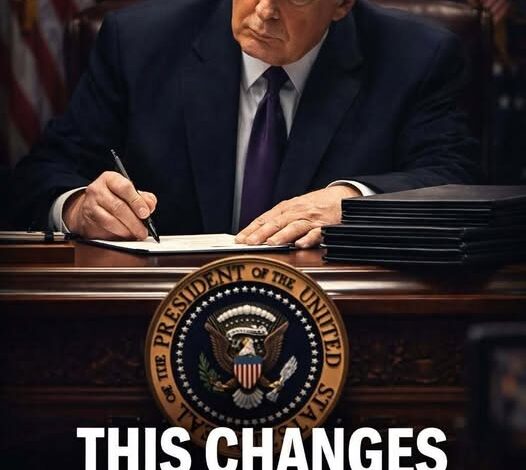
The room was meant to symbolize unity.
Instead, according to Newt Gingrich, it revealed something far darker.
After walking out of the Joint Session of Congress, the former House speaker described a moment that felt less like political disagreement and more like a warning flare over the entire American system. The silence in the chamber, he argued, was not accidental. It was not merely awkward. It was deliberate, cold, and deeply revealing.
To Gingrich, the problem was not simply that one side refused to applaud the other.
It was that elected leaders seemed unable to recognize anything larger than party.
A speech before Congress is supposed to produce at least a few moments of shared recognition—support for the military, pride in national achievements, sympathy for suffering families, respect for public service. Yet Gingrich saw a chamber so divided that even basic gestures of unity had become impossible.
That, he suggested, is where the real crisis begins.
Because when a government cannot briefly rise above partisan instincts, the damage reaches beyond one evening. It tells the public that Washington is no longer a place where leaders gather to solve problems. It has become a stage where each side performs loyalty for its own audience.
The silence, in that sense, became louder than applause ever could.
Gingrich’s warning lands in a country already drowning in distrust. Many Americans believe the political system is broken, corrupt, or controlled by people more interested in power than service. For them, the image of lawmakers refusing even symbolic unity only confirms what they already fear: that the people in charge no longer see one nation, only opposing camps.
His criticism is aimed most sharply at Democrats, whom he portrays as defenders of an oversized and failing status quo. In his view, Republicans are the ones offering reform, while Democrats remain committed to protecting the machinery of government as it exists.
But the deeper indictment does not stop with one party.
It reaches everyone in power.
A system begins to collapse when politicians fear primary voters more than national failure. It weakens when performance matters more than results. It rots when lawmakers care more about viral clips, fundraising emails, and ideological purity than the actual condition of the country they claim to serve.
That is the danger Gingrich is pointing toward.
Not bad manners.
Not poor etiquette.
A loss of shared reality.
When leaders cannot agree on what deserves respect, citizens eventually stop believing the institution itself deserves respect. The public begins watching government the way it watches theater: expecting conflict, doubting sincerity, and assuming every gesture is scripted.
That kind of cynicism is difficult to reverse.
Once trust disappears, speeches sound hollow. Promises feel calculated. Even serious warnings are dismissed as strategy. The country becomes harder to govern because people stop believing anyone is acting in good faith.
The Joint Session, then, becomes more than a political event.
It becomes a mirror.
And what Gingrich says he saw in that mirror was a nation dangerously close to losing its ability to function as one people.
The question is whether anyone in Washington is willing to hear the warning.
Because a country can survive disagreement. It can survive hard debate, sharp elections, and competing visions for the future. What it cannot survive forever is a political class that treats the other half of the country as illegitimate.
At some point, leaders must decide whether they are serving a party or preserving a nation.
They must rediscover the courage to applaud America before applauding themselves.
If they cannot, the silence Gingrich described may not remain inside the chamber.
It may spread outward.
To voters.
To communities.
To the very idea that government can still work.
And when the audience finally stops believing in the performance, it may not just boo.
It may walk out for good.