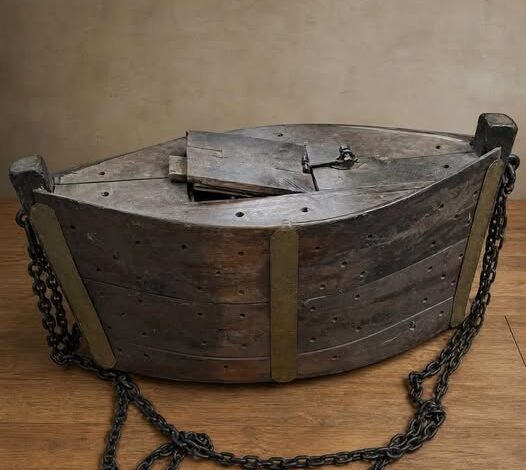
At first glance, it looks like a strange wooden cage pulled from another century.
Curved slats, heavy iron bands, thick chains, and a hinged lid give it an appearance that’s both intriguing and mysterious. Many people guess it was used to transport supplies, trap animals, or even store valuables.
Its real purpose, however, was far more practical.
This was a fish keeper, sometimes called a fish cage or fish locker—a clever device that allowed people to keep freshly caught fish alive for hours or even days by placing them directly into a river, lake, or stream.
Long before electric refrigerators, freezers, or coolers filled with ice, preserving fresh food required ingenuity.
For families who depended on fishing, keeping a catch alive until it could be eaten or sold made an enormous difference. Fish spoil quickly once they die, especially during warm weather, so allowing them to remain alive in cool, flowing water extended their freshness naturally.
The design was remarkably effective.
Its wooden slats formed sturdy walls with narrow openings between them.
These gaps allowed fresh water to flow continuously through the cage, bringing oxygen to the fish while carrying away waste. The steady current created conditions similar to the fish’s natural environment, helping them survive far longer than they would if simply left on shore.
The curved shape also served a purpose.
Rather than resisting the current with large flat surfaces, the rounded design reduced pressure from flowing water, making the keeper more stable while it remained submerged.
Heavy iron bands strengthened the wooden frame, allowing it to withstand constant exposure to water and the movement of live fish inside.
Equally important were the chains attached to the top.
They weren’t merely handles.
They anchored the fish keeper securely to a dock, pier, shoreline, or sturdy tree, preventing it from drifting away during changing water levels or strong currents.
For families whose next several meals depended on the fish inside, losing the keeper to the river would have been a costly setback.
The hinged lid completed the design.
Once closed, it prevented fish from escaping while also discouraging unwanted visitors.
In some cases, the lid could even be locked.
That extra security protected the catch not only from curious animals such as otters, raccoons, or foxes, but also from theft in areas where valuable catches might tempt passing strangers.
Every feature reflected careful observation of both nature and daily life.
The people who built and used these keepers understood river currents, seasonal water temperatures, fish behavior, and the practical challenges of preserving food without modern technology.
They didn’t rely on electricity.
Instead, they used the river itself as a natural refrigeration system.
Cold, moving water slowed spoilage while keeping the fish alive until they were needed.
For fishing families, this simple invention offered tremendous flexibility.
Rather than preparing every fish immediately after it was caught, they could harvest what they needed over several days, maintaining freshness without waste.
Commercial fishermen also benefited, often keeping catches alive until they could be transported to market, where live or exceptionally fresh fish commanded higher prices.
Today, fish keepers are rarely seen outside museums, historical collections, antique shops, or old barns where forgotten equipment from earlier generations sometimes survives.
Modern refrigeration, portable coolers, live wells on boats, and advanced storage methods have made these wooden devices largely obsolete.
Yet they remain remarkable examples of practical engineering.
Constructed from little more than wood, iron, and skilled craftsmanship, they solved a complex problem using the natural environment rather than mechanical technology.
Looking at one today, it’s easy to admire the craftsmanship.
The weathered planks, hand-forged hardware, and worn chains tell the story of countless days spent along rivers and lakes, where survival often depended on making the most of every catch.
These objects remind us that innovation didn’t begin with electricity or digital technology.
Generations before modern appliances, people developed elegant solutions using the materials they had and a deep understanding of the world around them.
What now appears to be an unusual wooden relic was once an indispensable household tool.
It helped families preserve food, reduce waste, and make full use of the resources nature provided.
More than a simple container, the fish keeper represents a time when patience, craftsmanship, and careful observation transformed an ordinary river into one of the most effective refrigerators anyone could ask for.