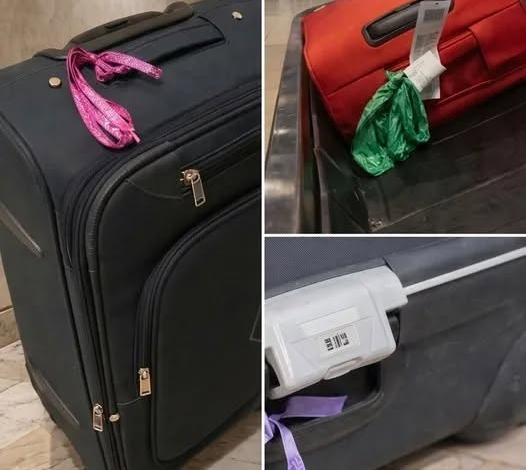
After a long flight, few moments feel more tiring than standing beside the baggage carousel, watching suitcase after suitcase slide past while trying to spot your own among a sea of nearly identical black bags.
Everyone is tired.
Everyone wants to leave.
The airport feels too bright, too loud, and too crowded after hours in the air.
So it makes sense that travelers look for shortcuts.
A colorful ribbon tied around the handle.
A bright scarf wrapped around the luggage strap.
A decorative tag swinging from the side.
At first, it seems like a clever idea. After all, anything that makes your suitcase easier to recognize should make the process faster, right?
Not always.
According to baggage handlers and airport workers, that simple trick can sometimes create problems travelers never see.
Modern airports depend on complex automated baggage systems designed to move thousands of bags every hour. Once a suitcase is checked in, it travels through conveyor belts, scanners, sorting machines, and loading areas before reaching the aircraft. During that journey, barcodes and baggage tags are scanned repeatedly so the system knows exactly where each bag needs to go.
When everything works properly, the process is fast and efficient.
But loose ribbons, dangling straps, scarves, and oversized decorations can interfere with that system.
A ribbon may cover part of a barcode.
A loose tag may swing into the wrong position.
A scarf or strap may catch on machinery.
If the scanner cannot read the luggage label clearly, the bag may be pulled aside for manual handling. That extra step can slow everything down and may increase the chance of delay, especially during busy travel periods when airport systems are already under pressure.
In other words, the very thing meant to help you identify your suitcase could make it harder for the airport to process it smoothly.
Baggage experts also warn travelers about another common mistake: leaving old airline stickers and luggage tags on their bags.
After several trips, suitcases often collect layers of old barcodes, destination stickers, and baggage labels. Many travelers ignore them, assuming they no longer matter. But automated systems are designed to read barcode information quickly, and outdated tags can sometimes create confusion.
A bag covered in old labels may be harder for machines to sort correctly.
Before every trip, travelers should remove old baggage tags and stickers so only the current flight information remains visible. It is a small habit, but it can help reduce the risk of sorting errors.
There are also unexpected items inside luggage that may slow things down.
Some dense foods, including marzipan and similar products, can look unusual on security X-ray screens. While these foods are usually allowed in checked bags, they may trigger additional inspection because of their density and shape. That does not mean travelers must avoid packing them entirely, but they should understand that certain items may cause delays during screening.
Fortunately, making your luggage easy to recognize does not require adding dangling decorations.
A better solution is choosing a suitcase that naturally stands out.
Bright colors.
Unique patterns.
Textured designs.
Distinctive hard-shell cases.
Even a simple colored luggage strap that fits tightly around the suitcase can make identification easier without creating loose pieces that might catch or interfere with scanners.
Travelers can also use sturdy, flat luggage tags with clear contact information. These are safer than loose ribbons because they are designed for travel and less likely to become tangled in airport equipment.
Another useful tip from baggage handlers is to place checked luggage on the conveyor belt with the wheels facing upward when possible. This can help reduce wear and damage as the bag moves through the system. It is a small detail, but experienced travelers know that small details often make a difference.
The goal is not to make travel more complicated.
It is to make it smoother.
A suitcase that is easy to identify, clean of old labels, and free from loose decorations is less likely to cause problems behind the scenes. That helps airport workers, improves baggage handling, and may reduce the risk of delays.
So before your next trip, take a few minutes to prepare your luggage properly.
Remove old stickers.
Check that your current baggage tag is visible.
Avoid dangling ribbons and loose accessories.
Choose practical identification instead of decorations that could get caught.
At the baggage carousel, you still want your suitcase to stand out.
But the smartest travel choice is making sure it stands out in a way that helps you without making the airport’s job harder.
Sometimes the best travel hack is not adding more to your bag.
It is taking away what might cause trouble.