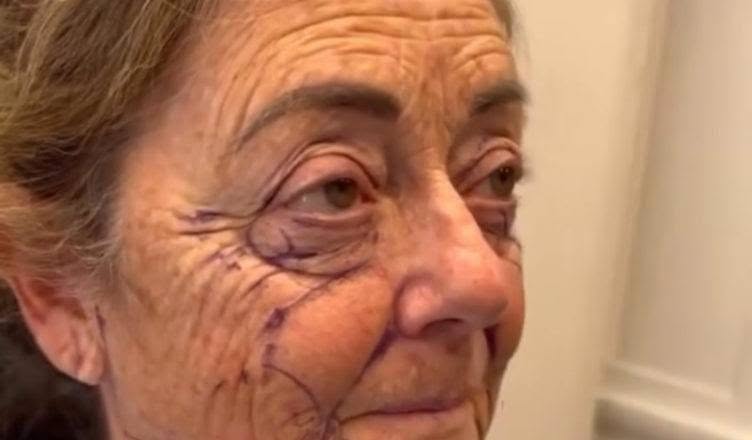
For most of her seventy years, Margaret had been the woman everyone could depend on.
The problem was that somewhere along the way, she stopped being someone she could depend on herself.
She had spent decades taking care of other people.
Children.
A husband.
Aging parents.
Grandchildren.
There was always another meal to prepare, another appointment to remember, another birthday to organize, another person whose needs seemed more urgent than her own.
Margaret rarely complained.
That was almost part of her identity.
“Don’t worry about me,” she’d say.
“I’m fine.”
And usually, everyone believed her.
Because Margaret had become very good at being fine.
She could smile while exhausted.
She could comfort someone while carrying worries of her own.
She could look after an entire room without anyone noticing that nobody had asked how she was doing.
Years passed that way.
Not dramatically.
Quietly.
That was what frightened her when she eventually recognized it.
There had been no single moment when Margaret disappeared.
She had vanished gradually.
One sacrifice at a time.
One postponed plan.
One “maybe next year.”
One glance in the mirror followed by the thought that caring about her appearance was something younger women were supposed to do.
By seventy, she barely recognized the woman looking back at her.
It wasn’t simply the wrinkles.
She expected those.
There were lines around her eyes from decades of laughter and worry. Her jaw had softened. Her neck had changed. Her hair was thinner and silver.
Age had arrived honestly.
But something else bothered her.
She looked tired even when she wasn’t.
The face in the mirror seemed to carry every difficult year at once.
One morning, Margaret stood there longer than usual.
She touched her cheek.
Then she whispered something she hadn’t allowed herself to say before.
“I miss me.”
The sentence startled her.
Because she suddenly understood that this wasn’t really about wanting to look thirty again.
She didn’t want to be thirty.
She had survived too much to wish herself backward.
She wanted to feel visible again.
So Margaret began researching cosmetic surgery.
At first, she told nobody.
Even searching online made her feel strangely guilty.
She read about procedures, recovery times, risks, consultations, and realistic expectations. Eventually, she met with qualified medical professionals and asked questions she had been too embarrassed to say aloud.
Could someone her age undergo elective surgery safely?
What would recovery involve?
What could realistically change?
What couldn’t?
The conversations were not about magic.
Age mattered.
Overall health mattered.
Medical history mattered.
Anesthesia carried risks.
Healing could be slower in older patients.
Any responsible decision would depend on an individualized medical assessment, not simply desire.
Margaret listened carefully.
Then she went home and thought.
Her daughter was the first person she told.
“You’re doing what?”
Margaret immediately felt herself shrinking.
“I’ve only been considering it.”
“But why?”
That question hurt more than the surprise.
Why?
Why should a seventy-year-old woman care?
Why spend money on herself now?
Why endure surgery for something cosmetic?
Why not simply accept aging gracefully?
Margaret had spent her entire life accepting things gracefully.
She was tired of grace being another word for disappearing without complaint.
“I’m not trying to become young,” she finally said.
Her daughter stared at her.
“Then what are you trying to become?”
Margaret smiled sadly.
“Myself.”
That ended the argument.
Not everyone’s reaction was supportive.
Some relatives thought it was unnecessary.
A friend warned her that people would gossip.
Someone jokingly asked who she was trying to impress at seventy.
That comment stayed with her.
Because the answer was surprisingly simple.
Herself.
For once, Margaret wasn’t making a decision based on what would make somebody else’s life easier.
She wasn’t cooking anyone dinner.
She wasn’t babysitting.
She wasn’t caring for a sick relative.
She wasn’t sacrificing something she wanted because another person needed the money, time, attention, or energy.
She was choosing something for Margaret.
That alone felt revolutionary.
Eventually, after medical consultations and careful consideration, she decided to proceed.
The recovery was not glamorous.
There were no cinematic mornings where she removed a bandage and instantly looked transformed.
There was swelling.
Bruising.
Discomfort.
Restlessness.
Moments of doubt.
For several days, Margaret wondered whether everyone who criticized her had been right.
She avoided mirrors.
Then, gradually, healing began.
The swelling decreased.
The bruising faded.
Her features settled.
One morning, she walked into the bathroom and stopped.
There she was.
Not thirty.
Not forty.
Not some artificially perfected stranger.
Margaret.
Older.
Still unmistakably seventy.
But refreshed in a way that made her eyes appear brighter and her expression less weighed down.
She smiled.
The woman in the mirror smiled back.
And Margaret cried.
Not because she suddenly believed she was beautiful.
Because she realized she had never stopped being beautiful.
She had simply stopped looking at herself with kindness.
Weeks later, her family held a party.
Margaret almost stayed home.
Old instincts returned.
What will everyone say?
Will they stare?
Will they think I’m ridiculous?
Then she caught herself.
She had spent seventy years arranging her life around other people’s reactions.
Enough.
She chose an outfit she loved.
Did her hair.
Put on lipstick.
And walked through the door.
The room changed.
Conversations paused.
Someone lowered a glass halfway to their mouth.
Margaret felt every eye turn toward her.
For one terrible second, insecurity surged through her.
Then her grandson stared at her.
“Grandma?”
She smiled.
His eyes widened.
“Is that really you?”
People laughed.
Margaret did too.
But the question landed somewhere much deeper.
Is that really you?
For years, she might not have known how to answer.
She had been Mom.
Grandma.
Wife.
Daughter.
Caregiver.
Helper.
The woman who remembered everyone’s birthdays.
The woman who always volunteered.
The woman who said she didn’t need anything.
But standing there, surrounded by people she loved, Margaret finally had an answer.
Yes.
It was her.
Still here.
Still allowed to take up space.
Still allowed to change.
Still allowed to surprise people.
Still allowed to want things.
Photographs from the celebration eventually found their way online.
Then something unexpected happened.
People began sharing them.
At first, Margaret couldn’t understand why strangers cared.
But the comments weren’t only about her appearance.
Women wrote about themselves.
A woman in her sixties said she had postponed traveling for twenty years because someone in the family always needed her.
Another said she had stopped wearing bright clothes after being told they weren’t “appropriate” for her age.
Someone else wrote that she had spent her entire adult life raising children and had no idea what she wanted now that they were grown.
Again and again, women repeated variations of the same sentence:
“I thought it was too late.”
Margaret understood then why her story resonated.
The surgery was the visible part.
But underneath it was something almost universal.
Permission.
Permission to care about yourself after decades of caring for everyone else.
Permission to begin something at seventy.
Or sixty.
Or eighty.
Permission to change your hair.
Take the trip.
Learn the instrument.
Leave the house.
Wear the dress.
Start exercising.
Study something new.
Make new friends.
Or simply look into a mirror and stop speaking cruelly to the person reflected there.
Cosmetic surgery isn’t the right choice for everyone, and no procedure can manufacture self-worth. It carries genuine medical risks and should be approached with realistic expectations and appropriate professional guidance.
Margaret’s deeper transformation wasn’t something a surgeon could create.
It happened when she decided her own desires were still worthy of consideration.
For decades, society had praised her for selflessness.
But nobody had warned her that selflessness, taken too far, can become self-erasure.
Caring for others is beautiful.
Loving your family is beautiful.
Sacrifice can be necessary.
But a woman does not become less deserving of her own attention simply because she becomes a mother, grandmother, caregiver, or senior citizen.
Age doesn’t cancel personhood.
Margaret still had wrinkles.
She still had gray hair.
Her knees still complained on stairs.
She still forgot where she left her glasses while they were sitting on top of her head.
She wasn’t trying to defeat aging.
She had simply stopped treating aging like an instruction to disappear.
Months later, her grandson asked about that night.
“Grandma, remember when I didn’t recognize you?”
Margaret laughed.
“I remember.”
“I didn’t mean it badly.”
“I know.”
Then she thought about the question that had unexpectedly become so important.
Is that really you?
She looked at him and smiled.
“Actually,” she said, “I think I’m more me now than I’ve been in years.”
That was the transformation no before-and-after photograph could capture.
The most important difference wasn’t in her jawline.
It wasn’t her skin.
It wasn’t something measurable in a mirror.
It was the way Margaret entered rooms.
Her shoulders no longer folded inward.
She stopped apologizing for wanting things.
She started making plans without first asking whether everyone else approved.
At seventy, Margaret hadn’t discovered a secret way to become younger.
She discovered something better.
She realized growing older and giving up on yourself were never the same thing.
There is no expiration date on curiosity.
No deadline for reinvention.
No age at which joy becomes inappropriate.
And no point in life when a woman must quietly surrender the right to look at herself and say:
I’m still here.
I still matter.
And whatever time remains belongs to me, too.