The headline was designed to make people stop scrolling.
“Sad in Washington, D.C., Barack Obama was confirmed as…”
Then came the inevitable invitation:
“See more.”
Within minutes, people were clicking, sharing, and asking the same anxious question.
What happened to Barack Obama?
But there was a problem.
The headline didn’t actually say.
It offered no confirmed event, no clear source, no meaningful context—only enough emotional language to make readers fear the worst.
And that missing information was the most important part of the story.
Barack Obama has spent decades living beneath a level of public attention few people ever experience. From his rise through Illinois politics to eight years in the White House and his continuing role as a former president, almost every significant development involving him has generated headlines around the world.
That makes his name exceptionally powerful online.
Attach “breaking,” “sad,” “confirmed,” or “Washington, D.C.” to it, and millions of readers immediately become curious.
Leave the sentence unfinished, and curiosity can turn into fear.
Was there a medical emergency?
A death in the family?
A political announcement?
Something involving Michelle Obama?
A security incident?
The headline allows the reader’s imagination to supply the frightening detail that the post itself refuses to provide.
That is precisely why these headlines work.
Human beings dislike incomplete information.
When we’re given the beginning of a dramatic story, our minds naturally want the ending.
Online publishers understand this.
A complete headline gives you information.
An incomplete headline gives you a reason to click.
And when the subject is someone as recognizable as Barack Obama, that temptation becomes even stronger.
The danger begins when curiosity is mistaken for confirmation.
A headline can say something was “confirmed” without clearly explaining what was confirmed.
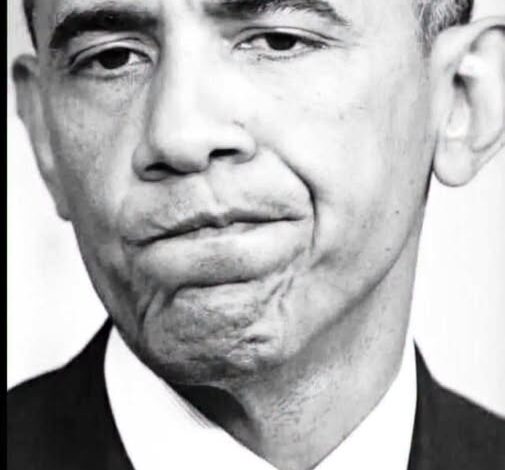
A photograph can show Obama looking serious without revealing when or where it was taken.
An old image from Washington can be paired with new text.
A routine appearance can be transformed into something ominous through carefully chosen wording.
None of those things establishes that a tragedy has occurred.
This is especially important with public figures.
If a major event involving a former U.S. president genuinely occurred, credible reporting would ordinarily contain basic facts.
What happened?
When did it happen?
Where did it happen?
Who confirmed it?
What did Obama’s representatives or other relevant officials say?
Are multiple reputable news organizations independently reporting the same information?
Those questions matter more than how frightening a headline sounds.
Yet social media rewards something very different.
Speed.
Emotion.
Surprise.
People often share alarming posts before opening them because the headline itself produces such a powerful reaction.
One person sends it to a family group chat.
Someone else reposts it.
Another account copies the wording.
Within an hour, thousands of people may have encountered essentially the same claim.
Repetition begins to resemble evidence.
But it isn’t.
Ten thousand accounts repeating one unsupported claim do not create ten thousand sources.
They create one rumor traveling ten thousand times.
Barack Obama’s public profile makes him particularly vulnerable to this cycle.
People have strong feelings about former presidents.
Some admire them.
Some dislike them.
Others simply recognize their names.
That means almost any dramatic claim involving Obama arrives with a built-in audience.
And emotional reactions can override skepticism.
Someone who admires him may click because they’re worried.
Someone who dislikes him may click because they’re curious.
Someone politically neutral may click simply because a former president is involved.
Different motivations.
Same result.
The headline wins.
But the person reading it may walk away with an impression that was never supported by facts.
Sometimes the article behind such a headline concerns something far less dramatic than readers imagined.
Sometimes it recycles an older event.
Sometimes the connection between the headline and article is tenuous.
And sometimes a post provides so little verifiable information that no responsible conclusion can be drawn from it at all.
That’s why the word “confirmed” deserves special attention.
Confirmed by whom?
A family spokesperson?
Obama’s office?
Law enforcement?
A hospital?
A government agency?
A reputable news organization citing identifiable sources?
Or simply another website repeating the same sentence?
Without that answer, “confirmed” is just a word.
The same applies to photographs.
An image of Obama appearing solemn proves only that a photograph exists of him appearing solemn at some moment.
Expressions require context.
A photograph taken at a memorial, speech, funeral, political event, or ordinary conversation can be repurposed years later beneath an unrelated headline.
Once separated from its original context, an authentic photograph can help sell a completely misleading story.
The picture may be real.
The implication may not be.
There is another reason caution matters.
False reports involving death, illness, accidents, arrests, or family tragedies don’t affect only the famous person named in the headline.
They can frighten ordinary people.
Someone sees the post and immediately messages a relative.
Another person believes it and tells coworkers.
Someone posts a tribute before checking whether anything happened.
Within minutes, misinformation acquires emotional momentum.
Corrections rarely travel as quickly.
“Nothing has been verified” simply isn’t as exciting as “SAD NEWS CONFIRMED.”
But boring information has one enormous advantage.
It can be true.
The solution isn’t to distrust everything online.
It’s to slow down at precisely the moment a headline is demanding that you hurry.
Before sharing, search for the actual event.
Look for reporting from multiple established outlets.
Check the publication date.
Read beyond the headline.
Determine whether the article identifies a source.
If it mentions an official statement, find the statement itself when possible.
And pay attention to suspicious wording.
“Fans are devastated.”
“America is praying.”
“Confirmed minutes ago.”
“Sad news from Washington.”
“See more.”
These phrases can accompany legitimate stories, but emotional language is not evidence.
Specific information is.
There is also nothing wrong with saying:
“I don’t know yet.”
Those four words are remarkably useful during breaking news.
They create space between seeing something and believing it.
That space is where verification happens.
Barack Obama has lived much of his adult life surrounded by cameras, political arguments, speculation, admiration, criticism, and rumor.
That attention did not disappear when he left the White House.
If anything, social media has made it easier for his name and image to be detached from context and attached to whatever story is most likely to generate engagement.
That places some responsibility on readers.
Not responsibility for what dishonest publishers create.
Responsibility for whether we help those claims travel.
The next time a headline tells you something devastating has been “confirmed” while mysteriously refusing to tell you exactly what happened, don’t let the unfinished sentence make the decision for you.
Stop.
Look for the missing information.
Ask who confirmed it.
Check the date.
Find another credible source.
Because the most revealing part of a sensational headline is sometimes not what it tells you.
It’s what it deliberately leaves out.
And until there are verified facts establishing what happened, an unfinished headline about Barack Obama should remain exactly that:
An unfinished headline.
Not a tragedy.
Not a confirmation.
And certainly not something worth frightening thousands of people over simply because someone added the words:
“See more.”