The laughter stopped the moment we looked inside the oven.
Only seconds earlier, the kitchen had been alive with the familiar chaos of a holiday gathering. Someone was setting the table, someone else was arguing over whether the stuffing needed more herbs, children darted through the hallway, and conversations overlapped until they blended into one warm, familiar soundtrack.
Then the oven door opened.
Instead of the roasting pan we expected, our attention locked onto something sitting on the oven rack.
At first, none of us could identify it.
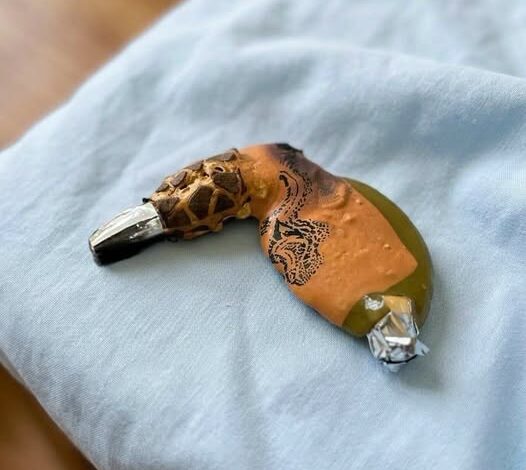
We leaned forward instinctively, shielding our faces from the wave of heat pouring out of the oven. The object was blackened and twisted, but it didn’t look like ordinary burnt food or a forgotten utensil. It looked as though it had melted, collapsed, and then hardened into an entirely different shape.
The longer we stared, the stranger it became.
Its surface was blistered and misshapen, frozen into ripples that suggested intense heat. Running through the center was a narrow strip of metal that somehow remained intact, giving the whole thing an oddly mechanical appearance.
It didn’t seem accidental.
It looked constructed.
For one unsettling moment, our minds raced through impossible explanations.
“What is that?”
“Did someone leave something in there?”
“Has it always been there?”
No one had an answer.
The cheerful sounds filling the rest of the house suddenly felt impossibly distant. Family members were still laughing in the dining room, music continued playing softly in the background, and dishes clinked against the countertop.
Yet inside the kitchen, everything seemed to narrow to that single, unfamiliar object.
Curiosity gradually gave way to unease.
None of us wanted to touch it.
None of us wanted to guess wrong.
Someone finally fetched a pair of oven mitts while another grabbed a long pair of tongs. Carefully, almost cautiously, we lifted the warped object onto a baking tray to examine it more closely.
Even outside the oven, it remained difficult to identify.
The plastic had melted beyond recognition.
Edges had curled inward.
The entire shape had been distorted until almost nothing familiar remained.
Then one person quietly said the words that made everyone freeze.
“I think that’s a lighter.”
We looked again.
Now the clues were impossible to ignore.
The small metal wheel.
The remains of the ignition mechanism.
Fragments of what had once been the plastic body.
Suddenly, the puzzle came together all at once.
Someone, without realizing it, had left a disposable lighter inside the oven.
Perhaps it had slipped from a pocket while putting away cookware.
Perhaps it had been placed there absentmindedly during cleanup.
However it happened, the lighter had remained hidden until the oven reached cooking temperature.
An uncomfortable silence settled over the room.
Our thoughts immediately jumped not to what had happened—but to what easily could have happened.
Disposable lighters are not designed to withstand the intense temperatures inside an operating oven. As they heat up, internal pressure can build, and they may rupture or burst, sending fragments of plastic and metal outward while creating a serious fire hazard.
We imagined opening the oven only moments later.
We imagined someone standing directly in front of the door if the lighter had failed more violently.
We imagined children wandering through the kitchen at exactly the wrong moment.
The possibilities were unsettling enough that no one wanted to finish the sentence aloud.
Eventually, someone made a nervous joke.
Another person laughed.
The laughter sounded forced at first.
Not because anything was funny, but because everyone was trying to release the tension that had settled over the room.
Slowly, conversation returned.
Dinner was finished.
The holiday continued.
To anyone arriving later, nothing seemed unusual.
But something had quietly changed for all of us.
Before that day, preheating the oven had been automatic.
Turn the dial.
Wait for the temperature.
Start cooking.
Now there’s one extra step.
Before every holiday meal, every casserole, every batch of cookies, someone opens the oven and looks inside.
Not because we expect to find another lighter.
Because we’ve learned how easily ordinary routines can hide extraordinary risks.
It’s a habit that takes only a few seconds.
Check for forgotten pans.
Look for plastic cutting boards accidentally stored inside.
Make sure towels, paper packaging, utensils, or anything else that doesn’t belong has been removed before turning on the heat.
Most of the time, the oven is empty.
That’s exactly what we hope to see.
The incident has become one of those family stories that resurfaces every holiday season.
Someone inevitably says, “Remember the lighter?”
Everyone nods.
The details grow a little more dramatic with each retelling, as family stories often do.
But beneath the humor remains genuine gratitude.
Nothing exploded.
No one was injured.
Dinner wasn’t ruined.
We were fortunate enough to discover the problem before it became a tragedy.
Sometimes the biggest safety lessons don’t come from disasters.
They come from the disasters that almost happened.
The close calls.
The moments that leave you replaying different outcomes long after the danger has passed.
Now, every time the oven door swings open before a meal, we pause for one brief inspection.
It’s a tiny ritual born from one unforgettable afternoon.
A reminder that accidents often begin with ordinary oversights—and that a few extra seconds of attention can make all the difference between an ordinary family gathering and a story no one would ever want to tell.