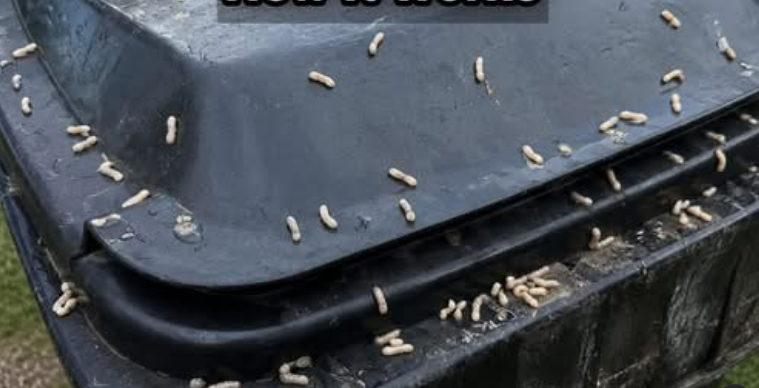
Few household surprises are as unpleasant as opening your trash bin and discovering it crawling with maggots.
Your first reaction is often disgust, followed quickly by one unsettling question:
“How did this happen?”
The answer is usually much simpler—and far less alarming—than many people think.
Maggots are not a sign that your home is dirty or that you’ve done something terribly wrong. They are simply the larval stage of flies. Given the right conditions, flies can locate food waste remarkably quickly, lay their eggs, and disappear long before anyone realizes they’ve been there.
Warm temperatures, moisture, and decomposing organic matter create exactly the environment they need.
A few scraps of raw meat.
Spoiled leftovers.
Food residue leaking from a garbage bag.
An uncovered bin left open for a short time.
To a fly, that’s an ideal nursery.
After the eggs hatch—often within a day in warm weather—the tiny larvae begin feeding on the decaying material. By the time you notice movement inside the bin, the flies responsible are usually long gone, leaving behind dozens or even hundreds of hungry maggots.
As unpleasant as they look, they can usually be eliminated with a thorough cleaning and a few preventive habits.
The first priority is dealing with the infestation safely.
Wear disposable gloves if possible, remove the garbage bag, and tie it securely before placing it in an outdoor waste container for collection. If any loose waste remains in the bin, remove that as well.
One commonly used method for killing maggots is carefully pouring boiling water over them. The heat destroys the larvae quickly and also helps loosen grime clinging to the sides and bottom of the container.
Some people prefer following with a solution of hot water and white vinegar, which can help clean away residue and reduce lingering odors. Afterward, scrub every surface thoroughly—including the bottom, sides, corners, handles, and especially the underside of the lid, where flies may sometimes deposit eggs.
Rinse the bin well and allow it to dry completely before inserting a fresh garbage bag.
Dry bins are less attractive to flies than damp ones.
Once the immediate problem has been solved, prevention becomes much easier than dealing with another infestation.
Always tie garbage bags securely before placing them in the bin.
If you’re discarding raw meat, poultry, seafood, or other food scraps that spoil quickly, consider wrapping them in an extra bag before throwing them away. Double-bagging messy waste helps reduce leaks and limits odors that attract flies.
Keeping the lid tightly closed is equally important.
Even a brief opportunity for flies to enter can be enough for them to lay eggs. If your trash container has a damaged lid that no longer seals properly, replacing or repairing it may prevent future problems.
Regular cleaning also makes a noticeable difference.
Rinsing the bin every few weeks—more often during hot weather—helps remove food residue that may collect even when garbage bags remain intact. Paying attention to cracks, seams, and the underside of the lid ensures there are fewer places where flies can be attracted by lingering odors.
Some homeowners also use simple methods to discourage insects between cleanings.
A light layer of baking soda, salt, or food-grade diatomaceous earth placed in the bottom of a dry outdoor trash bin may help absorb moisture and make the environment less inviting for insects. (Use food-grade diatomaceous earth carefully and avoid breathing the dust.)
Others place citrus peels inside the bin or use cotton balls lightly scented with peppermint, eucalyptus, or citronella essential oils near—but not directly on—food waste. While these scents are not guaranteed to repel flies, many people find they help reduce unpleasant odors and may make the area less attractive to insects.
Perhaps the most effective strategy is reducing how long food waste sits in the bin.
During hot summer weather, taking out garbage more frequently, especially if it contains meat or seafood scraps, can dramatically reduce the likelihood of flies finding an opportunity to lay eggs.
If you compost, keeping food scraps intended for composting in a sealed container until they can be transferred may also help.
The good news is that maggots are a temporary problem.
Remove their food source, clean the container thoroughly, and make it difficult for flies to return, and the infestation usually disappears just as quickly as it appeared.
It may feel like something out of a horror movie the first time you see it, but in reality it’s simply nature taking advantage of the right conditions.
A clean, dry bin with tightly sealed garbage bags offers flies very little opportunity.
With a few consistent habits—wrapping food waste carefully, closing the lid securely, cleaning the bin regularly, and disposing of garbage promptly—you can keep your trash container exactly what it’s supposed to be.
Not a breeding ground for insects.
Just a place for the trash until collection day.