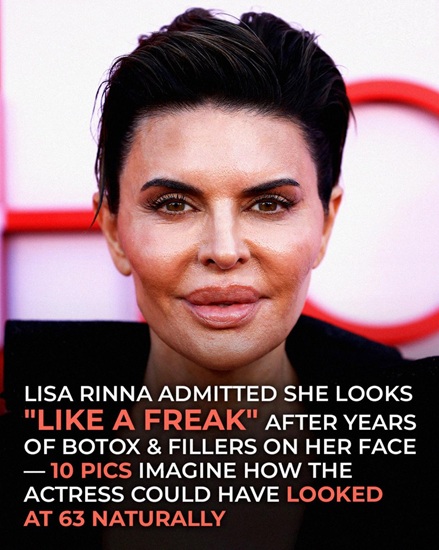
For decades, Lisa Rinna has existed at the center of a uniquely modern celebrity phenomenon: the transformation of a face into public discourse.
Few Hollywood figures have been visually analyzed as intensely, repeatedly, and openly as she has. Yet what makes Rinna particularly fascinating is not simply that her appearance evolved over time — nearly every public figure’s does — but that she chose to engage directly with that scrutiny instead of hiding from it.
In an industry built on illusion, denial, and carefully controlled narratives, Rinna often did the opposite.
She talked.
She joked.
She admitted things.
She reflected publicly on regret, vanity, insecurity, aging, and cosmetic experimentation with a level of openness that made people alternately admire her honesty and criticize her visibility.
And somewhere along the way, she transformed from actress into something more culturally complicated:
a living conversation about beauty itself.
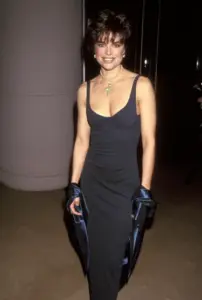
Long before reality television amplified every facial expression into online debate, Lisa Rinna entered Hollywood carrying a look that felt distinctly of its era. During her early years, especially after landing the role of Billie Reed on Days of Our Lives, she embodied the softer glamour associated with late-1980s and early-1990s television beauty.
At the time, soap operas still occupied a peculiar middle ground between fantasy and familiarity. Actors needed to appear glamorous enough for daytime television but emotionally accessible enough for audiences watching from kitchens and living rooms every afternoon. Rinna’s expressive face fit perfectly within that environment.
She had striking features naturally:
large eyes,
high cheek structure,
strong expressions,
and an energy that translated immediately through the camera.
Importantly, her appearance during those years still reflected an era before cosmetic enhancement became aggressively normalized within celebrity culture. Hollywood beauty standards certainly existed, but the visual language of fame had not yet fully entered the hyper-sculpted aesthetic that social media and high-definition photography would later intensify.
In those earlier years, Rinna still looked recognizably human in a way modern celebrity imagery sometimes struggles to preserve.
That relatability mattered.
Audiences connected to her not only because of performance, but because her face communicated emotion vividly. Soap operas depend heavily on exaggerated emotional readability — heartbreak, betrayal, desire, shock — and Rinna’s expressions carried those emotions almost theatrically well.
As the 1990s progressed, however, both Hollywood and celebrity culture began changing rapidly.
Red carpets grew more influential.
Entertainment journalism intensified.
Celebrity photography became more invasive.
Fashion culture merged increasingly with branding.
And alongside all of that, beauty itself became more strategic.
Rinna adapted quickly to the evolving environment. Her iconic short hairstyle became central to her visual identity — sharp, layered, voluminous, instantly recognizable. At a time when many actresses leaned toward softer glamour, the haircut distinguished her aggressively. It framed her face dramatically and amplified the expressiveness audiences already associated with her.
That hairstyle eventually became almost inseparable from her celebrity image itself.
People did not merely recognize Lisa Rinna.
They recognized “the Lisa Rinna look.”
That distinction matters because celebrity identity increasingly depends on visual branding. Stars become culturally memorable not simply through talent, but through instantly identifiable aesthetics:
Farrah Fawcett’s hair,
Marilyn Monroe’s platinum waves,
Cher’s silhouette,
Dolly Parton’s glamour,
or Rinna’s sharp-cut hair and unmistakable lips.

As her visibility expanded beyond soap operas into broader entertainment culture, her marriage to actor Harry Hamlin further elevated public attention surrounding her image. Together they became one of those highly photographed Hollywood couples whose appearances at premieres, award shows, and industry events fed continuously into celebrity media.
And during that period, Rinna’s look evolved again.
The changes were gradual at first:
stronger contouring,
more sculpted makeup,
sharper styling,
more polished symmetry.
But they reflected something larger happening culturally.
By the early 2000s, cosmetic enhancement had begun shifting from whispered industry secret toward semi-public conversation. High-definition photography intensified scrutiny dramatically. Suddenly pores, wrinkles, asymmetry, and facial volume became visible with uncomfortable clarity under digital cameras.
Hollywood responded predictably.
Fillers increased.
Injectables normalized.
Facial procedures became increasingly common even among relatively young performers.

And Lisa Rinna became one of the rare celebrities willing to acknowledge that reality publicly instead of pretending transformation occurred naturally.
The public fascination surrounding her lips eventually became central to her identity. What may initially have begun simply as cosmetic experimentation evolved into one of the most recognizable celebrity features of the era.
Audiences obsessed over them.
Tabloids discussed them constantly.
Interviewers asked about them repeatedly.
Many celebrities would likely have denied or deflected that attention entirely.
Rinna leaned into it.
That response fundamentally changed how people perceived her.
Instead of positioning herself as a victim of scrutiny, she treated the conversation almost as collaborative theater between herself and the public. She joked about it, referenced it directly, and eventually transformed the fascination into business branding through beauty ventures tied explicitly to her lips.
Psychologically, that strategy was extremely effective.
By acknowledging public curiosity openly, she removed much of the shame and secrecy surrounding cosmetic procedures while simultaneously maintaining control over the narrative herself.
Yet beneath the humor and branding existed genuine vulnerability too.
In later interviews, Rinna spoke candidly about regretting certain cosmetic choices and feeling at times that procedures had altered her appearance beyond what felt emotionally comfortable. She admitted that insecurity and beauty pressure influenced some decisions and reflected openly on the emotional complexity of changing one’s face publicly.
That honesty resonated with many women because it exposed something celebrity culture often hides:
cosmetic enhancement does not automatically erase insecurity.
In fact, it can sometimes intensify it.
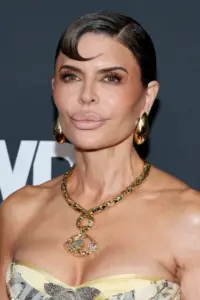
Hollywood frequently sells aesthetic procedures as simple confidence solutions. But many people who undergo cosmetic changes describe a far more emotionally complicated experience involving expectation, self-perception, public reaction, aging anxiety, and shifting identity.
Rinna’s willingness to admit dissatisfaction at times made her story feel more human than aspirational.
She did not present herself as someone who “perfected” beauty.
She presented herself as someone navigating it publicly in real time.
That distinction is important.
By the time she joined The Real Housewives of Beverly Hills, her appearance had become inseparable from larger conversations surrounding aging, fame, cosmetic work, and female visibility in entertainment.
Reality television amplified everything.
Unlike scripted television, reality TV exposes performers to relentless visual observation under uncontrolled conditions:
close-ups,
harsh lighting,
candid reactions,
high-definition filming,
internet screenshots.
Every facial movement becomes analyzable content.
And social media intensified that scrutiny exponentially.
Viewers no longer simply watched celebrities.
They dissected them.
Instagram and TikTok culture accelerated this phenomenon further. Side-by-side comparison videos, cosmetic speculation threads, AI-enhanced imagery, and digital “before-and-after” edits transformed celebrity faces into ongoing public projects open for collective interpretation.
Rinna remained central to those conversations partly because she refused to disappear from them.
Some viewers admired her confidence.
Others criticized what they perceived as excessive enhancement.
Many projected their own anxieties about aging, beauty, and self-worth onto her image.
But through all of it, she continued engaging openly rather than retreating into silence.
That visibility itself became part of her cultural role.
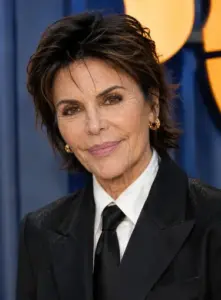
And perhaps the most fascinating aspect of Lisa Rinna’s story is how often discussions surrounding her appearance reveal more about society than about her personally.
Because the public obsession with celebrity transformation is rarely only about aesthetics.
It is about fear.
Fear of aging.
Fear of irrelevance.
Fear of losing attractiveness.
Fear of becoming invisible.
Women in Hollywood face those pressures especially aggressively because female celebrity has historically been tied heavily to youth and appearance. Aging publicly becomes almost combative under those conditions. Every wrinkle generates headlines. Every cosmetic procedure generates criticism. Every “natural” face becomes either celebrated or mocked depending on shifting internet sentiment.
There is effectively no winning.
Rinna’s response seems to have been:
then stop pretending the game is fair.
Her openness stripped away some of the illusion surrounding celebrity beauty. Instead of insisting perfection emerged effortlessly, she acknowledged maintenance, experimentation, mistakes, and evolution openly.
That transparency made her simultaneously more criticized and more relatable.
Even discussions imagining what she “would look like naturally” through AI-generated or digitally altered interpretations reveal this cultural obsession clearly. Such images are fundamentally speculative fantasy — projections of what audiences imagine authenticity should resemble. Yet people consume them eagerly because they symbolize something emotionally deeper:
curiosity about identity underneath performance.
But perhaps that search misses the larger truth entirely.
Because Lisa Rinna’s public identity has never actually depended on preserving one fixed appearance.
It depends on evolution itself.
Unlike celebrities who desperately chase the illusion of timelessness, Rinna’s career has unfolded through visible transformation. Every era of her life reflects changing beauty standards, changing technology, changing media culture, and changing personal priorities.
She adapted publicly instead of pretending not to change at all.
That may ultimately explain why she remains culturally relevant decades after her soap opera beginnings.
Not because she avoided scrutiny.
Because she survived it visibly.
And in a celebrity culture increasingly built around artificial perfection, there is something strangely compelling about a public figure willing to admit openly that beauty can be confusing, empowering, commercialized, emotional, risky, performative, and deeply personal all at once.
Lisa Rinna’s story is therefore not really about lips, fillers, or cosmetic procedures alone.
It is about what happens when a woman spends decades aging in front of cameras while refusing to surrender ownership of the conversation surrounding her own face.
And perhaps that honesty —
messy,
commercial,
self-aware,
contradictory,
human —
is ultimately what has kept audiences watching her for so long.