It often starts so subtly that you barely notice.
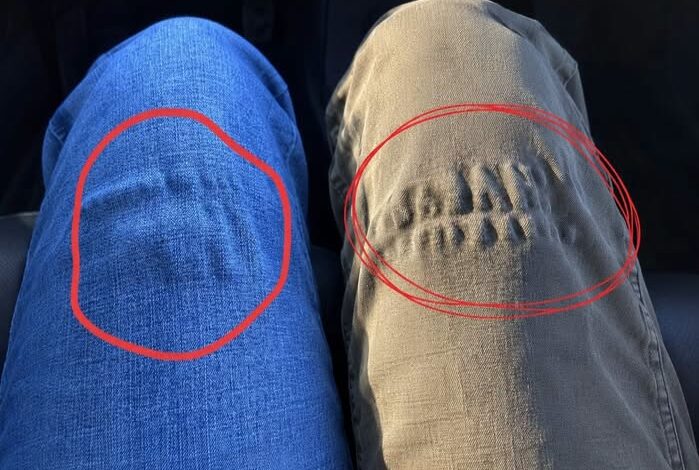
A favorite pair of jeans comes out of the wash looking just a little different. The seams no longer lie perfectly straight. Strange ripples appear along the thighs. Wrinkles seem permanently pressed into the fabric, refusing to smooth out no matter how many times you wear them.
At first, it’s easy to blame poor manufacturing or simple wear and tear.
But in many cases, the real culprit is something happening every time the jeans go through the laundry.
Modern denim is far more complex than it appears.
While classic jeans were once made almost entirely from sturdy cotton, many of today’s styles include a small percentage of elastane—also known as spandex or Lycra. Even two or three percent of this stretch fiber can dramatically change how jeans fit, allowing them to move with your body while maintaining a slimmer, more comfortable shape.
That flexibility comes with a trade-off.
Elastane is remarkably resilient during everyday wear, but it is far less tolerant of repeated exposure to excessive heat and harsh washing conditions.
Every trip through a hot wash or an overheated dryer places stress on those delicate elastic fibers.
At first, the damage is almost invisible.
Gradually, however, the elastane begins to lose its ability to stretch and recover. As its structure weakens, it can no longer support the surrounding cotton in the way it was designed to.
That’s when the familiar distortions begin to appear.
The cotton and stretch fibers no longer shrink or relax evenly.
Instead, different parts of the fabric begin responding differently to washing and drying. Cotton naturally contracts when exposed to heat, while damaged elastane loses its elasticity altogether. The result is uneven tension throughout the garment.
Seams begin to twist.
Legs develop permanent-looking waves.
The fabric puckers around stitched areas.
What once looked crisp and smooth slowly takes on a warped appearance that many people mistake for simple aging.
Unfortunately, once elastane fibers have been permanently damaged by heat, they rarely recover their original performance.
The changes are often irreversible.
Fortunately, preventing the problem is much easier than trying to fix it.
The first step is surprisingly simple.
Wash jeans in cold water whenever possible.
Cold water places far less stress on both cotton and stretch fibers while still effectively removing everyday dirt and most household stains. It also helps preserve dye, reducing the fading that often accompanies repeated hot washes.
Choosing a gentle wash cycle can make an equally important difference.
Aggressive cycles create additional twisting, stretching, and friction inside the washing machine. Over time, that repeated mechanical stress weakens fibers and encourages the uneven distortion that causes jeans to lose their original shape.
Turning jeans inside out before washing offers another layer of protection.
This simple habit reduces abrasion on the outer surface, helping preserve both the color and texture of the denim while minimizing wear along visible seams.
It’s also worth resisting the temptation to overload the washing machine.
When jeans become tightly packed together with towels, sweatshirts, and other heavy clothing, they are forced into constant twisting and compression throughout the cycle. Giving garments enough room to move freely allows them to wash more gently and emerge with fewer creases and less structural stress.
Drying may be even more important than washing.
High dryer temperatures are among the biggest enemies of stretch denim.
Excessive heat accelerates the breakdown of elastane, shortening the lifespan of the very fibers responsible for keeping jeans comfortable and well-fitting.
Whenever practical, air drying is the gentlest option.
Hanging jeans or laying them flat allows the fibers to relax naturally without being subjected to intense heat. If using a dryer is more convenient, selecting a low-heat or delicate setting is far kinder to the fabric.
Many clothing experts also recommend removing jeans while they are still slightly damp.
Allowing them to finish drying naturally helps the fabric settle more evenly, reducing the chance of wrinkles becoming permanently set and helping the seams retain their intended shape.
Another often-overlooked tip is simply washing jeans less frequently.
Unless they are visibly dirty or carrying odors, many denim manufacturers suggest wearing jeans multiple times before laundering them. Spot cleaning small stains and airing them out between wears can significantly reduce unnecessary washing, extending both the appearance and lifespan of the fabric.
Treating jeans this way may seem like extra effort at first.
In reality, it’s simply recognizing what modern denim has become.
Although jeans are often viewed as rugged workwear capable of surviving anything, today’s stretch denim behaves much more like a carefully tailored garment. Its comfort depends on delicate fibers that reward gentle care and deteriorate more quickly under harsh conditions.
A few small adjustments can make a noticeable difference.
Cold water instead of hot.
Gentle cycles instead of aggressive ones.
Inside out before washing.
Plenty of space inside the machine.
Low heat—or better yet, air drying.
These simple habits help preserve the smooth lines, comfortable stretch, and flattering fit that made your favorite jeans worth buying in the first place.
In the end, those mysterious ripples and twisting seams aren’t random imperfections.
They’re signs of fibers pushed beyond their limits.
By treating modern denim with a little more patience and a little less heat, you can keep your jeans looking better, fitting more comfortably, and lasting far longer—proof that sometimes the smallest changes in your laundry routine make the biggest difference.