DREAM HOME TURNS INTO A LIVING NIGHTMARE AS ADOPTED CHILDS SHOCKING BEHAVIOR JUST HOURS AFTER ARRIVAL LEAVES A LOVING COUPLE IN TOTAL TERROR AND POLICE AT THE DOOR

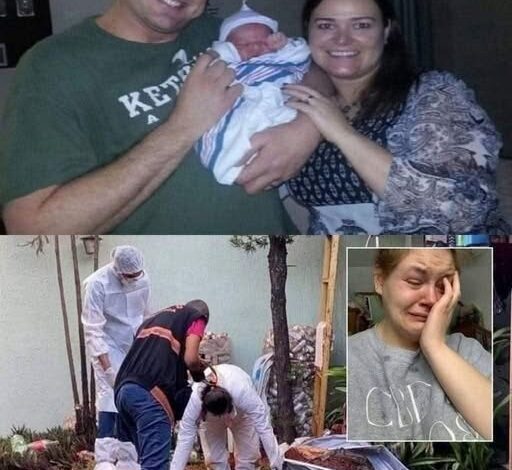
When they welcomed Leo into their home, they believed they had prepared for every challenge.
They had attended parenting classes, completed stacks of paperwork, participated in interviews, and spent months learning about adoption and child development. Their home was safe, their routines were stable, and their commitment to becoming parents never wavered.
On paper, they seemed ready.
But there was one lesson no checklist, handbook, or training session could fully teach.
Trauma doesn’t always announce itself.
Sometimes it appears without warning, surfacing in moments that seem ordinary to everyone except the child living through them.
Leo had experienced more in his short life than most adults could imagine. Although he couldn’t always put those experiences into words, his body remembered. Certain sounds, situations, or unexpected changes could trigger overwhelming fear, even when no real danger existed.
To the outside world, these moments might have looked like tantrums or defiance.
To trauma-informed professionals, they often reflected something very different.
A nervous system still operating in survival mode.
When children experience significant adversity early in life, their brains and bodies can become highly sensitive to perceived threats. Long after they are physically safe, they may continue reacting as though danger is just around the corner. What looks like anger, withdrawal, or aggression is sometimes an expression of fear that has never had the chance to heal.
That reality became painfully clear one afternoon when Leo experienced an intense emotional crisis that escalated beyond what his adoptive parents knew how to manage.
In the confusion and concern for everyone’s safety, emergency services were called.
When the immediate crisis ended and the house finally grew quiet again, the couple found themselves sitting in stunned silence.
Neither of them had imagined that parenthood would begin this way.
The days that followed were filled with difficult conversations.
There were urgent appointments with mental health professionals who specialized in childhood trauma.
Meetings with the adoption agency to review support plans and available resources.
Long discussions about how to keep everyone safe during future crises while continuing to build the trust Leo desperately needed.
It was emotionally exhausting.
Questions they had never expected to ask suddenly became part of everyday life.
How could they recognize early warning signs before a crisis developed?
Which situations were likely to overwhelm Leo?
How could they respond in ways that helped him feel secure instead of unintentionally increasing his fear?
The answers didn’t come overnight.
They emerged gradually through guidance from therapists, careful observation, and a willingness to learn from each setback rather than view it as failure.
One of the hardest lessons was accepting that love, while essential, is not always sufficient on its own.
Friends and relatives who had enthusiastically encouraged them with reassuring phrases like, “Love will fix everything,” often struggled to understand the complexity of what they were facing.
Some didn’t know what to say.
Others quietly stepped back, unsure how to help.
The couple discovered that parenting a child who has experienced trauma requires more than affection and good intentions.
It calls for specialized knowledge, extraordinary patience, consistent routines, and access to appropriate professional support.
Slowly, the household began to change.
Therapy became part of the family’s weekly rhythm.
Predictable schedules helped reduce uncertainty.
Visual routines, calming strategies, and carefully developed safety plans gave everyone greater confidence during difficult moments.
Most importantly, Leo began learning that the adults around him would remain present, even when his emotions felt overwhelming.
Progress was rarely straightforward.
There were setbacks.
Unexpected triggers.
Difficult days that left everyone emotionally drained.
But there were also quiet victories that might have gone unnoticed by anyone outside the family.
A shorter recovery after a frightening moment.
A hug offered without hesitation.
A bedtime that no longer ended in panic.
A smile that lingered just a little longer.
Each small step represented something much larger.
Trust.
The foundation that trauma so often damages and healing slowly rebuilds.
The family also learned the importance of setting healthy boundaries—not as punishment, but as protection for everyone involved. Clear expectations and consistent responses created an environment where Leo could begin understanding that safety and structure could exist together.
Over time, those boundaries became another form of reassurance.
They communicated that the adults were capable of keeping everyone safe, including him.
Perhaps the greatest transformation occurred not in Leo alone, but within the family as a whole.
Their understanding of adoption became deeper and more realistic.
They stopped measuring success by the absence of challenges and started recognizing growth in resilience, connection, and the willingness to keep showing up on difficult days.
They learned that healing isn’t a straight path.
It unfolds through countless ordinary moments of consistency, compassion, and perseverance.
Adoption, they realized, wasn’t the final chapter of a story with a happy ending.
It was the beginning of a relationship shaped by patience, trust, and continuous learning.
Like many adoptive families, they discovered that the journey would include joy alongside heartbreak, hope alongside uncertainty, and progress alongside setbacks.
None of that meant they had failed.
It meant they were living the reality of parenting a child whose earliest experiences had left invisible wounds.
With the right support, those wounds could begin to heal.
Not all at once.
Not perfectly.
But little by little.
Their story never became a fairy tale where every problem disappeared.
Instead, it became something quieter, stronger, and perhaps more meaningful.
A family choosing one another again and again.
A child slowly discovering that safety could become familiar.
And parents learning that courage isn’t found in having all the answers—it grows through the decision to remain present, seek help when it’s needed, and continue building trust one day at a time.
In the end, they came to understand a simple but powerful truth.
Adoption is not the finish line of a long process.
For many families, it is where the real journey begins.