Dennis Rush, known for his roles in Man of a Thousand Faces and The Andy Griffith Show, has died at 74 –

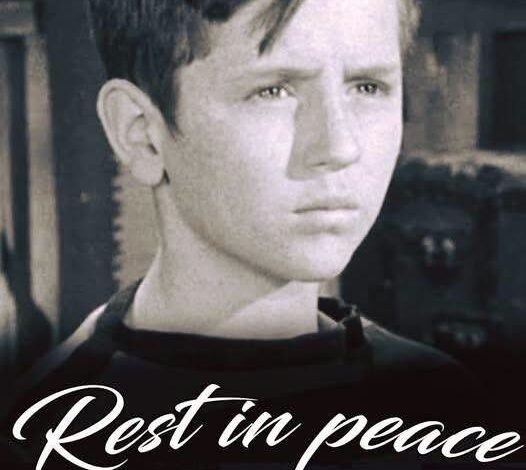
For many child actors, the end of a beloved television role marks the beginning of a lifelong struggle to stay in the spotlight. Fame fades, opportunities disappear, and the pressure to recapture yesterday’s success can become overwhelming. But Dennis Rush chose a remarkably different path. Instead of chasing another moment of celebrity, he quietly stepped away and built a life defined not by applause, but by purpose.
When his time in Mayberry came to an end, Dennis didn’t spend years trying to recreate the magic of his childhood career. He understood something that many performers spend decades trying to learn: a meaningful life isn’t measured by the number of cameras pointed your way. It’s measured by the people you love, the values you live by, and the character you display when no one is watching.
Leaving Hollywood wasn’t an act of surrender.
It was a conscious decision to write the next chapter on his own terms.
Far from the bustling soundstages and relentless auditions, Dennis found what so many people search for but few truly discover—peace. He traded the uncertainty of the entertainment industry for something steadier, choosing a future rooted in faith, family, and genuine human connection. The bright lights that had once defined his early years gave way to the quiet comfort of ordinary life, and he embraced that transition with remarkable grace.
San Diego became more than just a place to live.
It became home.
There, Dennis wasn’t introduced as a former television star or recognized for an old credit on a casting sheet. He became the kind of person every neighborhood treasures—the familiar face who always offered a friendly wave, the dependable friend who showed up when someone needed help, and the neighbor whose kindness was woven into everyday life rather than performed for recognition.
Those who knew him away from Hollywood often saw something audiences never could.
His generosity wasn’t reserved for special occasions.
His compassion didn’t require an audience.
The qualities that made him admirable were the same ones he carried into ordinary conversations, quiet acts of service, and lasting friendships. Fame had never become the center of his identity. Instead, he built a reputation based on humility, reliability, and a sincere concern for the people around him.
Years passed, and Dennis remained largely out of the public eye.
Then, every so often, he accepted invitations to reunions and fan conventions celebrating The Andy Griffith Show and the timeless charm of Mayberry.
What happened at those gatherings surprised him every time.
Children who had once watched him on television had grown into adults with families of their own. They waited patiently for the chance to shake his hand, share a memory, or simply thank him.
Many told him that those gentle episodes had become treasured parts of their childhoods. They spoke about afternoons spent watching reruns with parents or grandparents, about simpler times when Mayberry represented kindness, honesty, and community. Some admitted they still turned to those episodes whenever life felt overwhelming because the stories reminded them of a world where decency always mattered.
For Dennis, those conversations were deeply moving.
The scenes he had filmed as a young actor had seemed ordinary at the time—just another day on a television set. Yet decades later, complete strangers were telling him that those moments had become cherished family traditions and lasting sources of comfort.
It was a legacy he had never expected.
Instead of allowing that admiration to inflate his ego, Dennis accepted it with quiet humility.
He listened more than he spoke.
He thanked fans sincerely for remembering him.
He never acted as though their appreciation was something he deserved automatically.
If anything, he seemed genuinely amazed that such brief appearances could leave such a lasting impression on people’s lives.
That humility became one of his defining qualities.
Even as age brought new challenges, Dennis continued to carry himself with the same quiet dignity that had characterized the rest of his life. Eventually, illness began to narrow the world that had once felt so open. The routines became smaller. The public appearances became fewer. Everyday tasks demanded more strength than they once had.
Yet those who knew him best often remarked that his spirit remained remarkably unchanged.
He faced difficult days without bitterness.
He accepted life’s changes with quiet courage.
And he continued to value the people around him far more than any memories of celebrity.
Looking back, it becomes clear that Dennis Rush’s greatest achievement wasn’t simply appearing in one of America’s most beloved television series.
Many actors have memorable roles.
Far fewer build memorable lives.
Dennis accomplished both.
Mayberry introduced him to millions of viewers and gave him a place in television history. It ensured that generations would continue to recognize his face and remember the warmth of the stories he helped tell.
But the years that followed revealed something even more meaningful.
Away from the cameras, without scripts, applause, or studio lights, he chose kindness over recognition, humility over status, and purpose over fame. He proved that the most important role anyone can play is simply being a good human being.
In the end, Dennis Rush was never defined by the name of a character listed on a production schedule or remembered only because of the television town where audiences first met him.
He was remembered because of the life he lived after the cameras stopped rolling.
Mayberry made him familiar to millions.
His integrity, his quiet compassion, and the choices he made long after the spotlight faded made him unforgettable.