This Boy Survived War & Worked as Forklift Truck Driver — He Became World-Famous Actor and Fell in Love at 70

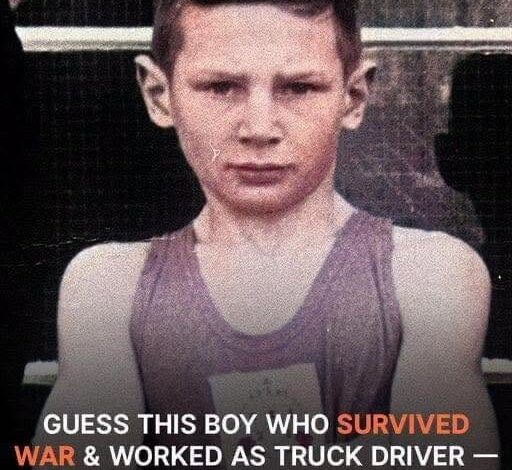
Liam Neeson’s life has never followed the predictable path of a Hollywood fairy tale. Long before he became one of cinema’s most recognizable leading men, he was a boy growing up in Northern Ireland during one of the country’s most turbulent periods, where uncertainty and violence were woven into everyday life. Those early experiences shaped a quiet resilience that would later define not only his career but also the deeply personal challenges he would face far from the movie screen.
Born in Ballymena, County Antrim, Neeson spent his childhood during The Troubles, a decades-long conflict that touched nearly every community in Northern Ireland. While he has often described his upbringing as loving and grounded, the broader atmosphere around him was marked by political tension, violence, and loss. Living in such an environment instilled an early awareness of how fragile life could be and how quickly ordinary moments could change.
As a young man, Neeson found discipline through boxing.
He competed as an amateur boxer for several years, learning lessons about perseverance, self-control, and determination. Although he eventually stepped away from the sport, the confidence and resilience it fostered remained with him throughout his life. Before acting became his profession, he worked a variety of jobs—including as a forklift operator and teacher—while searching for a path that truly inspired him.
That path ultimately led him to the stage.
His commanding presence and quiet intensity soon attracted attention, opening the door to film roles that showcased his remarkable range. Performances in films such as Schindler’s List, Michael Collins, Rob Roy, and later the Taken series established him as one of Hollywood’s most respected actors, capable of portraying both vulnerability and strength with equal conviction.
Yet behind the success stood the relationship that would become the center of his personal life.
In the early 1990s, Neeson met actress Natasha Richardson while they were performing together in the Broadway revival of Anna Christie. Their connection was immediate, and what began as a professional collaboration soon developed into a lasting partnership built on mutual admiration, humor, and unwavering support.
The couple married in 1994 and welcomed two sons, Micheál and Daniel.
Friends and colleagues often described their marriage as deeply affectionate and remarkably grounded despite the demands of international film careers. Family remained their priority, and Neeson has frequently spoken about how Natasha brought warmth, balance, and joy to his life.
Then, in March 2009, everything changed.
While taking a beginner ski lesson at a resort in Quebec, Natasha Richardson suffered what initially appeared to be a minor fall. She declined immediate medical treatment and seemed well enough to continue her day. Hours later, however, her condition deteriorated dramatically due to a severe head injury caused by an epidural hematoma.
She was rushed to the hospital, but the injury proved irreversible.
Faced with devastating medical reality, Neeson honored a promise the couple had once made to each other: if either of them were ever in a situation with no hope of recovery, they would not be kept alive by artificial means. Natasha died at the age of 45.
In the years since, Neeson has spoken with quiet honesty about the profound grief that followed.
He has acknowledged that losing his wife left an emptiness that words could scarcely describe. Like many people navigating bereavement, he searched for ways to cope with overwhelming sorrow. At times, he has admitted, that included drinking more heavily than was healthy before eventually choosing a different path forward.
Rather than allowing grief to define the rest of his life, he focused on the responsibility that mattered most.
Being a father.
Raising Micheál and Daniel became his greatest priority. Together, the family found ways to preserve Natasha’s memory while continuing to build lives filled with purpose and love.
As adults, both sons forged their own paths.
Micheál followed his parents into acting, later choosing to honor his mother’s legacy by adopting the surname Richardson professionally. Daniel pursued entrepreneurship, launching an environmentally conscious fashion and lifestyle company that reflected his own passions and values.
Watching his sons grow into compassionate, accomplished men became one of Neeson’s greatest sources of pride.
He has often suggested that their kindness, resilience, and integrity are among the most meaningful legacies Natasha left behind.
Although Neeson has occasionally spoken about companionship in the years following his wife’s death, he has generally kept his private life out of the public eye. In interviews, he has reflected on moments when he developed feelings for someone unavailable, choosing not to pursue a relationship out of respect for existing commitments.
Rather than becoming tabloid drama, those reflections revealed something much simpler.
That the capacity to love does not disappear after profound loss.
Sometimes it survives quietly.
Sometimes it asks nothing in return.
Sometimes the most loving choice is knowing when to let someone remain exactly where they are.
That quiet restraint speaks to the dignity with which Neeson has approached much of his personal life.
Despite decades in the spotlight, he has rarely invited public attention into his grief, preferring instead to let his work, his family, and his actions speak for themselves.
His story is not one of effortless healing or neatly resolved sorrow.
It is the story of someone who discovered that grief and gratitude can exist side by side—that a life forever changed by loss can still contain purpose, laughter, meaningful work, and enduring love.
Today, audiences continue to admire Liam Neeson not only for the unforgettable characters he has portrayed but also for the quiet strength he has shown beyond the screen. His journey reminds us that resilience is not about forgetting those we have lost. It is about carrying their memory forward in the choices we make, the people we love, and the lives we continue to build.
Some stories do not end with perfect closure.
They continue one day at a time.
And perhaps that is the most honest kind of courage there is: choosing love again and again, even when it means accepting that sometimes the deepest expression of love is simply learning how to let go.