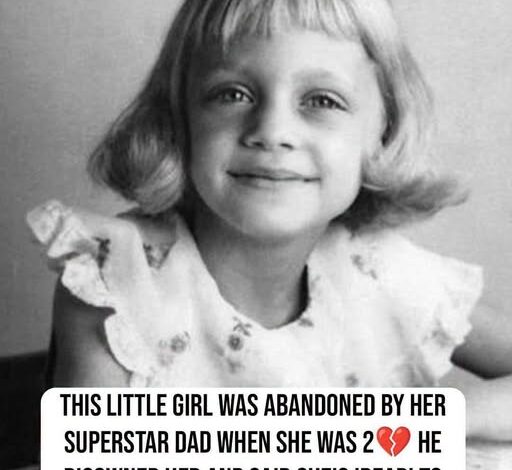
From the outside, their romance looked like the kind of story Hollywood loves to tell.
They met by chance in the first-class cabin of a flight, each at the height of a rapidly rising career. Success surrounded them, the chemistry was immediate, and before long they had convinced themselves that fate had introduced them for a reason. Friends described them as inseparable. The future seemed to unfold effortlessly, carrying them toward marriage, family, and everything they imagined happiness would be.
The wedding came quickly.
So did life’s first unimaginable test.
When their first child arrived, joy was eclipsed by fear as the newborn faced a critical medical crisis. Long nights in the hospital replaced the carefree dreams of newlywed life. Every prayer, every hopeful update from doctors, every small sign of improvement reminded them how fragile everything really was.
Together, they endured those terrifying weeks.
Together, they celebrated when their child finally came home.
Not long afterward, they welcomed a daughter, and from the outside it appeared they had survived the hardest challenge any young family could face. They had beautiful children, successful careers, and a life many people admired.
But the strongest-looking families sometimes carry the quietest fractures.
The differences between them weren’t loud at first.
They emerged in conversations left unfinished, expectations never fully shared, and two very different understandings of what marriage required. One partner believed commitment meant choosing each other every day, regardless of changing circumstances. The other viewed love as something more fluid—something that could evolve, fade, or lead elsewhere without necessarily betraying the past.
Neither perspective announced itself overnight.
Instead, the distance between them grew slowly, hidden beneath busy schedules, public appearances, and the demands of raising children while living in the spotlight.
Eventually, what had once felt unshakable could no longer be held together.
Their marriage ended.
Divorce rarely belongs to a single moment.
More often, it is the final page of a story written through countless small disappointments, misunderstandings, and decisions that accumulate over time until there is no longer enough trust left to bridge the distance.
Life, however, did not stop.
New relationships began.
New routines formed.
And one relationship, in particular, gradually reshaped the emotional landscape of the family.
When she found love again with a fellow actor, it wasn’t merely a new romance. It became the beginning of a new home. He wasn’t trying to replace anyone. He simply showed up—day after day, year after year.
He attended school events.
He celebrated birthdays.
He helped with homework.
He listened after difficult days.
He remained present.
Children rarely define parenthood through biology alone.
They remember consistency.
Who answered the late-night phone call.
Who stayed beside them when they were frightened.
Who kept returning, even when life became complicated.
Slowly, almost imperceptibly, their understanding of the word “Dad” expanded to include the man who had become part of their everyday lives.
It wasn’t a rejection born overnight.
It was the result of years spent building trust one ordinary moment at a time.
For a long while, those emotions remained private.
Then came Father’s Day.
A single social media post.
A heartfelt caption expressing gratitude to the man who had helped raise them.
What might have remained an intimate family tribute instantly became national conversation.
Within hours, headlines appeared everywhere.
Some readers viewed the message as a touching acknowledgment of the person who had consistently been there throughout their childhood.
Others saw it as a painful public dismissal of their biological father, who insisted he had never willingly abandoned his children and had instead been kept at a distance by circumstances beyond his control.
The internet quickly did what it often does.
It demanded that one version of the story be declared true.
One parent became the hero.
The other became the villain.
Reality, however, is rarely so simple.
Families are complicated.
Relationships evolve differently for every child.
Two people can experience the same years together and remember them in profoundly different ways. One person may remember every effort they made to stay connected. Another may remember only the empty chair at birthdays, graduations, or family dinners.
Memory doesn’t always divide neatly into right and wrong.
It divides into lived experience.
That is why stories like theirs continue to resonate.
They force us to confront difficult questions with no universal answers.
What makes someone a parent?
Is it biology?
Presence?
Sacrifice?
Time?
Can more than one person occupy that role honestly?
And what happens when love for one parental figure feels, to someone else, like rejection?
There may never be a single answer.
What remains clear is that families are shaped not only by the people who bring children into the world, but also by those who choose, day after day, to help guide them through it.
Sometimes those roles overlap.
Sometimes they conflict.
Sometimes they leave lasting wounds that no public statement can fully explain.
In the end, the headlines faded, but the family continued living with the realities behind them.
The children honored the relationships that had given them security.
The adults carried their own versions of what had happened.
And somewhere between those competing narratives lies a truth that many families quietly understand: love can both heal and hurt, unite and divide, sometimes all at once.
Perhaps the greatest act of courage is not insisting that everyone remembers the past the same way, but allowing space for each person’s experience to be heard. Families are rarely defined by perfect endings. More often, they endure through imperfect people doing their best to love, forgive, and keep moving forward—even when the story they share is far more complicated than anyone outside it will ever fully understand.