The first reports sounded chaotic and incomplete, the way mass violence often does in its earliest moments.
Gunfire.
Multiple scenes.
A mosque surrounded by police vehicles.
Families rushing away carrying children while helicopters circled overhead.
For several terrible hours, San Diego existed inside uncertainty.
People refreshed news feeds obsessively, trying to understand whether the attack was random, targeted, ongoing, or somehow connected to something larger still unfolding beyond the police barricades.
And as details slowly emerged, the story became even more disturbing.
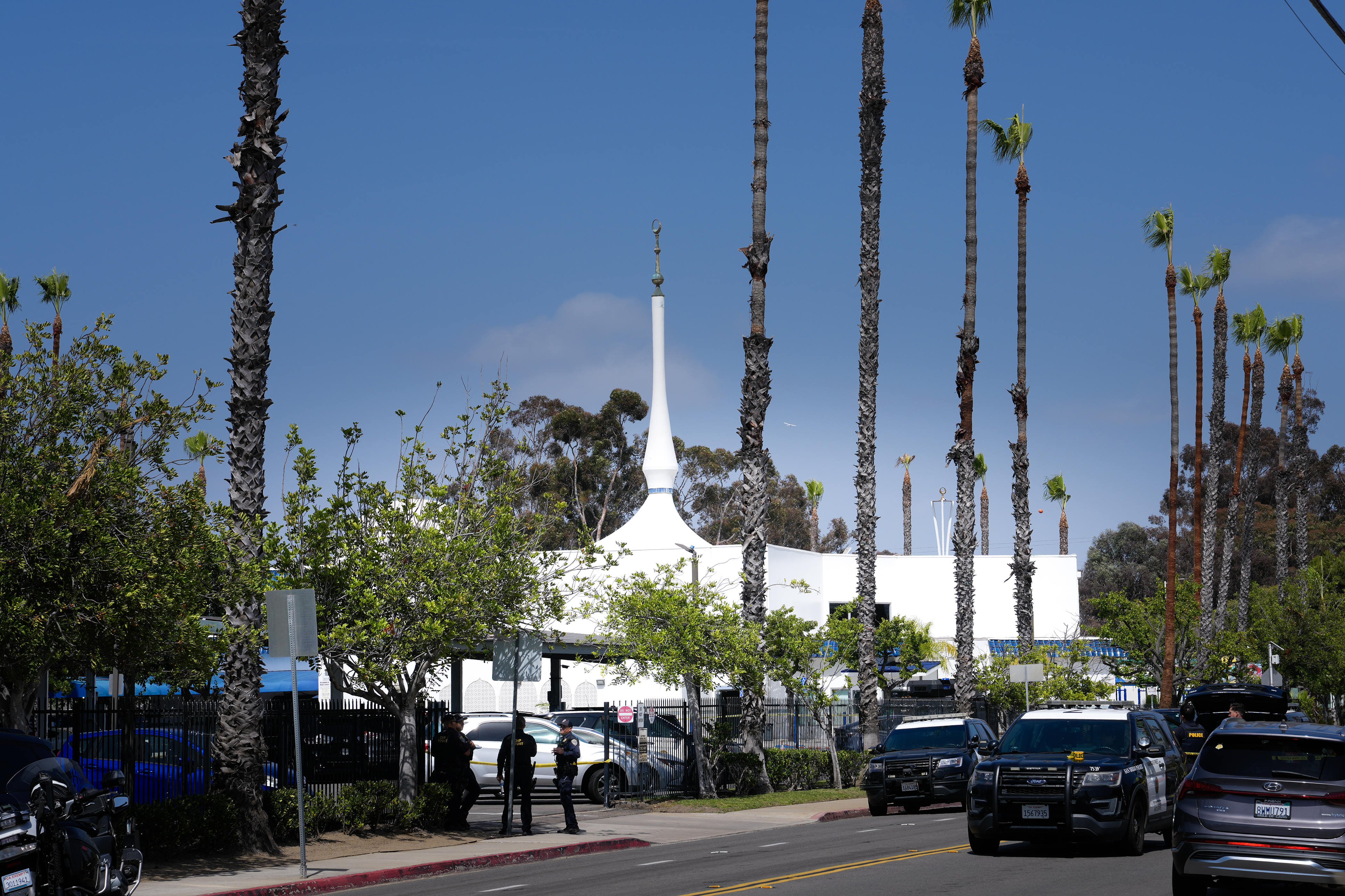
Police vehicles remain outside the Islamic Center of San Diego after the shooting on May 18, 2026 | Source: Getty Images
Because what happened near the Islamic Center of San Diego was not only a shooting.
It was a collision of fear, hatred, isolation, warning signs, and two young lives that now sit permanently beside the devastation they caused.
By Monday evening, authorities had confirmed multiple people were dead.
Others were injured.
Families had been evacuated.
Investigators were working across several crime scenes scattered around the neighborhood near Eckstrom Avenue by the 805 freeway.
Police said the suspects had also fired at a landscaper nearby, though the worker survived unharmed.
That detail matters emotionally because it reinforces something communities struggle with after violence:
how random survival can feel.
One person dies.
Another walks away physically untouched after standing only feet from danger.
And afterward, entire neighborhoods replay tiny moments endlessly:
What if someone left home five minutes later?
What if a child had been outside?
What if the landscaper had turned at the wrong second?
Trauma expands outward like that.
Not only through victims, but through proximity.
Authorities eventually located the two suspects inside a vehicle near the mosque itself.
Police later said they believed the teens died from self-inflicted gunshot wounds.
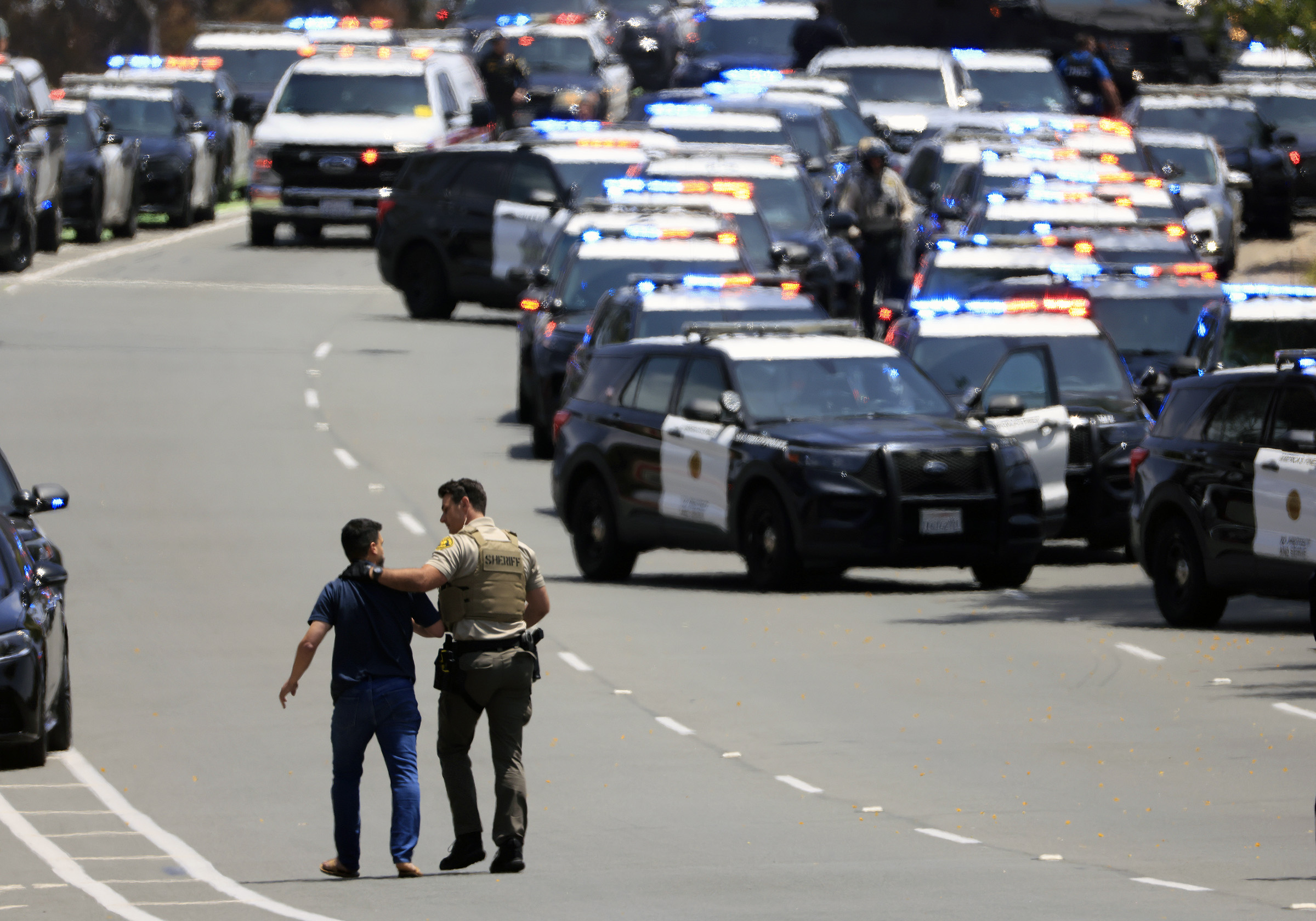
A sheriff’s deputy escorts a person away from the area surrounding the Islamic Center of San Diego on May 18, 2026 | Source: Getty Images
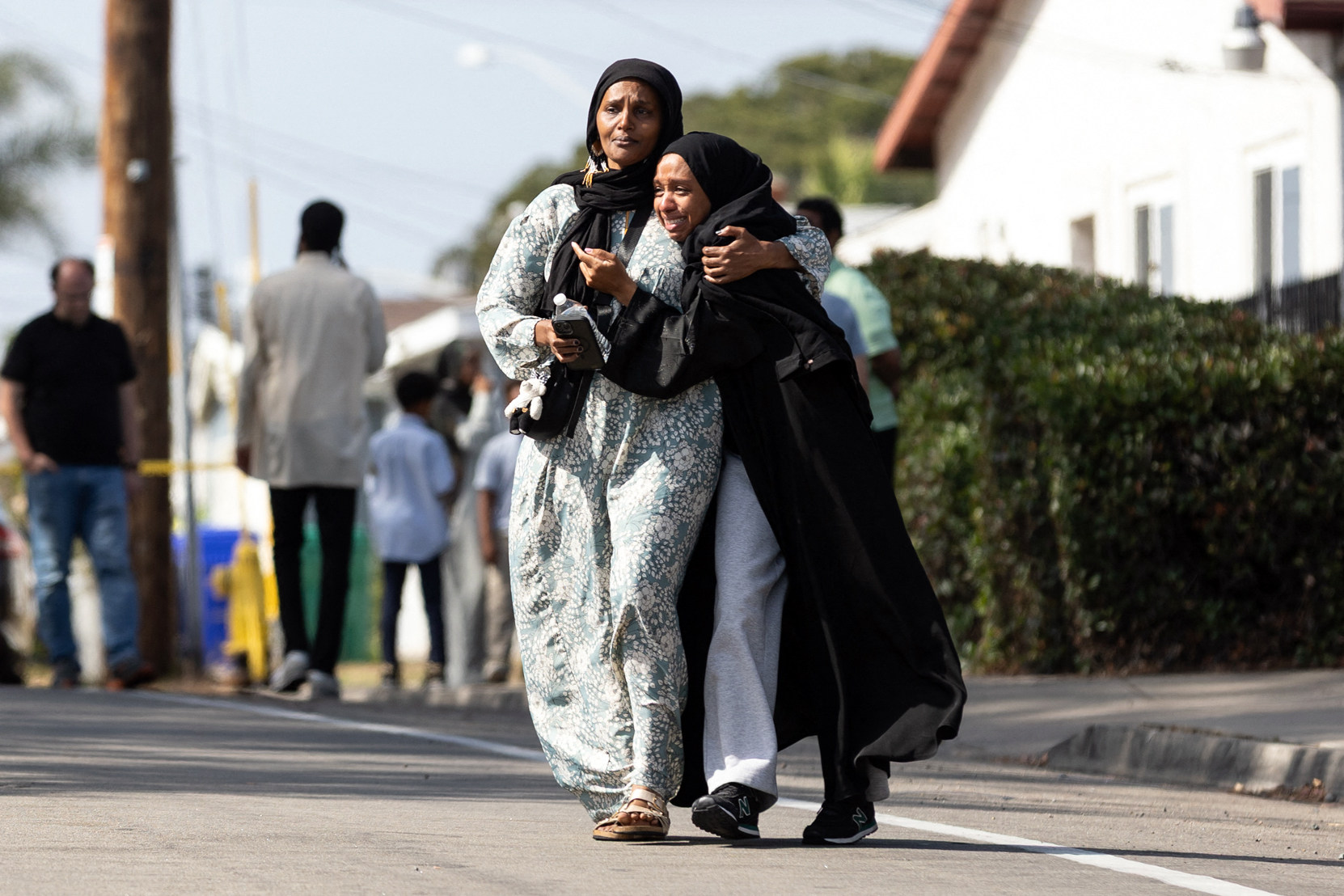
Community members leave a reunification center following the shooting in San Diego on May 18, 2026 | Source: Getty Images
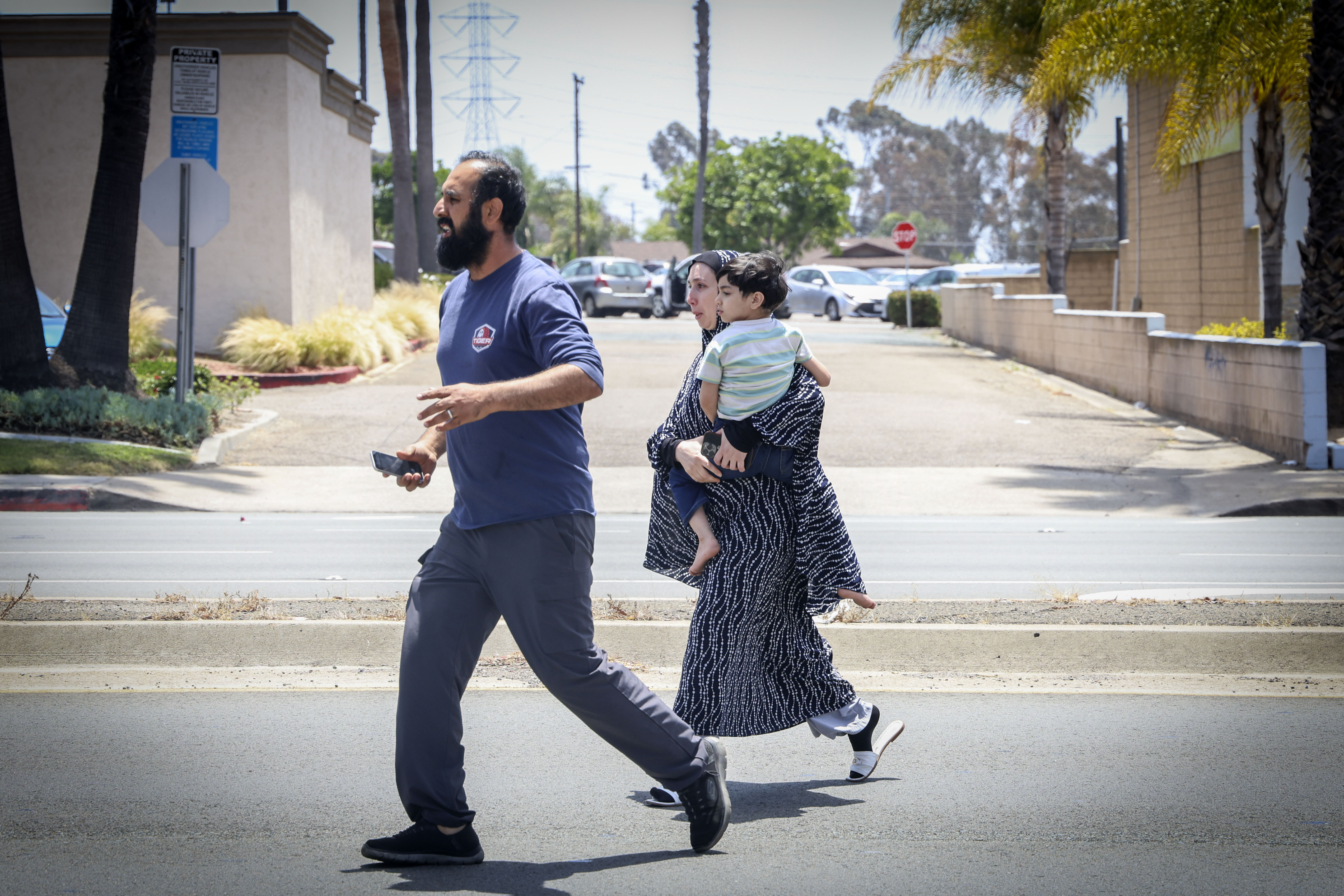
Families evacuate the area surrounding the Islamic Center of San Diego on May 18, 2026 | Source: Getty Images
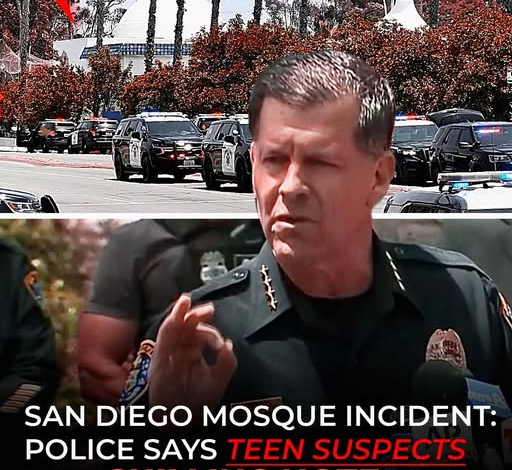
“No officers involved in firing their weapons,” San Diego Police Chief Scott Wahl explained carefully during a press briefing.
That detail transformed the emotional atmosphere surrounding the case immediately.
Because now the community faced not only grief and anger, but the unsettling reality that the attack ended with two teenagers dead inside a car.
Seventeen-year-old Cain Clark.
Eighteen-year-old Caleb Velasquez.
Two names now permanently attached to an act of violence that shattered multiple families at once.
And perhaps one of the most haunting parts of the story is how ordinary parts of their identities still remained visible beneath the horror.
Clark attended Madison High School.
He was reportedly known as a standout wrestler.
That detail feels emotionally disorienting because communities often struggle to reconcile public violence with familiar everyday roles:
student,
athlete,
neighbor,
classmate.
People instinctively ask:
How does someone move from ordinary teenage life into this?
But those questions rarely have simple answers.
The grandfather’s reaction captured that confusion perfectly:
“We’re very sorry for what happened. We know as much as you do. It’s a shock.”
Shock becomes one of the defining emotional states after public violence because communities realize, often painfully, how incomplete their understanding of each other really is.
Teachers remember homework.
Friends remember jokes.
Families remember routines.
Then suddenly investigators uncover something darker existing beneath the visible surface all along.
And in this case, the deeper investigators looked, the more disturbing the picture became.
Earlier that morning — before the shootings began — police had already received a troubling call involving a “runaway juvenile.”
One suspect’s mother reportedly contacted authorities around 9:42 a.m. after discovering several alarming things simultaneously:
her son was missing,
her vehicle was gone,
firearms had disappeared from the home,
and she believed he was suicidal.
Most hauntingly, she had also found a note.
That sequence changes the emotional structure of the story entirely.
Because now the tragedy becomes layered with another unbearable question:
Could this have been stopped?
Communities ask that after nearly every mass shooting now.
What warning signs existed?
Who noticed?
What systems failed?
Could intervention have interrupted the chain of events before lives were lost?
And importantly, police did respond seriously once the report came in.
Security around Madison High School increased during the day.
Authorities began what Chief Wahl described as a broader “threat assessment.”
Then another detail escalated concern further:
the missing teens were reportedly wearing camouflage clothing.
Wahl later admitted that detail felt inconsistent with a straightforward suicide concern.
“That began to trigger a larger threat assessment picture.”
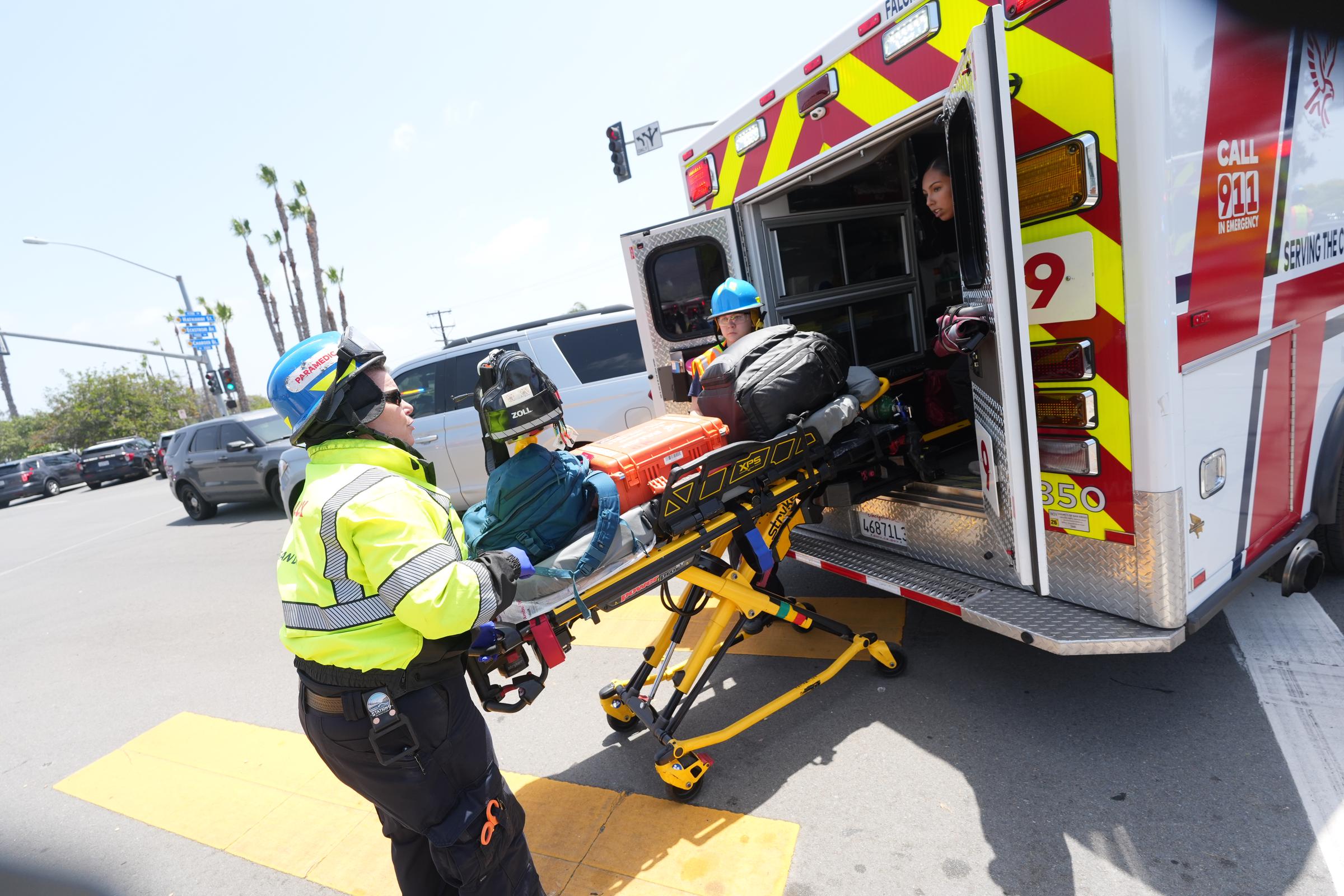
Emergency crews respond near the Islamic Center of San Diego following the shooting on May 18, 2026 | Source: Getty Images
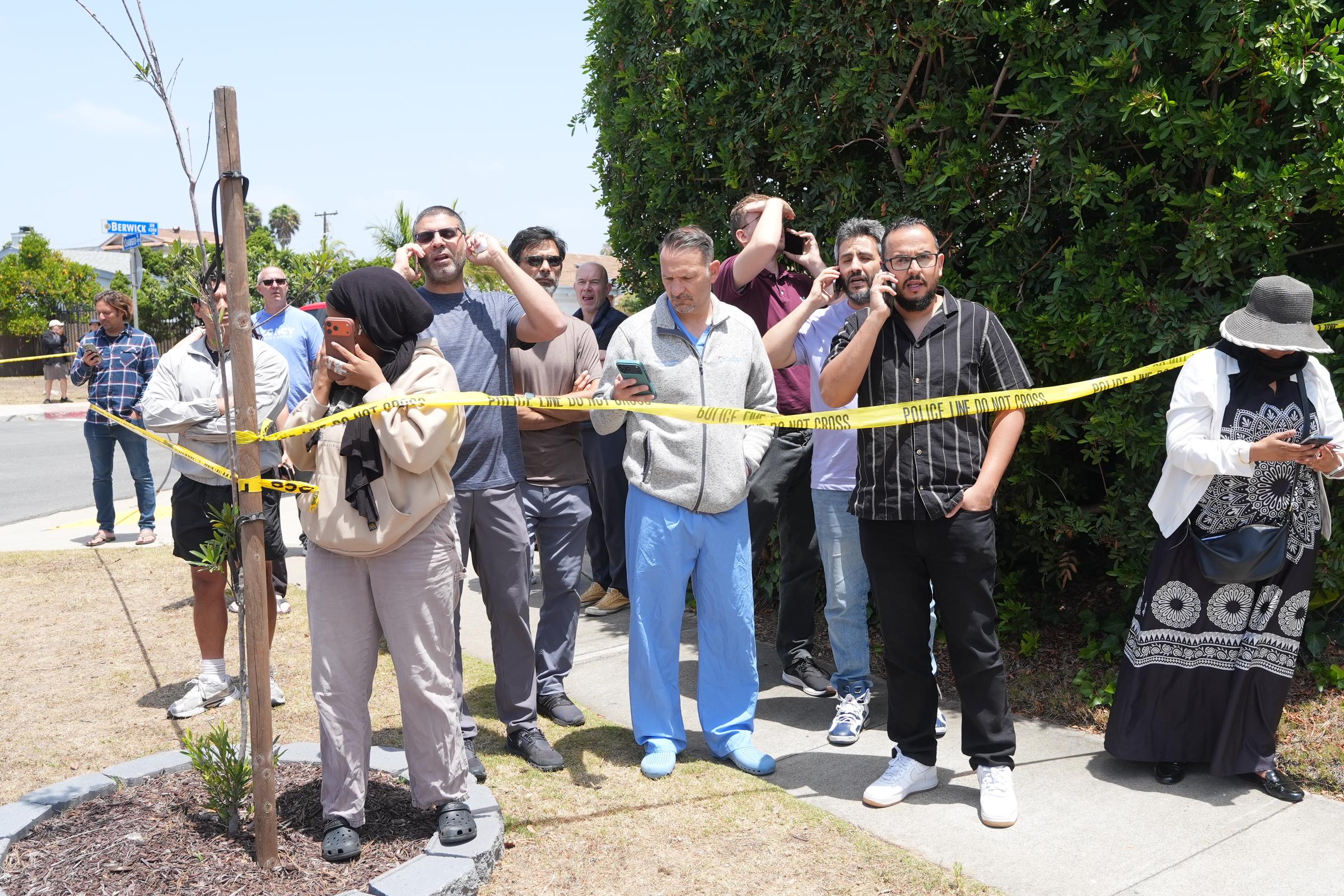
Community members gather near the Islamic Center of San Diego after the shooting on May 18, 2026 | Source: Getty Images
That sentence reveals the terrifying reality modern law enforcement increasingly faces:
distinguishing between private emotional crisis and public threat before violence occurs.
Because sometimes the two overlap catastrophically.
As investigators continued processing evidence, the case took another dark turn.
Authorities reportedly discovered hate rhetoric tied to the attack.
A suicide note containing writings about racial pride.
Alleged hate speech scrawled on one of the weapons.
Police have not publicly disclosed the exact language, but investigators confirmed they are treating the shooting as a possible hate crime.
And perhaps that transforms the emotional weight of the attack most profoundly.
Because violence motivated by hate damages communities differently than violence perceived as random or purely personal.
When people feel targeted because of religion, race, or identity, fear spreads collectively.
The attack no longer belongs only to direct victims.
It becomes symbolic.
Families attending the mosque that day were suddenly forced to confront an unbearable thought:
Were we chosen?
Even though police later clarified there had been “no specific threat” made directly toward the Islamic Center beforehand, authorities still acknowledged that generalized hate rhetoric appeared connected to the suspects’ mindset.
“It was more generalized,” Wahl explained carefully.
“But yes, it’s being investigated as a hate crime.”
That distinction matters legally.
Emotionally, however, many people inside the Muslim community likely experienced the fear similarly regardless.
Because in recent years, religious spaces increasingly carry dual emotional meanings:
sanctuary,
and vulnerability.
Churches.
Synagogues.
Mosques.
Temples.
Places once associated primarily with safety now often maintain visible security plans, emergency protocols, and evacuation strategies.
Wahl himself acknowledged that reality directly, calling it an “unfortunate” truth that many religious communities now live with persistent insecurity.
That sentence may be one of the most painful observations in the entire story.
Because it reflects how normalized fear has become in public life.
Children attending religious services now sometimes learn where exits are before they learn hymns.
Congregations discuss security cameras alongside holiday celebrations.
Parents quietly scan parking lots while carrying food trays into community events.
And after each attack, communities everywhere absorb another layer of vigilance.
Meanwhile, investigators continue reconstructing the timeline:
the missing vehicle,
the firearms,
the movements across several blocks,
the moments before shots were fired,
the writings left behind,
the conversations that may or may not have signaled danger earlier.
But even as authorities search for explanations, another painful truth remains underneath all of it:
understanding motive rarely repairs emotional damage afterward.
Families still lost loved ones.
Children still witnessed terror.
A neighborhood still became a crime scene.
Two teenagers are still dead.
And somewhere now, parents on every side of the tragedy are likely replaying ordinary moments obsessively:
conversations ignored,
mood changes dismissed,
small warning signs misunderstood.
That is one of the cruelest psychological effects of violence involving young perpetrators.
People search backward desperately for the exact moment intervention might have altered everything.
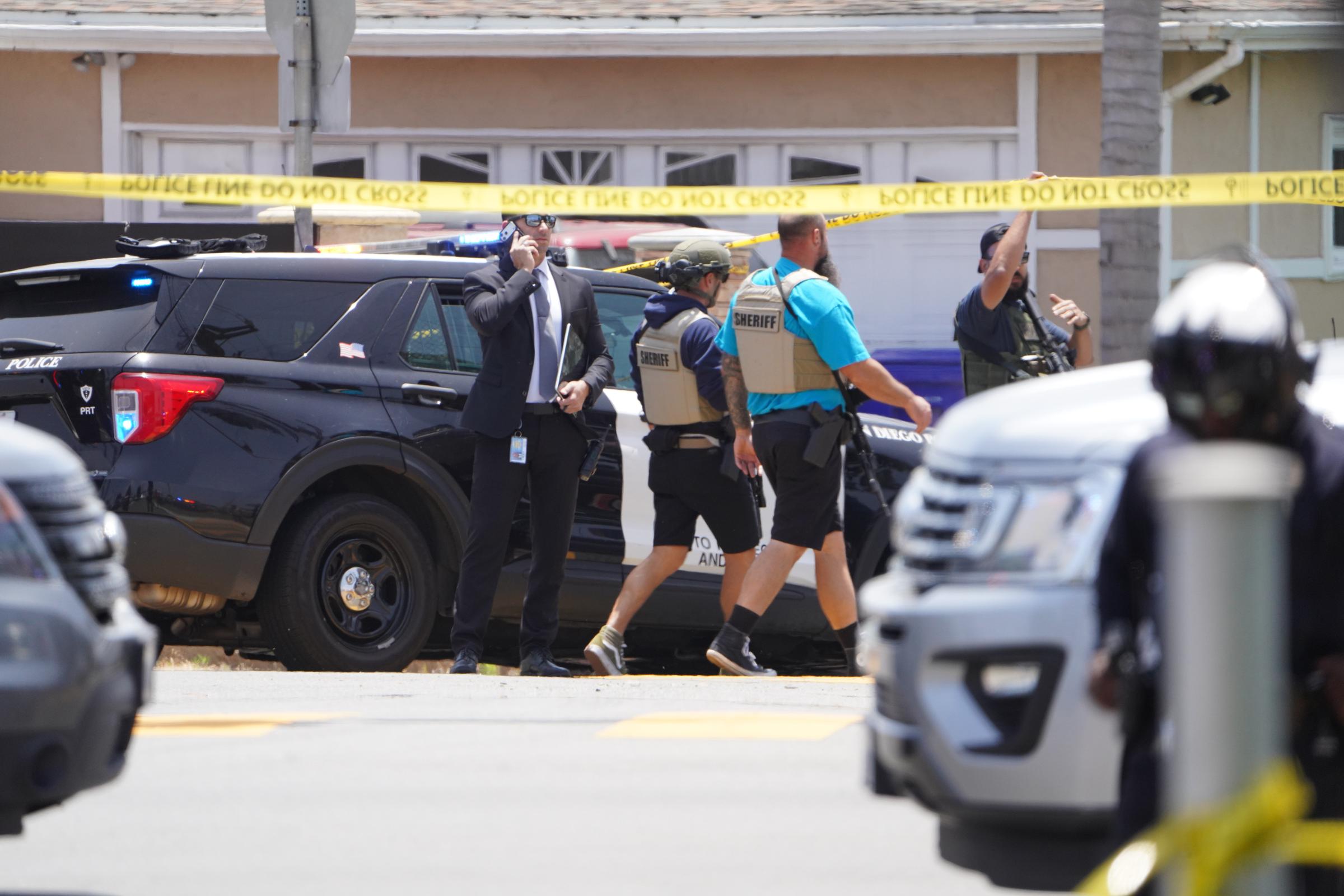
Authorities respond near the Islamic Center of San Diego following the shooting on May 18, 2026 | Source: Getty Images
Sometimes there was one.
Sometimes there wasn’t.
Human behavior rarely reveals itself cleanly in advance.
Still, the story leaves behind difficult questions impossible to avoid.
About online radicalization.
About adolescent mental health.
About access to firearms during emotional crises.
About how hatred grows quietly inside isolated young people before erupting publicly.
And perhaps most painfully, about how communities are supposed to rebuild trust and normalcy after violence enters sacred spaces.
Because eventually the police tape comes down.
The flashing lights disappear.
News crews leave.
Investigators move on to reports and court documents.
But the emotional aftermath stays much longer.
Children remember the panic.
Parents remember the fear.
Worshippers remember hearing gunfire near a place meant for peace.
And communities everywhere watching from afar absorb another unsettling reminder of how quickly ordinary mornings can collapse into irreversible tragedy.
In the end, what happened near the Islamic Center of San Diego was not only about two suspects or one investigation.
It became another painful reflection of a country still struggling to understand how isolation, hate, fear, and access to violence continue colliding in ways that leave entire communities grieving afterward.
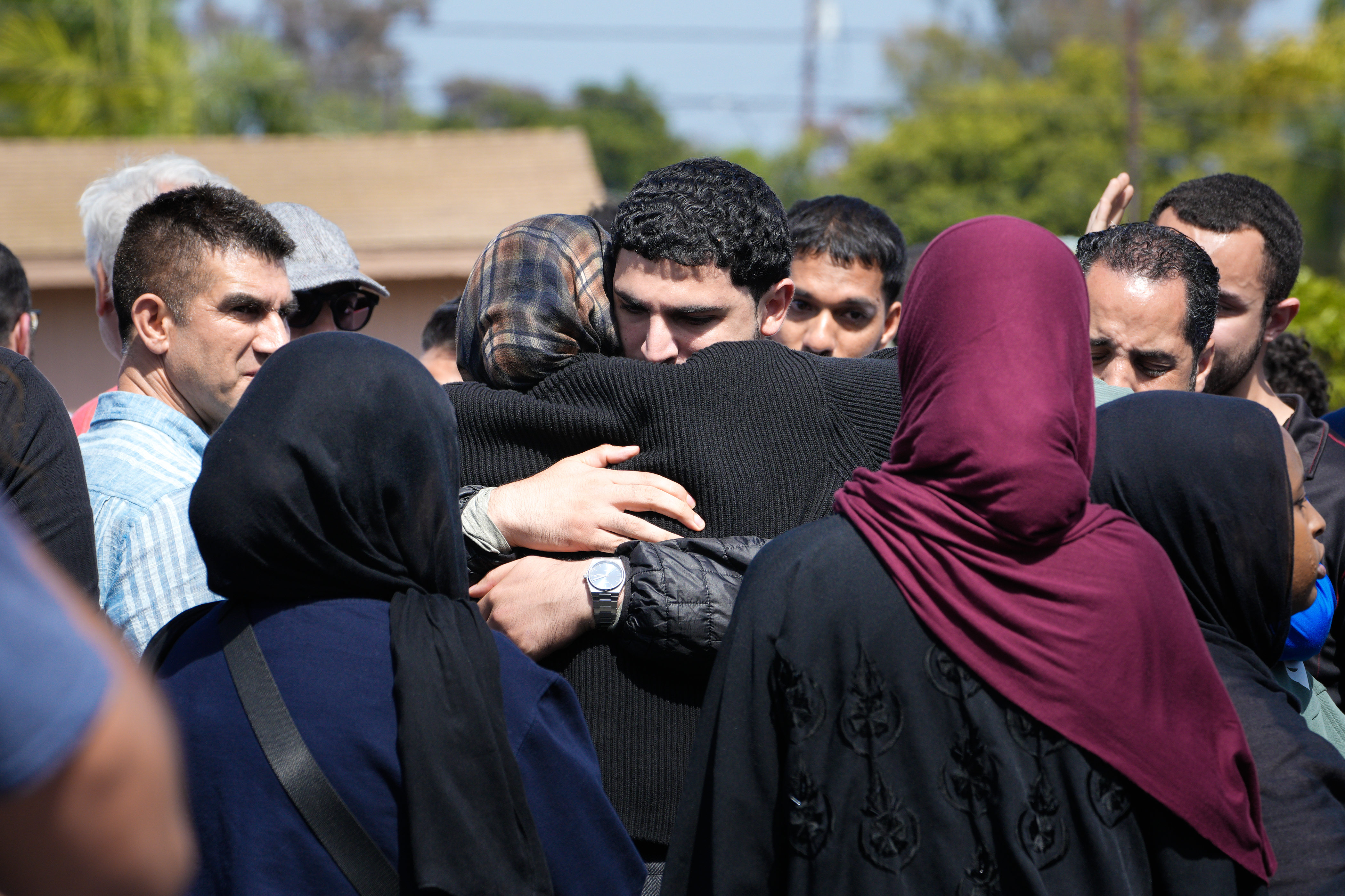
Families evacuate the area surrounding the Islamic Center of San Diego on May 18, 2026 | Source: Getty Images