Most people think of bread as temporary.
Something fragile.
Something already beginning to disappear the moment it comes home from the store.
You buy a loaf with good intentions — sandwiches for the week, toast in the mornings, maybe garlic bread with dinner — and for a day or two, everything feels fine. The slices are soft. The crust still gives slightly beneath your fingers. The smell carries that faint warmth of yeast and flour that somehow makes a kitchen feel more alive.
Then life happens.
A rushed morning means breakfast gets skipped.
Dinner plans change.
Someone orders takeout.
The loaf sits untouched for another day.
And suddenly you’re standing in the kitchen holding bread that has crossed the invisible line between fresh and disappointing.
Too stiff for sandwiches.
Too dry around the edges.
Not technically ruined, but no longer inviting.
So many small household frustrations happen exactly like this:
not dramatic enough to feel important,
yet repetitive enough to quietly wear people down over time.
The stale loaf.
The wasted groceries.
The guilt of throwing away food that cost money you worked hard to earn.
That’s why freezing bread feels strangely satisfying once you begin doing it consistently.
Not because it’s revolutionary.
Because it interrupts a cycle.
The habit itself is simple almost to the point of seeming insignificant:
the moment the bread comes home, you prepare for the future version of yourself.
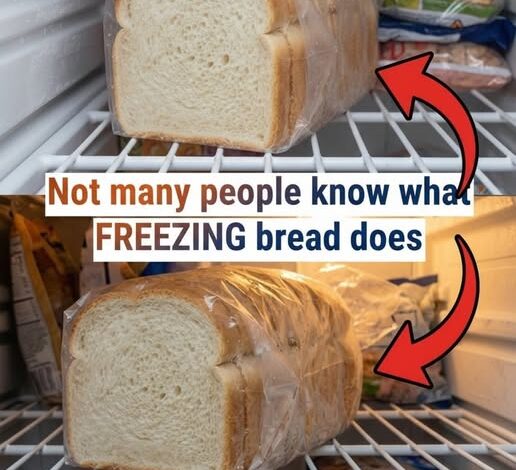
You slice the loaf if it isn’t already sliced.
Separate pieces carefully so they won’t freeze together in one useless block.
Slide them into freezer bags while they’re still soft and fresh.
That timing matters.
You are not freezing stale bread hoping to save it.
You are preserving possibility while the bread is still at its best.
There’s something unexpectedly comforting about that.
The freezer becomes less a place for forgotten leftovers and more like quiet insurance against small daily disappointments. Each slice waits there unchanged by the passing days outside. No mold creeping invisibly across the corners. No rushed calculations about whether the loaf still smells okay.
Just readiness.
Morning arrives.
You reach into the freezer.
Two slices into the toaster.
Done.
No emergency grocery trip.
No settling for crackers because the bread went bad again.
No irritation before coffee even finishes brewing.
Tiny stability.
And honestly, tiny stability matters more than people admit.
Modern life overwhelms people partly because of accumulation. Rarely one catastrophic problem every day — more often dozens of tiny inefficiencies constantly draining emotional energy:
empty milk cartons,
missing chargers,
expired produce,
nothing easy to cook,
forgotten errands.
Small frustrations compound quietly until ordinary living begins feeling heavier than it should.
Good habits reduce friction.
That’s what freezing bread really does.
It removes one small source of unnecessary stress from the future.
And over time, the emotional effect becomes surprisingly meaningful.
You stop opening the bread bag anxiously wondering if the last few slices survived another humid night on the counter. You stop throwing away hardened heels nobody wants to eat. You stop buying replacement loaves prematurely “just in case.”
Instead, the freezer holds backup.
Dependable backup.
There’s a particular kind of peace in knowing food is waiting for you without urgency attached to it.
Especially now, when grocery prices make waste feel almost morally painful.
Every loaf thrown away carries quiet arithmetic behind it:
money spent,
resources used,
effort wasted.
Freezing bread stretches value gently and efficiently. A single loaf lasts weeks instead of days because time no longer works against it the same way. You take only what you need. One slice for toast. Two for sandwiches. Four for grilled cheese during rainstorms when comfort matters more than nutrition.
Nothing rushes.
That’s part of the beauty too:
the bread stops controlling you.
Fresh bread sitting on the counter creates pressure subtly. Eat me now. Use me quickly. Don’t waste me.
Frozen bread waits patiently instead.
No guilt.
No countdown.
And strangely, that patience changes your relationship with food itself.
People often associate preparedness with extremes:
stockpiling,
panic,
scarcity thinking.
But freezing bread feels different.
Calmer.
It’s not fear-based preparation.
It’s care-based preparation.
You are simply making life easier for tomorrow’s version of yourself.
There’s dignity in that kind of foresight.
The habit also reconnects people to older forms of household wisdom modern culture sometimes dismisses unfairly. Previous generations understood preservation instinctively because waste carried harsher consequences historically. Bread boxes, root cellars, canning jars, freezer bags — these weren’t quirky domestic hobbies.
They were strategies of stability.
Ways families stretched resources carefully enough to survive uncertain weeks.
Today, convenience culture encourages constant replacement instead:
buy more,
throw out more,
solve every shortage immediately through consumption.
But freezing bread quietly resists that rhythm.
It says:
what you already have is enough if you care for it properly.
That message feels surprisingly grounding.
Especially during financially stressful times.
And beyond practicality, there’s something emotionally soothing about opening a freezer and seeing organized rows of individually separated slices waiting there. Not glamorous. Not aesthetically perfect for social media. Just useful.
Reliable.
A form of care your past self already completed.
Late at night, that matters too.
Anyone who has stood hungry in the kitchen after midnight knows how strangely emotional food availability can become. The empty bread bag. The realization there’s nothing quick to make. The temptation to spend money unnecessarily because planning failed earlier.
Then you remember:
the freezer.
A few slices.
A grilled sandwich.
Toast with butter.
Simple food appearing without complication.
Relief.
And maybe that’s why small domestic habits become so meaningful over time. They are not only about efficiency. They are about emotional atmosphere.
A stocked freezer says:
you are cared for.
Even if the person doing the caring is simply yourself from three days ago.
That continuity creates comfort.
Especially for people who grew up around instability, scarcity, or chaos. Small systems become ways of building safety into everyday life:
prepared meals,
clean sheets,
extra batteries,
frozen bread.
Not dramatic survivalism.
Just reducing unnecessary hardship wherever possible.
The older I get, the more I suspect adulthood itself is largely built from these tiny invisible acts of maintenance nobody applauds publicly:
refilling the ice tray,
charging devices overnight,
washing clothes before urgently needing them,
freezing bread before it spoils.
Quiet decisions preventing future stress.
And perhaps that’s why this particular habit feels oddly emotional once it becomes routine. The freezer full of bread slices starts symbolizing something larger than toast.
Preparedness without panic.
Frugality without deprivation.
Care without performance.
No one posts inspirational quotes about frozen sandwich bread.
But maybe they should.
Because there is wisdom in learning how to preserve good things before neglect or time quietly ruins them.
And there’s something deeply reassuring about opening your freezer on an exhausting morning to find simple proof that, at least in one small corner of life, you already planned ahead with kindness toward yourself.
Not extravagance.
Not perfection.
Just a row of ordinary slices waiting patiently in the cold —
softness preserved,
waste avoided,
one less thing to worry about in a world already full of enough.