We live in a strange moment in history where people are more obsessed with “wellness” than ever before, yet often less connected to the basic realities of how food actually reaches their table.
Modern consumers scan labels obsessively:
organic,
gluten-free,
keto-friendly,
non-GMO,
high-protein,
all-natural.
Entire industries now revolve around selling the appearance of health. Social media influencers photograph chia puddings beside sunlight-filled windows while supermarkets dedicate entire aisles to “clean eating.” The message is constant:
if a product looks natural enough, packaged attractively enough, or marketed with enough wellness language, it must also be safe.
But beneath that polished image sits a much more unsettling truth.
Some of the foods marketed most aggressively as “healthy” are also among the easiest to contaminate, mishandle, or poorly regulate—especially when they travel through sprawling international supply chains before landing in a consumer’s pantry.
That is what makes the so-called “Seeds in Your Snack” phenomenon emotionally powerful. Not because of one terrifying ingredient or one sensational conspiracy, but because it reveals how modern food anxiety often misunderstands where the real risks actually live.
People fear dramatic threats:
viral outbreaks,
poisoned imports,
mysterious toxins,
headline-grabbing food scandals.
Meanwhile, genuinely dangerous contamination often enters quietly through ordinary products nobody thinks twice about:
trail mix,
bulk nuts,
seed blends,
dried fruit packets,
cheap snack bags from discount markets or obscure online sellers.
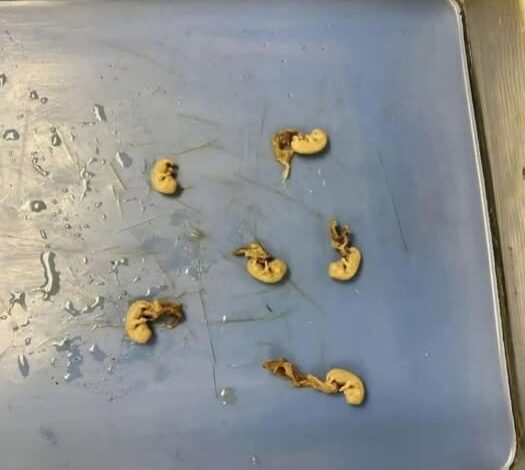
The panic that recently swept through Mexico City illustrates this perfectly. Rumors exploded across messaging apps and social media about mysterious “killer seeds” supposedly causing catastrophic illness. Fear spread rapidly because the story sounded cinematic and easy to visualize. People avoided vendors and shared warnings before any verified information even existed.
But when medical investigations finally examined the situation carefully, the truth turned out to be both less dramatic and far more concerning.
There was no cursed seed from some hidden legend.
Instead, investigators found what food-safety experts quietly understand all too well:
poor storage,
unsanitary handling,
lack of oversight,
and products bypassing proper regulation.
In other words, the real danger was not mystery.
It was neglect.
And perhaps that is harder for people psychologically because neglect feels ordinary. There is no singular villain. No monstrous ingredient. Just a long chain of small failures accumulating quietly inside modern supply systems.
Seeds and nuts occupy a particularly vulnerable place in this system because they appear deceptively safe. Consumers associate them with health, simplicity, and nature itself. A handful of almonds or sunflower seeds feels fundamentally cleaner than processed fast food.
Yet many dry snack products are uniquely vulnerable to contamination.
Unlike meat, which people instinctively treat cautiously, seeds and nuts are often eaten directly from the package without cooking. That means there is no final “kill step” eliminating bacteria before consumption. If contamination occurs during harvesting, transport, processing, or packaging, the consumer may ingest pathogens exactly as they entered the product.
Salmonella and E. coli do not care whether something looks healthy.
Under poor conditions, they thrive.
And because snack ingredients frequently move through multiple countries and suppliers, tracing contamination becomes extremely difficult. One bag of trail mix might contain raisins from one continent, sunflower seeds from another, nuts processed elsewhere, and packaging completed in yet another location.
Every additional step creates more opportunities for failure:
unsanitary equipment,
improper moisture control,
cross-contamination,
temperature instability,
poor worker hygiene.
Most consumers never think about this complexity while grabbing a snack from a shelf.
They see simplicity.
The supply chain behind it is anything but simple.
Then there are the risks people cannot taste, smell, or immediately detect at all:
chemical contamination.
This is where the conversation becomes even more disturbing because the effects are often invisible in the short term. Some low-cost or poorly regulated producers use unauthorized preservatives, industrial dyes, contaminated soil sources, or aging machinery that introduces heavy metals into food products.
Unlike acute food poisoning, these exposures rarely create dramatic immediate symptoms.
Instead, they accumulate quietly over years.
Small amounts absorbed repeatedly through everyday eating can contribute to long-term health problems involving:
hormonal disruption,
organ stress,
neurological effects,
or chronic inflammation.
That subtlety is precisely why such dangers receive less public attention. Modern media prioritizes crises that look explosive and immediate. Slow damage rarely generates viral panic.
Yet from a public-health perspective, long-term low-level contamination may affect vastly more people overall.
The issue of allergens introduces another layer of hidden danger entirely.
For someone with severe peanut, sesame, or tree-nut allergies, food labeling errors are not minor inconveniences. They are life-threatening risks. And in loosely regulated facilities, cross-contamination can happen constantly.
Equipment used for one product may not be cleaned adequately before another batch begins. Bulk storage containers may expose products to unintended allergens without proper disclosure. A package labeled “sunflower seeds” may still carry trace contamination from completely different products processed nearby.
For allergic individuals, that uncertainty transforms ordinary eating into constant vigilance.
And this points toward the deeper issue underlying the entire discussion:
the danger is not usually one terrifying ingredient.
It is systems operating without accountability.
Modern consumers often celebrate suspiciously cheap products without considering what low prices may actually represent. Proper testing, refrigeration, sanitation, transportation control, and regulatory compliance are expensive. When products appear dramatically cheaper than established competitors, something in that safety chain may already have been sacrificed.
The cost difference does not disappear.
It shifts.
And sometimes consumers unknowingly pay through risk instead of money.
That does not mean people must become paranoid about every seed or snack they buy. But it does require reclaiming some habits modern convenience culture has weakened.
Food safety used to depend partly on direct sensory judgment:
smelling food,
checking texture,
observing appearance,
recognizing signs of spoilage instinctively.
Today many people rely almost entirely on expiration dates and branding. Yet the body’s ancient warning systems still matter enormously.
A rancid smell.
An unnatural chemical odor.
Tacky texture.
Visible moisture.
Dusty discoloration.
Oddly vibrant coloring.
These signs often communicate danger faster than labels ever will.
Texture especially matters with seeds and nuts because moisture creates ideal environments for bacterial growth and mold development. Something crisp should not feel damp or sticky. Packaging integrity matters too. Bulk bins and unpackaged displays expose products continuously to airborne contaminants, humidity, and repeated handling.
Perhaps the most important lesson in all of this is psychological.
Modern consumers are often trained to fear dramatic, cinematic threats while ignoring slow systemic ones. Viral rumors about “mystery seeds” spread rapidly because they feel emotionally satisfying. They provide a clear enemy.
But the real threat is usually far less dramatic:
underregulated systems,
careless handling,
cut corners,
anonymous suppliers,
and blind trust in anything marketed as “natural.”
That reality demands a quieter kind of vigilance.
Not panic.
Not conspiracy thinking.
Attention.
Paying attention to where food comes from.
Who sells it.
How it smells.
How it feels.
Whether the source itself deserves trust.
Because ultimately, food safety is not just about avoiding immediate illness.
It is about understanding that “healthy-looking” products are not automatically safe products. The modern wellness industry often confuses aesthetics with integrity. Attractive packaging and trendy marketing language can easily hide weak oversight and dangerous shortcuts underneath.
And maybe that is the most unsettling realization of all.
The greatest risks are rarely the ones screaming for attention.
They are the quiet ones already sitting in the pantry,
waiting patiently inside bags we stopped questioning long ago.