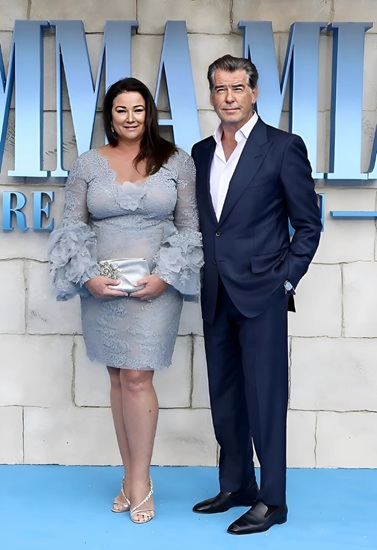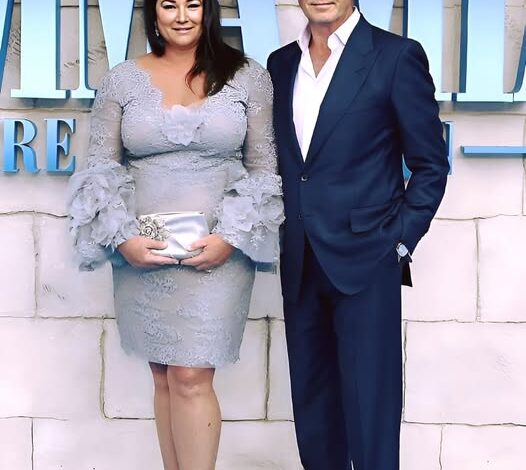
In a world where celebrity relationships often seem to dissolve beneath pressure, scrutiny, ambition, and constant public attention, Pierce Brosnan and Keely Shaye Smith have built something that feels increasingly rare:
a marriage shaped less by spectacle than by endurance.
For nearly three decades, their relationship has remained one of Hollywood’s quiet anomalies — stable, affectionate, deeply rooted, and remarkably untouched by the chaos that so often surrounds fame. While tabloids continuously cycle through breakups, scandals, and reinventions, Brosnan and Keely have carried themselves with a steadiness that feels almost old-fashioned.
Not perfect.
Not performative.
Simply committed.
And perhaps that is precisely why people remain so fascinated by them.
Because beneath the glamour, premieres, interviews, and public appearances lies something audiences instinctively recognize as genuine:
two people who appear to genuinely like one another after years of shared life.
Their story, however, did not begin inside some effortless fairytale.
Long before Keely entered his life, Pierce Brosnan had already experienced profound love — and devastating grief.
During the late 1970s, Brosnan met Australian actress Cassandra Harris, a woman who would become central not only to his personal life but to his emotional identity during the formative years of his acting career. Their connection deepened quickly, and after several years together, they married in 1980.
Those who knew Brosnan during that era often described Cassandra as deeply influential in shaping his confidence, ambitions, and understanding of family life. At the time, Brosnan was still building his career, navigating uncertainty while balancing the responsibilities of husbandhood and fatherhood simultaneously.
Together, they created a blended family.
In addition to the son they later shared together, Brosnan adopted Cassandra’s two children from a previous relationship and raised them fully as his own. Over the years, he repeatedly emphasized how important that choice was emotionally. Fatherhood, he often explained, transformed his understanding of responsibility and love far more profoundly than fame ever could.
For a time, life seemed to settle into something deeply meaningful.
Career opportunities expanded.
Their family grew.
The future appeared open and hopeful.
Then illness arrived.
In 1991, Cassandra Harris died following a battle with ovarian cancer.
The loss shattered Brosnan emotionally.
Grief after losing a spouse does not behave cleanly or predictably. It enters ordinary moments unexpectedly:
an empty room,
a familiar song,
silence beside you at night where someone once breathed.
For Brosnan, the loss was not only personal devastation but the collapse of an entire chapter of life built around shared history, parenting, companionship, and emotional partnership.
Years later, he would still speak openly about Cassandra with tenderness and sorrow, acknowledging how deeply her death affected him psychologically and spiritually.
And perhaps that honesty about grief became one reason people later connected so strongly to his relationship with Keely Shaye Smith.
Because Keely never arrived as someone replacing the past.
She arrived as someone willing to understand it.
Their first meeting took place in 1994 during an assignment in Mexico, where Keely worked as a journalist and television correspondent. Neither could have fully understood then how significant that meeting would eventually become.
According to Keely, she noticed Brosnan’s presence immediately.
Not simply because he was famous or handsome — though public fascination with his appearance certainly surrounded him — but because he carried himself with warmth, attentiveness, and emotional depth that contrasted sharply with the detached image many celebrities project publicly.
Their connection developed gradually rather than explosively.
That detail matters.
Hollywood romances are often portrayed through dramatic intensity:
instant attraction,
grand declarations,
headlines announcing whirlwind passion.
But lasting relationships frequently grow differently.
Slowly.
Patiently.
Through conversation rather than performance.
For Brosnan and Keely, emotional intimacy deepened over time through shared experiences and meaningful communication. One of their earliest significant evenings together later became part of their public story not because it was extravagant, but because it was simple.
They spent hours together talking while watching fireworks.
No dramatic spectacle.
No tabloid theatrics.
Just conversation stretching late into the night.
According to both of them, that evening established something foundational:
comfort.
The ability to speak openly.
To listen.
To exist beside one another without pretense.
And often, that emotional ease becomes more important than chemistry alone.
Because long-term relationships survive less through intensity than through compatibility during ordinary life.
Over time, their partnership deepened into family life.
In 1997, they welcomed their first son together, Dylan Thomas Brosnan.
Then in 2001 came their second son, Paris Beckett Brosnan.
Parenthood reshaped their relationship again, grounding it further beyond romance or celebrity image. Raising children together required routines, sacrifices, compromises, and shared responsibility far removed from red carpets or film premieres.
That same year, after years together building a life privately, Pierce and Keely officially married in Ireland.
The wedding itself reflected much of who they seemed to become as a couple:
deeply emotional,
family-centered,
elegant without excessive spectacle.
And throughout the years that followed, one aspect of their relationship continued standing out publicly:
Keely never treated Brosnan’s grief over Cassandra as something threatening.
This emotional maturity mattered enormously.
Many relationships struggle under the weight of unresolved grief or comparison with lost partners. But Brosnan often acknowledged that Keely approached his history with empathy rather than insecurity. She did not demand he erase the past emotionally to prove devotion in the present.
Instead, she understood something deeply human:
love after loss does not require forgetting.
People are capable of carrying grief and new love simultaneously.
That emotional generosity became one of the strongest foundations of their marriage.
Brosnan repeatedly described Keely as grounding, compassionate, and emotionally stabilizing. He credited her not only with companionship but with helping restore balance to parts of himself permanently altered by earlier tragedy.
And Keely spoke about him with equal warmth.
Not as a distant movie star, but as someone affectionate, funny, emotionally attentive, and deeply family-oriented behind public life.
Their dynamic seemed built less around performance than mutual appreciation.
Perhaps that explains why they weathered public scrutiny differently than many celebrity couples.
Because public attention never truly disappears for people living inside fame.
Over the years, tabloids commented constantly on their marriage:
their appearances,
aging,
weight,
public outings,
family life.
Particularly cruel media attention often targeted Keely physically, comparing her unfairly to Hollywood beauty standards obsessed with youth and thinness.
Yet Brosnan consistently rejected those narratives publicly and privately.
Rather than distancing himself from his wife to preserve celebrity image, he defended and celebrated her openly. He spoke repeatedly about loving her exactly as she was and valuing the life they built together over superficial expectations surrounding appearance.
That loyalty resonated strongly with audiences.
Not because it should be extraordinary for spouses to support one another — but because celebrity culture so often rewards vanity, replacement, and image management over visible devotion.
In many ways, their marriage became quietly countercultural inside Hollywood itself.
They also intentionally protected large portions of their private life.
Unlike couples constantly broadcasting intimacy publicly, Brosnan and Keely maintained a quieter rhythm centered largely around home, family, and ordinary routines.
Their Malibu home became symbolic of that lifestyle.
Not merely a luxurious celebrity property, but a shared creative space shaped collaboratively over years. Keely played a major role in designing and organizing the environment, reflecting her interests in interior design, nature, and comfortable living rather than flashy extravagance.
Brosnan often spoke lovingly about their domestic routines:
gardening together,
cooking,
walking outdoors,
spending time near the ocean.
Simple things.
But simplicity becomes deeply valuable when public life constantly demands performance.
Their sons grew up largely outside the most aggressive forms of Hollywood spectacle as well. Both Dylan and Paris later pursued creative careers involving modeling, filmmaking, and artistic work, supported openly by their parents while maintaining relatively grounded public images.
Family clearly remained central to both Brosnan and Keely throughout changing career stages.
And perhaps that consistency explains why their relationship continues attracting admiration decades later.
Because many people no longer trust public love stories easily.
Modern culture produces endless images of romance while simultaneously normalizing disposability inside relationships:
constant upgrading,
emotional detachment,
temporary connection mistaken for intimacy.
Against that backdrop, marriages lasting decades feel increasingly unusual.
Especially marriages that still appear affectionate.
Observers often describe Brosnan and Keely’s relationship as aspirational not because it seems perfect, but because it appears deeply human:
two people aging together,
supporting one another through grief,
raising children,
building routines,
protecting privacy,
remaining emotionally loyal despite public pressure.
No marriage survives decades without hardship.
There are inevitably arguments,
stress,
misunderstandings,
career pressures,
health concerns,
personal changes.
But enduring relationships develop resilience precisely through navigating ordinary life repeatedly together.
And Brosnan himself often summarized love in surprisingly uncomplicated terms.
Companionship mattered most.
Connection mattered most.
Having someone beside him who made life feel emotionally steady mattered most.
Not spectacle.
Just presence.
Today, after nearly thirty years together, Pierce Brosnan and Keely Shaye Smith continue living largely outside the chaos many celebrity couples become consumed by. Their lives revolve around family, creative projects, environmental interests, home life, and each other.
And maybe that is their real legacy as a couple.
Not proving love remains effortless forever.
But proving that love built patiently —
through respect,
grief,
forgiveness,
friendship,
shared history,
and ordinary daily devotion —
can still survive in a culture constantly expecting relationships to collapse under pressure.
In the end, what makes their story resonate so deeply is not fame itself.
It is the quieter truth visible beneath it:
after loss, after public scrutiny, after decades of change, they still seem to choose one another deliberately.
Again and again.
And in a world increasingly skeptical about lasting connection, that kind of loyalty feels almost radical. :::