For five years, I believed grief had settled into something manageable.
Not healed.
Never healed.
Just contained.
I built my life carefully around the shape of the loss, the way people learn to arrange furniture around a crack in the wall they cannot repair. I raised Stefan with all the love I had left while carrying another child silently beside us — the son I had buried emotionally before I ever got the chance to know him.
At least, that was the story I thought I had survived.
One baby alive.
One baby gone.
The tragedy had become part of my identity so completely that I stopped questioning it. Hospitals, signatures, condolences, exhausted doctors speaking in soft voices after impossible deliveries — all of it hardened over time into memory instead of active pain.
Or so I believed.
Then came the afternoon at the playground.
Ordinary in every possible way at first.
Children climbing over bright plastic structures. Parents half-watching while scrolling phones or sipping coffee gone cold. Stefan racing ahead toward the swings while I sat beneath weak autumn sunlight thinking about groceries, laundry, and the thousand invisible tasks adulthood stacks quietly onto every day.
Then another boy arrived.
Something in me noticed him before my mind understood why.
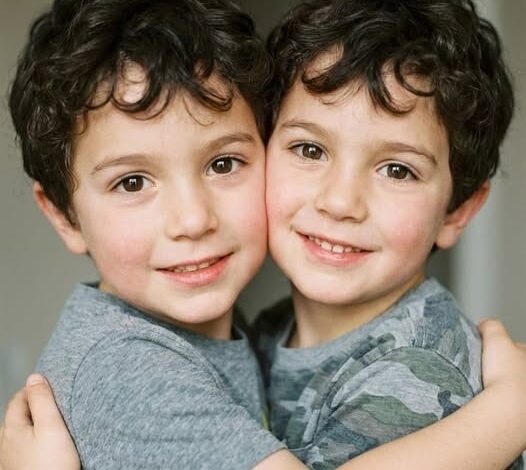
The same dark hair.
The same careful way of tilting his head while listening.
The same tiny crease appearing between his brows when concentrating.
Coincidence, I told myself immediately.
The world contains many children who resemble one another. Grief especially teaches people to project longing onto strangers. I had spent years seeing traces of my lost son everywhere:
in grocery stores,
school pickup lines,
photographs online.
But then Stefan saw him.
And the atmosphere around me changed instantly.
The boys froze when they locked eyes across the playground. Not dramatically. Not like scenes from movies where music swells and destiny announces itself loudly.
It was quieter than that.
More unsettling.
Recognition moved between them instinctively.
They approached slowly, studying each other with the strange intensity children sometimes carry before language catches up to feeling. Then Stefan reached forward first, touching the other boy’s hand briefly like he already understood something my adult brain still refused to process.
And suddenly they moved together as though separation itself had been unnatural.
Running.
Laughing.
Mirroring gestures unconsciously.
Two halves finding rhythm.
I sat completely still on that bench while something inside me began collapsing.
Not because I understood fully yet.
Because somewhere beneath logic, my body already did.
The next weeks unfolded like a nightmare disguised as revelation. DNA tests. Hospital records reopened. Lawyers speaking carefully around words like negligence, fraud, procedural failure. A chain of mistakes and concealed truths stretching all the way back to the delivery room where I had been told one son survived while the other did not.
But he had survived.
He had lived five years under another name, another roof, another life entirely.
And grief transformed instantly into something far more complicated.
Because losing a child to death is one kind of pain.
Learning your child existed nearby all along — laughing, growing, speaking first words without you — creates another entirely. It rewrites memory itself. Every birthday becomes haunted differently. Every moment I spent mourning him now carried the unbearable knowledge that somewhere else, at the exact same time, he was alive.
The truth cracked open every belief I had about safety.
Hospitals.
Trust.
Systems.
People.
I kept replaying the delivery endlessly afterward:
the exhaustion,
the medications,
the blurred voices,
the nurse who avoided eye contact too quickly.
How had something so enormous happened?
How had no one seen it sooner?
How many people knew?
The legal process consumed everything for a while.
Courtrooms.
Affidavits.
Accusations thrown across polished tables by people trying to reduce human devastation into procedural language.
But through all of it, I refused to let the boys become evidence.
That frightened me most of all.
Adults kept speaking about custody, damages, liability, biological rights — as though Stefan and Eli were competing claims instead of children whose entire realities had already been shattered once before either of them understood why.
Because Eli had parents too.
Parents who loved him genuinely.
Parents blindsided by the truth just as violently as I had been.
There was no villain standing neatly at the center of the story. Just damaged people trying to navigate impossible grief from opposite directions simultaneously.
I could have chosen war.
Part of me wanted to.
Five stolen years demands rage somewhere. Some mornings I woke up furious enough to burn through everyone involved:
the hospital,
the administrators,
the silence,
the universe itself.
But then I would watch the boys together.
And every instinct for revenge weakened.
They did not care about legal language.
They cared about being near each other.
Stefan stopped sleeping properly unless Eli visited regularly. Eli began drawing family pictures with two homes connected by one enormous sun overhead. They fought over toys within days like real siblings do — loud, emotional, instantly forgiving. Sometimes I would find them asleep back-to-back on the couch, breathing in identical rhythms that made my chest ache with equal parts joy and sorrow.
The bond arrived naturally.
Adults complicated it afterward.
Eventually, all of us — both families — made the hardest choice possible:
not possession,
but cooperation.
Therapy came first.
Long sessions filled with child psychologists helping explain impossible truths gently enough for young minds to survive them. We learned quickly that honesty mattered more than perfection. The boys deserved truth, but truth delivered carefully, at the pace childhood could absorb without collapsing beneath it.
So we built something messy instead of destructive.
Shared custody.
Shared birthdays.
Shared grief sometimes.
Not friendship immediately.
That would sound dishonest.
Healing began slower than that.
At first, every exchange reopened wounds. Seeing Eli leave with another family after finally finding him felt like losing him repeatedly in smaller doses. Watching Stefan struggle to understand why his brother lived somewhere else broke me in entirely new ways.
But over time, love stretched wider than I believed possible.
Not simpler.
Wider.
I still grieve the missing years fiercely.
Nothing erases first steps I never witnessed.
Fevers I never soothed.
Bedtime stories someone else read while I sat believing my child was gone forever.
That grief remains real.
But grief no longer stands alone now.
Because alongside it lives something else too:
return.
Not perfect restoration.
Not a miracle undoing damage cleanly.
Something more human than that.
A second chance built awkwardly and carefully between people trying to love children more than their own pain.
Now when I watch Stefan and Eli racing side by side through the backyard, arguing loudly over games before collapsing into laughter seconds later, I sometimes feel the old devastation rise unexpectedly beside gratitude.
Both emotions live together now.
Loss and recovery.
Anger and tenderness.
Mourning and joy.
I no longer try separating them.
Because life rarely heals by replacing sorrow with happiness completely. More often, healing happens when love grows large enough to exist beside sorrow without being destroyed by it.
My life did not return to what it once was.
Nothing could restore that version fully.
But in the chaos of truth, in the wreckage of trust broken and rebuilt imperfectly, I was given something I thought I had buried forever:
the chance to know both of my sons —
not as ghosts,
not as possibilities,
but as brothers learning, every day, how to grow together after the world accidentally tore them apart.