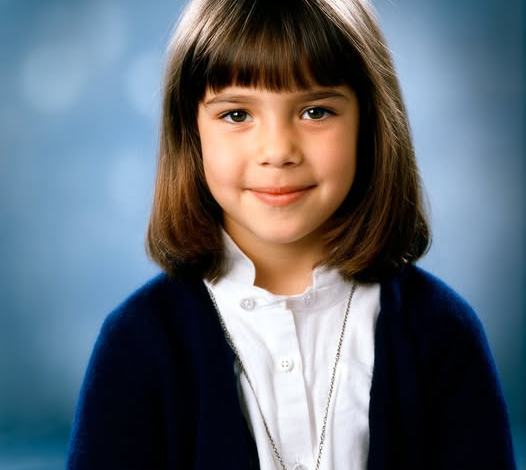
The Truth About Melissa Arrived One Piece at a Time
For years, we lived inside a question.
Every morning began with it.
Every night ended with it.
Every holiday, every birthday, every family gathering carried its weight.
Where was Melissa?
The question became part of our lives so completely that eventually it stopped feeling like a question at all.
It became a room we lived inside.
A shadow that followed us everywhere.
A wound that never healed because it never knew what had happened.
People imagine uncertainty as a temporary state.
They imagine answers eventually arriving.
They imagine closure waiting patiently somewhere in the future.
But some families spend years trapped between hope and grief.
Too hopeful to mourn.
Too heartbroken to move on.
That was us.
For a long time, we told ourselves stories.
Not because we believed them.
Because we needed them.
Maybe she left.
Maybe she got scared.
Maybe she wanted a different life.
Maybe she would call someday.
Maybe she was waiting for the right moment.
Maybe.
Maybe.
Maybe.
Hope survives on that word.
It feeds on possibility.
No matter how unlikely.
No matter how painful.
No matter how impossible.
The alternative felt worse.
The alternative meant accepting that something terrible might have happened.
And once you admit that possibility, it follows you everywhere.
So we waited.
Months became years.
Years became a decade.
The world moved forward.
Technology changed.
Neighbors moved away.
Children grew up.
Entire chapters of life unfolded.
Yet somehow everything still seemed connected to the day Melissa disappeared.
The day time fractured.
The day certainty vanished.
The day our family became known as the family with the missing daughter.
People tried to be kind.
Some were.
Others simply became curious.
Curiosity can feel cruel when it circles tragedy.
Every few months someone would ask.
Any news?
Any leads?
Any updates?
We learned to smile politely.
Learned to shake our heads.
Learned to carry disappointment without showing it.
But disappointment accumulates.
It settles into your bones.
Into your voice.
Into the way you look at empty chairs.
Especially mothers.
My mother carried it hardest.
She never stopped preparing for Melissa’s return.
Not openly.
Not dramatically.
In small ways.
Quiet ways.
The ways only mothers understand.
She kept Melissa’s room untouched for years.
Kept old photographs dusted.
Kept favorite recipes folded neatly inside kitchen drawers.
And she kept sewing.
That was her language.
Her comfort.
Her prayer.
Whenever grief overwhelmed her, she sat beside the window with fabric spread across her lap.
Needle moving carefully.
Patiently.
Creating flowers from thread.
Mostly daisies.
Melissa loved daisies.
Always had.
As a child, she picked them from fields.
Pressed them into books.
Wove them into crowns.
Drew them in margins.
Something about their simplicity made her happy.
So my mother stitched daisies.
Hundreds of them.
Maybe thousands.
Tiny acts of remembrance disguised as embroidery.
I think she hoped that if her hands stayed busy, her heart would hurt less.
It never did.
Then came the call.
The one every missing person’s family both dreads and desperately wants.
The call that promises answers.
The call that changes everything.
And nothing.
The detective’s voice sounded different.
Careful.
Measured.
Heavy.
I knew before he finished speaking.
Some truths announce themselves before words arrive.
We met at the station the following afternoon.
The room felt too small.
Too bright.
Too ordinary.
How could a room so ordinary contain something capable of destroying us?
Yet it did.
The information did not come all at once.
Perhaps because it couldn’t.
Some truths are too large to absorb in a single moment.
So they arrived in fragments.
A timeline.
A forensic report.
Old evidence reexamined through new technology.
Witness statements revisited.
Details that had once seemed insignificant now fitting together differently.
Every answer revealed another wound.
Every revelation rearranged years of assumptions.
The detective spoke gently.
The way people speak when they know language will fail.
Melissa had died the day she disappeared.
Not weeks later.
Not months later.
Not years later.
That day.
The same day we searched neighborhoods.
The same day we printed flyers.
The same day we believed she was still somewhere waiting to be found.
She had never run away.
Never started over.
Never abandoned us.
Never chosen another life.
The possibility we secretly feared had been true from the beginning.
And somehow that reality hurt more than uncertainty.
Because uncertainty contains hope.
Truth does not.
I remember my mother staring at the table.
Silent.
Motionless.
As though her entire body had forgotten how to function.
No tears at first.
Just stillness.
The kind of stillness that exists when grief exceeds language.
Then came the second revelation.
The one that shattered whatever remained.
Melissa had died less than a mile from home.
Less than a mile.
For years we searched cities.
States.
Possibilities.
While the truth sat horrifyingly close.
Close enough to walk.
Close enough to see.
Close enough to understand how fragile safety really is.
The place where it happened felt impossible.
Because it wasn’t some distant location.
Not some unknown place.
Not somewhere strangers occupied.
It was connected to us.
Connected to our lives.
Connected to our memories.
Connected to someone we trusted.
That is the part people rarely understand about betrayal.
It doesn’t arrive wearing a villain’s face.
If it did, we would recognize it immediately.
Real betrayal looks familiar.
Comfortable.
Safe.
It sits beside you at dinner.
Appears in family photographs.
Shares holidays.
Tells jokes.
Carries groceries.
Lives inside ordinary moments.
Which is exactly why it hurts so much.
The man responsible wasn’t a monster hiding in darkness.
He was someone we welcomed into light.
Someone who attended birthdays.
Someone who smiled in Christmas photos.
Someone who stood beside us while we searched.
The realization poisoned memories.
Every photograph suddenly looked different.
Every gathering felt rewritten.
Every smile became suspicious.
For weeks, anger consumed everything.
Not loud anger.
Exhausted anger.
The kind that arrives after shock.
The kind that sits awake at three in the morning asking impossible questions.
How could we not know?
How could he pretend?
How could someone live beside grief they created?
There are no satisfying answers.
Only painful ones.
Eventually, investigators completed their work.
The legal process followed.
Reporters called.
Neighbors whispered.
People wanted details.
People always want details.
But we discovered something important during that time.
The worst thing that happened to Melissa was not how she died.
It was the risk that her entire life would become defined by it.
That people would remember tragedy instead of joy.
Crime instead of character.
Loss instead of life.
We refused to let that happen.
The funeral arrived beneath a pale spring sky.
The kind of day Melissa would have loved.
Gentle wind.
Warm sunlight.
Clouds drifting lazily overhead.
Almost unfairly beautiful.
As though nature hadn’t received the news.
People came from everywhere.
Old classmates.
Former teachers.
Neighbors.
Friends.
Relatives.
Some carried flowers.
Some carried memories.
Many carried tears.
The service wasn’t about what happened.
Not entirely.
It was about who she was.
The girl who sang absentmindedly while doing chores.
The girl who laughed too loudly at bad jokes.
The girl who loved daisies.
The girl who always stopped for injured animals.
The girl who hummed songs under her breath without realizing it.
The girl who deserved decades she never received.
We played music she loved.
Read stories she once told.
Shared memories she created.
For a few hours, tragedy lost control of the narrative.
Melissa became herself again.
Not a headline.
Not a case file.
Not an investigation.
A daughter.
A friend.
A human being.
After the service, my mother did something nobody expected.
She opened a basket she’d carried quietly throughout the day.
Inside were dozens of hand-stitched daisies.
Fresh fabric.
Fresh thread.
Fresh work.
Every flower made by her own hands.
She began pressing them into people’s palms.
One by one.
No speeches.
No explanations.
Just gifts.
Small white daisies stitched with extraordinary care.
People cried as they accepted them.
Not because they symbolized death.
Because they symbolized life.
Love.
Memory.
Connection.
Everything grief tries—and fails—to destroy.
Months later, those daisies still appear everywhere.
Pinned to jackets.
Framed inside homes.
Tucked into books.
Resting beside photographs.
Tiny reminders that Melissa existed.
That she mattered.
That she continues to matter.
Sometimes people ask whether knowing the truth brought closure.
I never know how to answer.
Closure feels too neat a word.
Too final.
The truth did not erase grief.
It did not heal wounds.
It did not restore what was stolen.
What it did provide was something quieter.
Certainty.
Painful certainty.
The kind that allows mourning to begin honestly.
The kind that replaces endless questions with difficult answers.
The kind that lets families stop searching and start remembering.
These days, when I think about Melissa, I try not to picture the darkness surrounding her final hours.
I picture daisies.
I picture sunshine.
I picture her laughing.
I picture my mother’s hands moving carefully through fabric.
I picture a church full of people carrying stitched flowers home.
And I remember something grief eventually teaches everyone.
Love survives differently than we expect.
Not through denial.
Not through forgetting.
Not through pretending tragedy never happened.
Love survives through stories.
Through memory.
Through names spoken aloud.
Through acts of kindness repeated long after someone is gone.
Through daisies passed from hand to hand.
Blooming quietly in places sorrow cannot reach.
And in that way, somehow, Melissa still blooms too.