I Cared for My Grandchildren Every Day — One Misunderstanding Taught Us All a Powerful Lesson About Trust

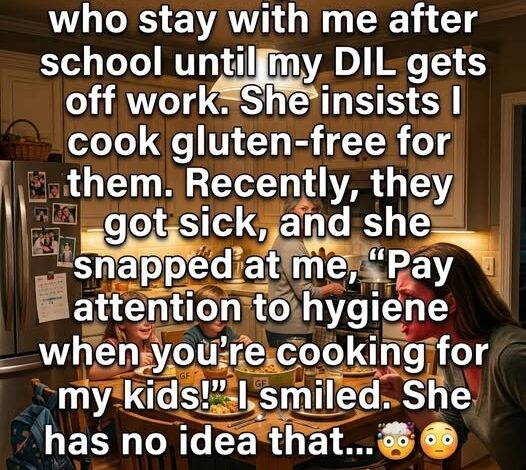
For years, my afternoons followed a rhythm that brought me more joy than I ever expected.
Every weekday around three o’clock, I’d hear the familiar sound of sneakers racing up my front steps. A second later, the front door would swing open, and my two grandchildren would come tumbling inside like a whirlwind of energy.
Backpacks hit the floor.
Lunchboxes landed on the counter.
Stories spilled out before their coats were even off.
One would be talking about a spelling test while the other interrupted to describe a playground argument that somehow felt like the most important event in the world.
Those hours between school and dinnertime became the highlight of my day.
I never considered it a burden.
It was a gift.
Their mother—my daughter-in-law, Rachel—worked long shifts at a medical office and often didn’t arrive until early evening. Watching the children gave her peace of mind and gave me something I cherished far more than I ever admitted aloud.
Purpose.
There was only one condition.
Everything the children ate had to be gluten-free.
Rachel had been firm about that from the beginning.
Both kids had dietary sensitivities, and even small mistakes could cause discomfort.
I understood completely.
In fact, I took the responsibility very seriously.
I researched ingredients.
Read labels twice.
Sometimes three times.
I replaced old cookware and bought separate cutting boards.
I learned new recipes I’d never imagined making.
At first it felt overwhelming.
Then it became routine.
Because protecting my grandchildren mattered more than convenience.
Every meal I prepared was made with care.
Every snack was double-checked.
Every kitchen surface was cleaned meticulously.
Over time, Rachel seemed to trust me completely.
And that trust meant a great deal to me.
Which is why what happened next hurt so much.
It started with a stomach bug.
Nothing dramatic.
Nothing unusual.
Just one of those viruses that seem to sweep through elementary schools every year.
The first signs appeared on a Tuesday afternoon.
My grandson complained that his stomach felt funny.
A few hours later, his younger sister wasn’t feeling well either.
By evening, both children were clearly sick.
I felt terrible for them.
I called Rachel immediately.
She arrived earlier than usual, her face tight with worry.
At first, she focused entirely on the kids.
Checking temperatures.
Asking questions.
Gathering medications.
Then something shifted.
Stress gave way to frustration.
Frustration turned into blame.
And suddenly, her attention was on me.
“What did they eat today?”
The question itself wasn’t unreasonable.
But the tone behind it caught me off guard.
I listed everything carefully.
Breakfast.
After-school snacks.
Dinner preparations.
All gluten-free.
All foods she had previously approved.
Rachel’s expression didn’t soften.
Instead, she started asking sharper questions.
Had I cleaned the counters properly?
Did I use the separate cookware?
Was I absolutely sure there hadn’t been cross-contamination?
The questions kept coming.
Each one landing harder than the last.
Then came the accusation.
“Maybe you weren’t as careful as you think.”
For a moment, I couldn’t speak.
Not because I was angry.
Because I was hurt.
Deeply hurt.
I had spent years doing everything possible to protect those children.
Yet in a moment of fear, all of that seemed forgotten.
Standing in my kitchen, I felt my heart sink.
Not because my pride was wounded.
Because someone I cared about suddenly looked at me as if I couldn’t be trusted.
Part of me wanted to defend myself.
To remind her about the separate cookware.
The careful preparation.
The countless precautions.
Instead, I simply nodded.
And listened.
Because beneath her anger, I recognized something else.
Fear.
Pure fear.
She wasn’t seeing me clearly in that moment.
She was seeing her children sick.
And like most parents, she desperately wanted an explanation.
Someone to blame.
Something she could control.
The truth was, I already suspected what had happened.
The children had been talking about illness at school all week.
Classmates were being sent home.
Teachers were constantly disinfecting desks.
Several parents had mentioned a virus making the rounds.
But Rachel hadn’t heard those conversations.
She only saw her children suffering.
So I stayed quiet.
Not because I agreed.
Because arguing wouldn’t help.
After she left, I sat alone at my kitchen table.
The house felt unusually silent.
Their unfinished homework still sat beside the couch.
A coloring book remained open on the coffee table.
Everything looked exactly the same.
Yet somehow different.
I wondered whether she’d ever trust me the same way again.
That thought hurt more than I expected.
The next few days felt longer than usual.
I checked in regularly.
The children slowly improved.
Their fevers disappeared.
Their energy returned.
Life moved forward.
Then, late Friday afternoon, there was a knock at my door.
When I opened it, Rachel stood there alone.
No children.
No rush.
No tension.
Just Rachel.
For a second, neither of us spoke.
Then she took a breath.
“I owe you an apology.”
The words came quietly.
Honestly.
Without excuses.
She explained that the pediatrician had confirmed what everyone eventually suspected.
A stomach virus was spreading rapidly through the school.
Several classrooms had reported cases.
Dozens of children had become sick.
The illness had nothing to do with food.
Nothing to do with gluten.
Nothing to do with my kitchen.
Rachel looked exhausted.
Embarrassed.
Ashamed.
“I was scared,” she admitted.
“I saw them sick and panicked.”
I nodded.
Because I already knew.
Fear makes people say things they don’t mean.
Sometimes it makes them forget who has been standing beside them all along.
What mattered wasn’t the mistake.
It was what happened afterward.
And what happened afterward was accountability.
She apologized sincerely.
No qualifications.
No attempts to justify herself.
Just a simple acknowledgment that she’d been wrong.
I accepted immediately.
Not because the words hadn’t hurt.
They had.
But because families survive through grace.
Not scorekeeping.
Not grudges.
Grace.
A few minutes later, the front door burst open again.
This time my grandchildren came running through it.
Healthy.
Laughing.
Full of energy.
My grandson wrapped his arms around my waist.
My granddaughter nearly knocked over a lamp trying to hug me at the same time.
In that moment, every hurt feeling disappeared.
Not because they were forgotten.
Because they became less important than what stood right in front of me.
Family.
Later that evening, after everyone had gone home, I reflected on the week.
Life has a way of testing relationships during stressful moments.
Fear can distort reality.
Exhaustion can create misunderstandings.
Pain can make good people say unfair things.
But love is often revealed by what happens next.
Rachel could have avoided the conversation.
She could have stayed defensive.
Instead, she came back and made things right.
That mattered.
The older I get, the more I realize that perfect families don’t exist.
Every family experiences misunderstandings.
Every family faces difficult moments.
The strongest families aren’t the ones that avoid mistakes.
They’re the ones willing to admit them.
To forgive them.
To move forward together.
When I think back on that week now, I don’t remember the accusation.
I remember the apology.
I don’t remember the hurt.
I remember the healing.
And most of all, I remember two healthy grandchildren racing through my front door again, reminding me exactly why I’d spent years learning recipes, reading labels, and keeping separate cookware.
Because love isn’t measured by how easy it is to care for someone.
It’s measured by how willingly you do it.
And if there’s one thing being a grandmother has taught me, it’s this:
The people we love most will occasionally disappoint us.
We’ll disappoint them too.
What matters isn’t perfection.
What matters is choosing patience when fear arrives, choosing understanding when emotions run high, and choosing love again once the storm has passed.
That week, the children recovered from a virus.
But our family gained something else.
A reminder that trust grows strongest not when life is easy, but when people find their way back to each other after things go wrong.
And watching my grandchildren run into my arms again, smiling as if nothing in the world could ever separate us, I knew I’d choose that love every single time.