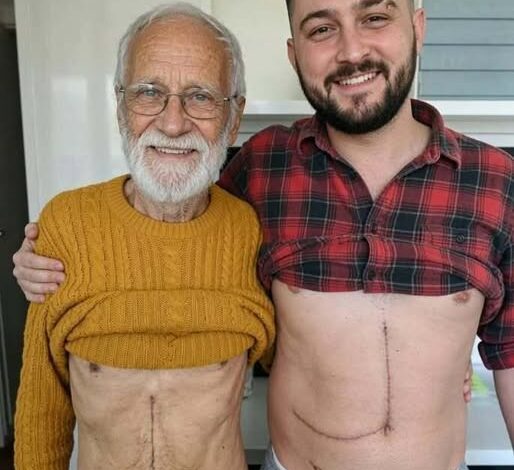
Few decisions test the strength of family bonds quite like the choice to become a living organ donor.
It is a decision made not for recognition, reward, or personal gain, but out of love. When someone volunteers to undergo major surgery so that a parent, child, sibling, or spouse can have another chance at life, the act goes far beyond medicine. It becomes a powerful expression of trust, sacrifice, and hope.
For families confronting serious liver disease, living liver donation often represents more than a treatment option.
It represents possibility.
A chance to rewrite a future that once seemed uncertain.
A chance to create more memories together.
And a chance to turn fear into action when time is running short.
What makes living liver donation especially remarkable is the unique nature of the liver itself.
Unlike most organs in the human body, the liver possesses an extraordinary ability to regenerate. During a living donor transplant, surgeons remove a portion of a healthy donor’s liver and transplant it into the recipient. Over time, both the transplanted section and the remaining liver tissue can grow, restoring much of their original size and function.
This natural regenerative capacity has transformed liver transplantation and offered hope to thousands of patients worldwide.
For many individuals with advanced liver disease, waiting for a deceased donor organ can be a long and uncertain process. Months—or even years—may pass before a suitable organ becomes available.
Living donation can dramatically shorten that wait.
And in some cases, it can save a life that otherwise might not have survived the delay.
The journey often begins with a difficult conversation.
A diagnosis.
A doctor’s recommendation.
A family gathering filled with questions and uncertainty.
Imagine a father learning that his liver disease has progressed to a critical stage. Medical treatments that once helped are no longer enough. A transplant may now be his best chance for survival.
The news changes everything.
Family members begin searching for answers, exploring options, and confronting fears they never expected to face.
Then someone steps forward.
Perhaps it’s a son.
Perhaps it’s a daughter.
Perhaps it’s a sibling or spouse.
Whoever it may be, the offer carries profound meaning.
“I’ll get tested.”
Those simple words can transform despair into hope.
Yet willingness alone is not enough.
Before living donation can proceed, potential donors undergo an extensive medical evaluation. Specialists carefully assess physical health, liver function, blood compatibility, and psychological readiness.
The process is thorough for a reason.
Doctors must ensure that the donor can safely undergo surgery while also maximizing the recipient’s chances of success.
Protecting both lives remains the highest priority.
Throughout the evaluation, potential donors receive detailed information about the procedure, recovery process, possible risks, and long-term expectations. The decision must be informed, voluntary, and made without pressure.
Only when the medical team is confident that donation can proceed safely does the process move forward.
The surgery itself represents an extraordinary feat of modern medicine.
On transplant day, teams of highly trained surgeons, anesthesiologists, nurses, and specialists work together in carefully coordinated procedures.
Often, the donor and recipient surgeries occur simultaneously.
While one surgical team removes a portion of the healthy liver, another prepares the recipient for transplantation.
Hours of meticulous work follow.
Every step matters.
Every decision carries enormous significance.
And when the procedure is complete, a new chapter begins for both patients.
Recovery requires patience.
For donors, the days immediately following surgery often involve discomfort, fatigue, and gradual rehabilitation. Most remain in the hospital for several days before continuing recovery at home.
Simple activities that once felt effortless may temporarily become challenging.
Walking.
Climbing stairs.
Sleeping comfortably.
Regaining energy takes time.
Yet many donors describe a deep sense of purpose that helps carry them through the recovery process.
They know exactly why they made the sacrifice.
Recipients face their own recovery journey.
Their bodies must heal from major surgery while adapting to the transplanted liver tissue. Medical teams closely monitor liver function, medication responses, and overall health during the weeks and months that follow.
Regular follow-up appointments become essential.
Progress often arrives gradually rather than all at once.
Small improvements become important milestones.
A better blood test.
More energy.
Improved appetite.
The ability to return to daily activities.
Each step forward becomes a reminder of what was made possible through generosity and medical expertise.
Of course, living liver donation is not without risks.
As with any major operation, complications can occur. Infection, bleeding, fluid accumulation, and other postoperative challenges are possibilities that medical teams carefully monitor and manage.
This reality underscores why donor evaluations are so comprehensive.
The decision is significant.
The responsibility is enormous.
And the commitment to safety is unwavering.
Despite these challenges, many donors say they would make the same choice again without hesitation.
For them, the opportunity to help someone they love outweighs the temporary hardships of recovery.
Watching a parent regain strength.
Seeing a spouse return home.
Sharing another birthday, holiday, or family celebration.
These moments often become priceless rewards.
The impact of living liver donation extends beyond the operating room.
Families frequently discover new levels of connection during the process.
Relatives organize schedules.
Friends prepare meals.
Neighbors offer assistance.
Communities rally around both donor and recipient.
The experience often reveals just how powerful human compassion can be.
People who may never have imagined themselves facing such a challenge come together in support of a common goal.
That collective effort can strengthen relationships in ways that endure long after recovery ends.
Ultimately, living liver donation represents one of the most extraordinary gifts one person can give another.
It is a testament to modern medical progress.
A reflection of human resilience.
And above all, an expression of love.
Because at its heart, the procedure is not simply about replacing an organ.
It is about preserving precious moments that might otherwise be lost.
Family dinners.
Conversations.
Laughter.
Milestones.
The ordinary experiences that become extraordinary when they are nearly taken away.
Every successful transplant tells a story of courage—both from the person receiving a second chance and from the individual willing to make that chance possible.
And in a world often filled with stories of division and uncertainty, living liver donation serves as a powerful reminder of something timeless:
The incredible things people are willing to do for those they love.