For more than twenty-five years, Doris believed that love could be served on a plate.
Not spoken.
Not written.
Served.
It appeared in steaming bowls of soup on cold winter evenings. In fresh bread cooling on the counter before anyone else woke up. In casseroles carefully prepared after long days at work. In pies baked from recipes older than she was.
Cooking wasn’t simply a skill Doris possessed.
It was the language she spoke best.
Every morning began the same way. The kitchen lights flickered on before sunrise, filling the house with a soft golden glow. Coffee brewed quietly while she planned meals in her head. By the time the rest of the world seemed awake, Doris had already measured ingredients, prepared lunches, and started dinner.
She never complained.
Never kept score.
Never asked for praise.
The satisfaction came from seeing people fed, comfortable, and cared for.
That was enough.
Or at least she thought it was.
The recipes she made had traveled through generations.
She remembered standing beside her mother as a little girl, watching her hands move effortlessly through dough and batter. Her grandmother had been the same way.
No measuring cups.
No recipe cards.
Just instinct.
Experience.
Love.
The kind of cooking that couldn’t really be taught from a book.
Over the years, Doris became the keeper of those traditions.
Every Sunday, family gathered around her dining table.
Children.
Grandchildren.
Neighbors who somehow became family.
The house filled with conversation and laughter while Doris moved between the kitchen and dining room, refilling plates before anyone needed to ask.
Those moments meant everything to her.
The food wasn’t the point.
The togetherness was.
As the years passed, life changed the way it always does.
Children grew up.
Grandchildren became busy.
Families moved away.
The weekly gatherings became monthly.
Then occasional.
Eventually, the house that once echoed with voices grew quiet.
But Doris never changed her habits.
She still cooked as though a dozen people might arrive at any moment.
She still prepared meals large enough to feed a crowd.
She still believed that if someone walked through her door hungry, she should be ready.
Her husband Alan often teased her about it.
“Doris, we’re feeding two people, not an army.”
She would laugh and shrug.
“I know.”
Then she’d make another casserole anyway.
The truth was, cooking gave her purpose.
It made the empty spaces feel less empty.
And she loved knowing Alan would always come home to a warm meal waiting for him.
For years, everything seemed perfectly normal.
Until she started noticing something strange.
At first, it was small.
A container of stew disappeared faster than expected.
A tray of lasagna vanished overnight.
Leftovers she could have sworn were still in the refrigerator somehow weren’t there anymore.
Initially, she blamed herself.
Maybe she had forgotten.
Maybe Alan had eaten more than usual.
Maybe she simply wasn’t keeping track.
After all, she was busy.
Between work at the local library and maintaining the household, anyone could lose track of leftovers.
But the pattern continued.
Week after week.
Month after month.
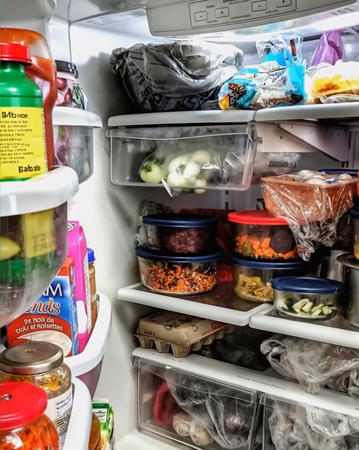
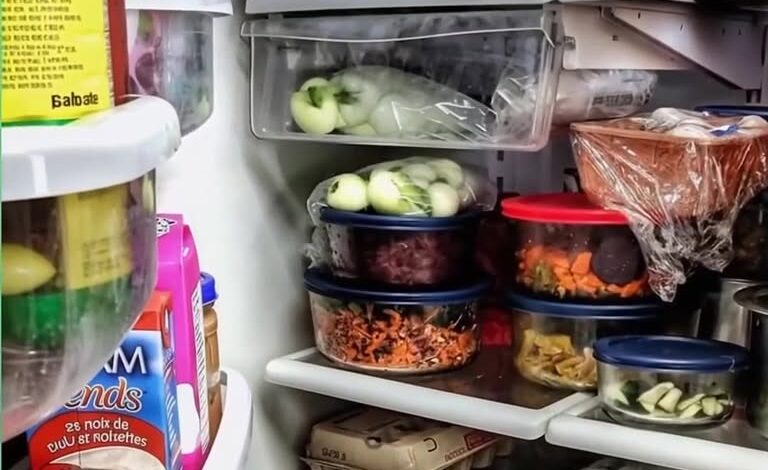
No matter how much she cooked, the refrigerator seemed empty by morning.
Large portions vanished without explanation.
Groceries disappeared faster than ever.
The more she noticed it, the more unsettled she became.
It wasn’t really about the food.
It was about the feeling.
The feeling that something was happening in her own home without her knowledge.
The feeling that she was missing part of the story.
Yet every time she considered bringing it up, she convinced herself she was being unreasonable.
Until one rainy Thursday afternoon changed everything.
The library closed unexpectedly due to a plumbing issue.
Delighted by the unexpected free time, Doris decided to surprise Alan with an early dinner.
She imagined his reaction when he walked through the door and found his favorite meal already waiting.
The thought made her smile.
But as she turned into the driveway, something caught her attention.
A familiar car sat parked outside.
Marian’s car.
Her sister-in-law visited occasionally, but usually after calling first.
Doris assumed she had simply stopped by for coffee.
Still smiling, she unlocked the front door and stepped inside.
“Hello?” she called.
No answer.
The house felt oddly quiet.
She walked toward the kitchen.
And stopped cold.
Marian stood in front of the refrigerator.
The door hung open.
A large tote bag rested on the counter.
Inside were containers of food.
Doris’s food.
The beef stew she’d made the previous evening.
The baked pasta from Tuesday.
A pie she had spent nearly two hours making.
Marian was packing them into her bag.
For several seconds, nobody spoke.
The only sound came from the refrigerator motor humming softly in the background.
Marian turned around.
Her face drained of color.
“Doris.”
The smile disappeared from Doris’s face.
Slowly.
Completely.
“What are you doing?”
Marian immediately became defensive.
“It’s not what it looks like.”
But it was exactly what it looked like.
When explanations finally came, they only made things worse.
Alan had apparently told Marian she could stop by whenever she wanted.
Take leftovers.
Help herself.
No need to ask.
“No big deal,” Marian said with a shrug.
“It’s just food.”
The words landed harder than any insult could have.
Just food.
To Marian, maybe it was.
To Doris, it wasn’t.
Every container represented hours of her life.
Planning.
Shopping.
Preparing.
Cooking.
Cleaning.
Love.
Care.
Effort.
All dismissed with two words.
Just food.
That night, she sat down with Alan.
Surely he would understand.
Surely he would see why this hurt.
Instead, he frowned as though the entire conversation confused him.
“She’s family.”
Doris stared at him.
“That’s not the point.”
“Then what is?”
The question stunned her.
Because after all these years, he genuinely didn’t understand.
“It isn’t about the leftovers.”
“Then why are you upset?”
She struggled to find the words.
How do you explain decades of invisible labor to someone who has never noticed it?
How do you explain what it feels like when your effort becomes expected instead of appreciated?
How do you explain being taken for granted?
“It’s about respect,” she finally whispered.
Alan sighed.
“Doris, you’re overreacting.”
Those words hurt more than finding Marian in the kitchen.
Because in that moment, Doris realized something painful.
The food wasn’t the issue.
The missing containers weren’t the issue.
The issue was that nobody saw her anymore.
Not really.
For years, she had quietly held everything together.
Meals.
Schedules.
Family traditions.
Emotional support.
The countless unseen tasks that kept a household running.
And somewhere along the way, everyone started treating those efforts as automatic.
As if they simply appeared.
As if they required nothing from her.
That night, Doris barely slept.
The next night wasn’t much better.
Neither was the one after that.
Eventually, clarity replaced confusion.
And with clarity came a decision.
One morning, before sunrise, Doris packed a small suitcase.
She left a handwritten note on the kitchen table.
Then she walked out the front door.
Not in anger.
Not to punish anyone.
But to save herself.
At her daughter’s home an hour away, something remarkable happened.
For the first time in years, Doris rested.
Really rested.
She cooked only when she wanted to.
Not because it was expected.
Not because someone depended on it.
Because she enjoyed it.
She joined a community garden.
Volunteered at a cooking program for seniors.
Made new friends.
Took long walks.
Rediscovered hobbies she had forgotten.
Slowly, joy returned.
Her children eventually came to understand.
What seemed like a disagreement about leftovers was actually years of accumulated hurt.
Years of feeling unseen.
Years of giving without acknowledgment.
Alan called often.
At first defensive.
Then apologetic.
Then genuinely remorseful.
He admitted he hadn’t understood.
Hadn’t noticed.
Hadn’t appreciated how much she carried.
The apology mattered.
But more importantly, so did the lesson.
Today, Doris lives in a bright apartment filled with plants, sunlight, and peace.
Her kitchen remains the heart of her home.
Bread still bakes in the oven.
Soups still simmer on the stove.
Pies still cool on the counter.
But now every meal is made for a different reason.
Not obligation.
Choice.
On her refrigerator hangs a handwritten note she sees every single day.
Five simple words.
A reminder she never intends to forget.
“Love should be appreciated, not expected.”
Whenever she reads it, she smiles.
Because after spending years feeding everyone else, Doris finally learned something equally important.