Long before tattoos became mainstream fashion, social media trends, or artistic statements displayed proudly on celebrities, they served a much deeper purpose.
They told stories.
Not the kind written in books or passed through conversations, but stories etched permanently into human skin.
Stories of survival.
Identity.
Belonging.
Faith.
Love.
Loss.
And the desire to leave a visible mark on the world.
Across thousands of years and countless civilizations, tattoos have accompanied humanity through nearly every chapter of history.
From ancient warriors and tribal leaders to modern artists and everyday individuals, people have used tattoos as a way to communicate who they are, where they come from, and what matters most to them.
Today, tattoos are more popular than ever.
Yet many people see only the artwork itself.
They admire the design without understanding the centuries of meaning that often lie beneath the surface.
The history of tattooing stretches back farther than most realize.
One of the earliest known examples belongs to a man known as Ötzi the Iceman.
Discovered preserved in ice and estimated to be more than 5,000 years old, Ötzi carried dozens of tattoo markings on his body.
Simple lines and geometric patterns covered various areas of his skin.
Researchers believe these markings may have served therapeutic, spiritual, or symbolic purposes.
Regardless of their exact meaning, they demonstrate something remarkable.
Even thousands of years ago, humans were already using their bodies as canvases for expression.
Ancient Egypt provides another fascinating example.
Archaeologists have discovered tattooed mummies dating back thousands of years.
Many of these markings appear on women and are believed to have been associated with fertility, protection, spirituality, and social status.
Rather than being purely decorative, tattoos functioned as meaningful symbols connected to daily life and cultural beliefs.
In many parts of the ancient world, tattoos were never casual decisions.
They represented identity.
Responsibility.
Achievement.
Or connection to something greater than oneself.
Perhaps nowhere is this more evident than in Polynesian cultures.
For centuries, tattooing occupied a sacred place within Polynesian society.
The word “tattoo” itself originates from the Polynesian word tatau.
For Polynesian communities, tattoos were far more than body art.
They functioned as visual biographies.
Every line carried meaning.
Every shape communicated information.
Every pattern revealed something about a person’s family, social status, accomplishments, responsibilities, and spiritual connections.
Receiving a tattoo was often a major life event.
The process could be physically demanding and emotionally significant.
Completing it demonstrated strength, endurance, and commitment to community traditions.
A completed tattoo was not merely decoration.
It was a symbol of identity earned through experience.
Indigenous cultures throughout the Americas also embraced tattooing as an important tradition.
Among Inuit communities, facial tattoos often marked important life transitions for women.
Certain patterns represented skills, maturity, survival knowledge, or readiness for marriage.
Elsewhere, Indigenous groups used tattoos during ceremonies, healing rituals, and spiritual practices.
These markings frequently reflected deep relationships with nature, ancestors, and community values.
Each design carried layers of meaning that extended far beyond appearance.
Throughout history, tattoos often served as powerful social identifiers.
A tattoo could instantly reveal a person’s place within society.
Warriors displayed symbols of bravery.
Leaders wore markings that reflected authority.
Religious practitioners carried sacred imagery connected to their beliefs.
In many communities, tattoos functioned almost like a visual language.
Those who understood the symbols could read an individual’s history simply by looking at their skin.
Yet tattoo culture also developed in very different environments.
Over time, tattoos became important within subcultures that existed outside mainstream society.
Prisons.
Military communities.
Biker groups.
Street organizations.
Among these groups, tattoos often conveyed experiences that words could not.
A simple symbol might represent loyalty.
Survival.
Time served.
Loss endured.
Or membership within a specific community.
Many prison tattoos, for example, carried highly specific meanings understood primarily by those familiar with that culture.
A teardrop.
A spiderweb.
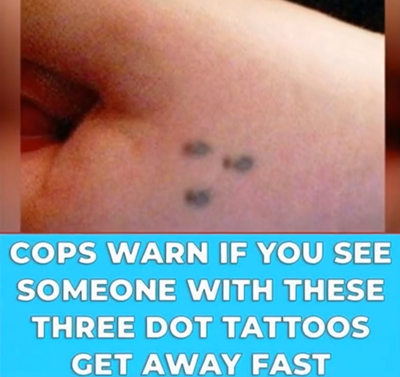
Three dots arranged in a triangle.
Five dots resembling a dice pattern.
Each symbol developed unique associations connected to personal experiences and group identity.
While modern tattoo enthusiasts may sometimes adopt similar imagery for artistic reasons, the original meanings often remain deeply significant within the communities that created them.
Numbers have also played an important role in tattoo symbolism.
Certain numbers commemorate life-changing events.
Others honor loved ones.
Some represent loyalty, rebellion, or important personal milestones.
A seemingly simple number tattoo can contain an entire lifetime of memories and meaning.
Symbols such as skulls, daggers, snakes, roses, and crosses demonstrate how tattoo interpretation often depends on context.
A skull might symbolize mortality.
Or survival.
Or remembrance.
A snake might represent wisdom.
Transformation.
Protection.
Or renewal.
The meaning often belongs as much to the wearer as to the image itself.
As societies evolved, so did tattoos.
Symbols once tied exclusively to specific communities gradually entered broader culture.
Designs that once identified tribal affiliation became appreciated for their artistic beauty.
Images once associated with rebellion became mainstream expressions of individuality.
Tattoo culture proved remarkably adaptable.
Rather than disappearing, it evolved alongside changing social values.
Different regions of the world developed distinctive tattoo traditions.
Japan’s renowned Irezumi tradition stands among the most recognizable.
These elaborate full-body designs often feature dragons, koi fish, tigers, cherry blossoms, and mythological figures.
Each image carries layers of symbolism connected to perseverance, courage, transformation, and the fleeting nature of life.
Although historically associated in part with organized groups such as the Yakuza, Japanese tattooing also represents one of the world’s most sophisticated and respected artistic traditions.
In Western societies, tattoos experienced a dramatic transformation over the past century.
Once associated primarily with sailors, soldiers, bikers, and countercultural movements, tattoos gradually entered mainstream acceptance.
Today, people from nearly every profession and background choose to wear tattoos.
Doctors.
Teachers.
Business executives.
Artists.
Parents.
Students.
The reasons vary widely, but the desire remains familiar.
To tell a story.
To preserve a memory.
To express identity.
Perhaps the most powerful aspect of tattooing is its role as personal storytelling.
Many people choose tattoos to commemorate pivotal moments in their lives.
The birth of a child.
The loss of a loved one.
A battle with illness.
Recovery from trauma.
A personal transformation.
A tattoo becomes a permanent reminder of a journey that shaped who they are.
For some, tattoos represent survival.
For others, love.
For others still, hope.
What makes tattoos extraordinary is their ability to transform invisible experiences into visible symbols.
They turn emotions into images.
Memories into art.
Stories into something that can be carried forever.
This personal significance is why assumptions about tattoos can be misleading.
Two people may wear identical designs for entirely different reasons.
The same symbol can hold vastly different meanings depending on the individual.
Understanding tattoos requires curiosity rather than judgment.
Context rather than assumption.
Respect rather than stereotype.
Modern tattoo culture continues to expand in exciting ways.
Artists experiment with styles ranging from minimalist line work and watercolor effects to hyper-realistic portraits and intricate geometric compositions.
Technology allows artists to share their work globally, inspiring innovation and cross-cultural collaboration.
Tattoo conventions attract enthusiasts from around the world.
Museums and galleries increasingly recognize tattooing as a legitimate art form.
Yet despite these innovations, the heart of tattooing remains unchanged.
People continue getting tattoos for the same reasons humans have for thousands of years.
To remember.
To honor.
To express.
To connect.
To leave a visible record of experiences that matter.
In many ways, tattoos serve as bridges between generations.
A symbol passed from parent to child.
A design inspired by ancestral traditions.
A tribute to cultural heritage.
Each tattoo becomes part of a larger human story.
A story that stretches across continents and centuries.
One person.
One memory.
One symbol at a time.
Ultimately, tattoos are far more than ink beneath the skin.
They are living art.
Personal archives.
Cultural artifacts.
Expressions of identity.
And reminders that human beings have always sought ways to communicate who they are and what they value most.
Whether chosen for beauty, symbolism, spirituality, remembrance, or self-expression, tattoos reflect something universal about the human experience.
The desire to tell our stories.
To preserve our memories.
And to leave a mark that endures long after the moment itself has passed.
That is why tattoos continue to fascinate generation after generation.
Because beneath every design lies something deeper than art.
A life.
A journey.