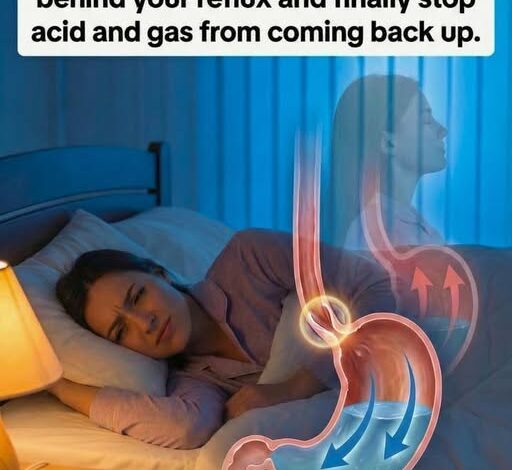
Why You May Have Heartburn, a Lump in Your Throat, or Constant Mucus — And What Your Stomach Valve Has to Do With It
Do you frequently feel a burning sensation in your chest after eating?
Or perhaps you don’t experience classic heartburn at all, but instead notice a persistent lump in your throat, sticky mucus, frequent throat clearing, hoarseness, chronic coughing, or a sour taste in your mouth.
At first glance, these symptoms may seem completely unrelated. One feels like a digestive problem, while the other feels more like a throat, voice, or sinus issue.
Yet many of them can stem from the same underlying cause: reflux caused by a weakened stomach valve.
Most people assume reflux happens because the stomach produces too much acid. In reality, the problem is often not the amount of acid, but where that acid is going.
When stomach contents move in the wrong direction, symptoms can appear in places far beyond the stomach itself.
The Hidden Gatekeeper: Your Lower Esophageal Sphincter
Between your esophagus and stomach sits a small ring of muscle called the lower esophageal sphincter (LES).
Think of it as a gate.
When functioning properly, it opens to allow food and drinks into the stomach, then closes tightly to keep everything where it belongs.
Problems begin when that gate becomes weak or relaxes at the wrong time.
When this happens, stomach acid, digestive enzymes, gas, and partially digested food can travel upward into the esophagus and sometimes even into the throat.
The result can include:
- Heartburn
- Chest discomfort
- Sour or bitter taste
- Chronic throat clearing
- Hoarseness
- Persistent cough
- Excess mucus
- Feeling of a lump in the throat
- Voice changes
The issue isn’t necessarily excess acid.
It’s acid in the wrong place.
Key Takeaways
- Reflux is often a mechanical problem, not simply an acid problem.
- The lower esophageal sphincter (LES) acts as the body’s anti-reflux valve.
- Excess pressure inside the stomach is one of the biggest reflux triggers.
- Certain foods and habits can weaken the valve.
- Small lifestyle changes can dramatically reduce symptoms for many people.
Your Stomach Is More Like a Pressurized Container Than a Storage Bag
Many people imagine the stomach as a passive container.
It isn’t.
The stomach functions more like a pressurized reservoir.
Every meal increases pressure inside it.
The larger the meal, the greater the pressure.
If the LES is strong, it usually keeps stomach contents where they belong.
But if the valve is weakened or overwhelmed, that pressure can push acid and gas upward.
This explains why reflux can occur even when acid production is completely normal.
Stomach acid isn’t inherently harmful.
In fact, it’s essential for digestion.
The problem arises when that acid escapes into tissues that were never designed to handle it.
The lining of the stomach is built to withstand acid.
The lining of the esophagus and throat is not.
Mistake #1: Overfilling Your Stomach
One of the most common reflux triggers is simply eating too much at once.
Large meals stretch the stomach and increase internal pressure.
That pressure pushes directly against the LES.
The more pressure present, the easier it becomes for stomach contents to move upward.
This is why reflux commonly appears after:
- Heavy dinners
- Holiday meals
- Restaurant portions
- Buffets
- Late-night eating
Try the 80% Full Rule
Instead of eating until you’re stuffed, stop when you feel comfortably satisfied.
This simple habit can significantly reduce pressure inside the stomach and decrease reflux episodes.
It may also help to:
- Eat smaller meals more frequently
- Avoid overeating at night
- Sip liquids during meals rather than consuming large amounts at once
Mistake #2: Ignoring Gravity
Gravity is one of the body’s best defenses against reflux.
When you’re upright, gravity helps keep stomach contents where they belong.
When you lie down, that assistance disappears.
If the stomach is still full and the LES is weak, acid can move upward much more easily.
This is why many people experience symptoms while:
- Sleeping
- Watching television on the couch after dinner
- Reclining after meals
Helpful Strategies
Try not to lie down for at least two to three hours after eating.
You may also benefit from:
- Sleeping on your left side
- Elevating the head of your bed by about 6 inches (15 centimeters)
- Using a wedge pillow rather than stacking regular pillows
Research suggests left-side sleeping often reduces nighttime reflux because of the natural position of the stomach.
Foods and Habits That May Relax the Valve
Certain foods and substances can weaken or relax the LES, making reflux more likely.
Common triggers include:
- Peppermint and mint products
- Chocolate
- Alcohol
- Tobacco
- Fried foods
- High-fat meals
- Coffee
- Carbonated beverages
- Spicy foods
- Citrus fruits
- Tomato-based sauces
Not everyone reacts to the same foods.
One person’s trigger may be completely harmless to someone else.
Keeping a symptom journal for several weeks can help identify personal patterns.
A Practical 3-Step Strategy to Reduce Reflux
Step 1: Reduce Pressure
Focus on reducing the physical pressure pushing against the LES.
This includes:
- Eating smaller meals
- Avoiding overeating
- Not lying down after meals
- Wearing looser clothing around the waist
- Maintaining a healthy weight if recommended by your doctor
Step 2: Create a Protective Barrier
Some people benefit from alginate-based products.
These products create a floating barrier on top of stomach contents that can help reduce reflux after meals and during sleep.
They don’t cure reflux, but they may help control symptoms.
Always follow label instructions and consult a healthcare professional if you’re taking other medications.
Step 3: Protect the Throat
When reflux reaches the throat, it may cause:
- Hoarseness
- Excess mucus
- Chronic coughing
- Constant throat clearing
- Voice fatigue
Managing reflux itself is the most important step, but persistent throat symptoms should be evaluated by a healthcare professional, particularly if they continue for several weeks.
When You Should See a Doctor
While mild reflux often improves with lifestyle changes, some symptoms require medical evaluation.
Seek medical attention if you experience:
- Difficulty swallowing
- Food getting stuck when swallowing
- Unexplained weight loss
- Vomiting blood
- Black or tarry stools
- Frequent vomiting
- Severe chest pain
- Symptoms that repeatedly wake you at night
Chest pain should always be taken seriously.
If chest discomfort is accompanied by shortness of breath, sweating, dizziness, nausea, or pain spreading into the arm, neck, jaw, or back, seek immediate medical attention to rule out a heart-related emergency.
The Bottom Line
Reflux is about more than stomach acid.
It’s also about pressure, timing, body position, and the strength of the valve separating the stomach from the esophagus.
When that valve isn’t functioning properly, acid can travel upward and cause symptoms that affect the chest, throat, mouth, and voice.
The encouraging news is that many people improve significantly through simple lifestyle changes.
Eat smaller meals.
Avoid lying down after eating.
Sleep in a reflux-friendly position.
Identify trigger foods.
Reduce unnecessary pressure on your stomach.
These changes may seem small, but together they can make a meaningful difference.
Understanding how reflux works turns it from a mysterious frustration into a manageable condition.
And sometimes, better digestion begins not with eliminating more foods or taking stronger medications, but with supporting the body’s natural mechanics and giving that small but important stomach valve a chance to do its job.