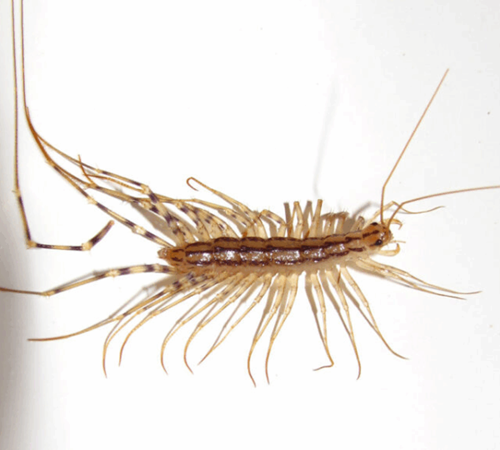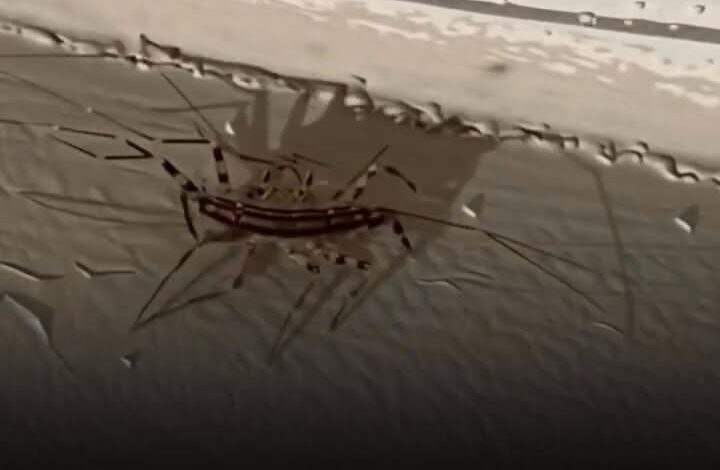
Most people react the same way when they spot a centipede racing across the floor.
Their first instinct is usually disgust, followed closely by the urge to grab a shoe, a tissue, or anything nearby to get rid of it as quickly as possible.
With dozens of rapidly moving legs, long twitching antennae, and an unsettling speed that seems almost unnatural, centipedes have earned a reputation as one of the most unwelcome visitors a homeowner can encounter. They often appear without warning, darting out from beneath furniture, disappearing into cracks, or climbing walls with surprising ease.
Yet despite their frightening appearance, centipedes are among the most misunderstood creatures found in and around homes.
The truth is that these ancient arthropods are far more fascinating—and far less dangerous—than most people realize.
Centipedes belong to a group of predatory arthropods known as Chilopoda. Unlike their distant relatives, millipedes, which primarily feed on decaying plant matter, centipedes are active hunters. They rely on speed, agility, and venom to capture prey, making them highly effective predators in both natural ecosystems and residential environments.
Their bodies are divided into segments, each carrying a single pair of legs. Depending on the species, a centipede may possess anywhere from 15 to more than 170 legs throughout its lifetime. Ironically, despite the name “centipede,” none actually have exactly one hundred legs.
Their long antennae constantly sweep the environment, collecting information about vibrations, temperature changes, and chemical signals. These sensory tools help them navigate dark spaces and locate prey with remarkable precision.
One of the most common concerns people have is whether centipedes can bite.
Technically, they can.
Near their mouths are specialized appendages called forcipules, which function like venomous claws. Centipedes use these structures to immobilize insects, spiders, and other small creatures they hunt.
However, bites involving humans are uncommon.
Most centipedes prefer escape over confrontation and will only bite when trapped, threatened, or handled directly. Even when a bite occurs, the effects are typically mild. The sensation is often compared to a bee sting, producing temporary redness, swelling, discomfort, or itching around the affected area.
Serious medical complications are extremely rare in healthy individuals.
For pets such as dogs and cats, centipede bites generally cause only minor irritation as well, though monitoring for unusual reactions is always advisable.
While they may not pose a major threat, centipedes remain remarkable creatures with some surprising characteristics.
One fascinating fact is that their leg count can change throughout their lives.
As centipedes grow, they periodically shed their exoskeleton through a process called molting. During these molts, some species develop additional body segments and leg pairs. Damaged or missing legs can also regenerate over time, meaning older centipedes often have significantly more legs than younger individuals.
Their history is even more impressive.
Centipedes have existed on Earth for over 400 million years. Long before dinosaurs roamed the planet, their ancestors were already hunting across ancient landscapes. This extraordinary longevity has allowed them to evolve into highly specialized predators perfectly adapted for survival.
Their speed is another surprising trait.
Although their numerous legs might suggest awkward movement, centipedes are incredibly fast. Some species can travel more than a foot per second, allowing them to ambush prey and evade predators with ease. Watching one sprint across a room is often enough to convince people they move much faster than they actually do.
Their diet is equally impressive.
Smaller centipedes typically feed on insects, larvae, worms, silverfish, cockroaches, and spiders. Larger species can tackle prey far bigger than expected, including small reptiles, amphibians, and even other centipedes.
Because of this appetite, centipedes serve an important ecological function by helping control populations of many nuisance pests.
Another surprising fact is their lifespan.
Unlike many insects that survive only a few months, some centipedes can live for several years. House centipedes, one of the species most commonly encountered indoors, may survive up to six years under favorable conditions. Certain larger tropical species can live even longer.
Despite being effective predators, centipedes are also prey for many animals.
Birds frequently hunt them while foraging. Frogs and toads consume them opportunistically. Some spiders, beetles, ants, rodents, and snakes also include centipedes in their diets. This predator-prey relationship helps maintain balance within ecosystems and prevents centipede populations from growing unchecked.
Ironically, the same creature that frightens many homeowners often works behind the scenes as a natural pest-control specialist.
House centipedes actively hunt cockroaches, silverfish, termites, spiders, and other household pests. In many cases, finding a centipede indoors may indicate the presence of an even larger food source hidden elsewhere in the home.
This is why exterminating every centipede you encounter isn’t always the best solution.
A single house centipede does not indicate an infestation. They do not build nests, create webs, or live in organized colonies. Most are solitary hunters that spend their lives searching for prey and avoiding detection.
If centipedes are appearing frequently, the underlying issue is often environmental rather than the centipedes themselves.
Moisture is one of their biggest attractions.
Damp basements, leaky pipes, poorly ventilated bathrooms, and humid crawl spaces provide ideal conditions for both centipedes and the insects they hunt.
Reducing moisture levels is one of the most effective ways to discourage them. Fixing plumbing leaks, improving airflow, using dehumidifiers, and addressing standing water can make a home significantly less appealing.
Eliminating their food source is equally important.
By controlling populations of cockroaches, silverfish, ants, and other insects, homeowners naturally reduce the reason centipedes entered the home in the first place.
Sealing cracks around foundations, windows, doors, and utility openings can also help prevent them from entering.
For larger infestations or recurring problems, professional pest control services can identify the root cause and implement targeted solutions safely and effectively.
Ultimately, centipedes are far more beneficial than their appearance suggests.
They are ancient survivors, highly specialized hunters, and valuable contributors to ecological balance. While their sudden appearance can certainly be startling, they rarely pose any significant danger to humans or pets.
Understanding what centipedes are—and what they are not—allows homeowners to respond with knowledge instead of fear.
Rather than viewing them solely as unwanted intruders, it may be more accurate to see them as nature’s pest-control specialists: swift, efficient predators quietly helping keep other household pests under control.
The next time a centipede darts across your floor, it may still make you jump. But knowing the truth behind those countless legs and lightning-fast movements might make the encounter a little less alarming—and a lot more fascinating.