Hollywood star retired from acting & now lives in a tiny town where people respect her privacy

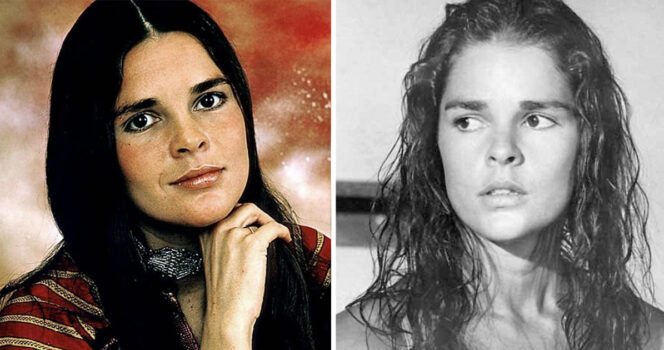
Long before she became the luminous star of Love Story, Ali MacGraw understood struggle.
Born Elizabeth Alice MacGraw on April 1, 1939, in Pound Ridge, New York, she grew up in a household filled with creativity but shadowed by emotional turmoil and financial hardship. Her parents were both artists, talented and imaginative people who believed deeply in the power of art. Yet talent did not shield them from poverty, nor did it heal the wounds they carried.
Her father, Richard MacGraw, had endured a difficult childhood that included time in an orphanage and years of unresolved anger toward the parents who abandoned him. According to Ali, much of his life was spent battling pain he never fully escaped. At times he could be warm and loving. At others, he could be frighteningly unpredictable.
The family lived modestly, often sharing limited space with others and struggling to make ends meet. Ali later recalled feeling the strain of those years—the lack of privacy, the tension in the home, and the uncertainty that seemed to hover over everyday life.
Those experiences left a lasting mark.
They also gave her something that would serve her well throughout her life: resilience.
Despite the challenges, Ali inherited her parents’ artistic instincts and intellectual curiosity. She earned a scholarship to Rosemary Hall and later attended Wellesley College. By the time she moved to New York City in her early twenties, she possessed a combination of determination, intelligence, and elegance that would soon open unexpected doors.
Her first major opportunity came at Harper’s Bazaar, where legendary editor Diana Vreeland hired her as an assistant. The environment was demanding and intensely competitive, but Ali thrived. She worked relentlessly, learning every aspect of the fashion business while developing a reputation for discipline and professionalism.
It wasn’t long before people noticed something else.
She had a striking presence.
Photographer Melvin Sokolsky encouraged her to move into styling and eventually modeling. Soon she was appearing in magazines, television commercials, and advertising campaigns around the world. Her beauty was undeniable, but what truly captured attention was the sense of intelligence and mystery she projected.
Hollywood soon came calling.
After a small role in A Lovely Way to Die in 1968, she landed the lead in Goodbye, Columbus, earning a Golden Globe and announcing herself as a major new talent.
Then came the role that changed everything.
When Ali read the script for Love Story, she immediately felt connected to Jenny Cavilleri, the smart, witty young woman whose romance would become one of cinema’s most famous love stories. The film’s producer, Robert Evans, believed she was perfect for the part from the moment they met.
Released in 1970, Love Story became a cultural phenomenon.
Audiences fell in love with Jenny, and they fell in love with Ali MacGraw. The film became one of the highest-grossing movies of its era, earned her an Academy Award nomination, and transformed her into an international star almost overnight.
At the same time, her relationship with Robert Evans blossomed. The couple married and welcomed a son, Josh Evans, in 1971.
From the outside, her life appeared charmed.
But success often hides complications.
Everything shifted when Steve McQueen entered her life.
The chemistry between them was immediate and powerful. Drawn to his charisma and independence, Ali left Evans and began a relationship with the actor many considered Hollywood’s ultimate rebel.
Their romance fascinated the public.
Their marriage proved far more difficult.
Behind the image of the rugged movie star was a man carrying deep emotional scars of his own. McQueen’s jealousy and need for control increasingly strained the relationship. Ali later spoke candidly about the limitations placed on her independence and the loneliness she experienced during their marriage.
By 1978, the relationship had ended.
The years that followed brought professional disappointments and personal struggles. Several films failed commercially, and Ali battled alcohol and substance abuse. Looking back, she acknowledged how profoundly drinking affected her judgment and happiness.
Determined to reclaim her life, she entered the Betty Ford Center in 1986.
The decision marked a turning point.
Recovery gave her clarity and a renewed sense of purpose. It also allowed her to focus on what mattered most: health, family, and meaningful work beyond fame.
Another major change arrived in 1993 when a wildfire destroyed her California home.
Rather than rebuilding in Los Angeles, Ali chose an entirely different path.
She moved to Tesuque, New Mexico, near Santa Fe.
The decision transformed her life.
Far from Hollywood, she found something she had spent years searching for: peace. Her neighbors knew her not as a movie star but as a community member, volunteer, advocate, and friend. She became involved in local causes, supported the International Folk Art Market, promoted wellness programs, and devoted herself to projects that felt personally meaningful.
Although she largely stepped away from acting, creativity never left her life.
She explored yoga, championed animal welfare causes, and occasionally returned to the stage. Most importantly, she remained curious about the world around her.
That curiosity became one of her defining qualities.
Even in later years, she often spoke about the importance of staying open to new experiences and continuing to create. Happiness, she believed, came from remaining engaged and inspired.
Through every chapter, one relationship remained especially important: her bond with her son, Josh.
An actor and director in his own right, Josh carried forward the family’s artistic tradition. Ali often described him as her favorite person in the world, speaking proudly of the life he built and the values they shared.
Looking back, Ali MacGraw’s story is about far more than fame.
It is the story of a woman who survived a difficult childhood, reached extraordinary heights of success, endured heartbreak and addiction, and ultimately found the courage to redefine her life on her own terms.
Many people remember her as the unforgettable star of Love Story.
But perhaps her greatest achievement came afterward.
She learned that fulfillment does not always come from remaining in the spotlight.
Sometimes it comes from walking away from it.
And choosing yourself instead.