What started as a routine afternoon of cleaning turned into an unexpected lesson about curiosity, observation, and the tendency of our minds to imagine the worst before we know the facts.
The day had begun quietly. Sunlight streamed through the bedroom window, casting warm rectangles across the hardwood floor. Dust particles drifted lazily through the golden light, and the entire room seemed to invite a fresh start. After several busy weeks of postponing household chores, I finally decided it was time to give the bedroom the attention it deserved.
There is something oddly satisfying about cleaning a familiar space. It’s more than just removing clutter. It’s a way of resetting your environment and, in many ways, your mind. As I stripped the bed of blankets and pillows, smoothed the sheets, and organized a few items that had accumulated on the nightstand, I felt a growing sense of accomplishment.
Everything seemed perfectly ordinary.
Until I noticed something strange.
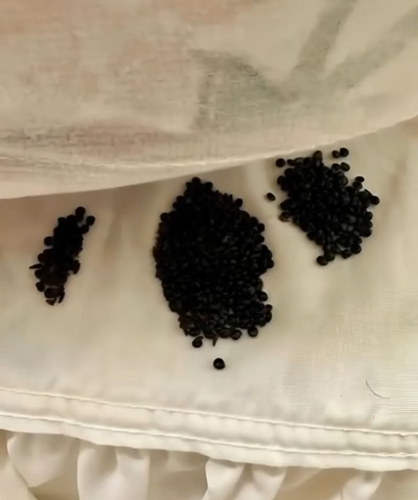
Near the corner of the bed frame, tucked into a narrow space where the mattress met the wood, sat a small cluster of dark particles. At first glance, they looked insignificant—tiny enough that most people would probably brush them away without a second thought.
Yet something about them caught my attention.
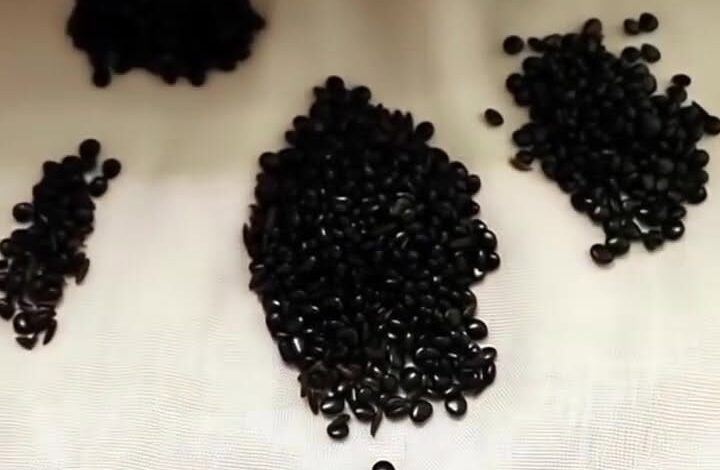
The particles were remarkably uniform. Each one appeared almost identical in size and shape. They weren’t scattered randomly like dust. Instead, they were gathered together as if deliberately placed there.
Curious, I crouched down for a closer look.
The tiny objects were dark brown, smooth, and oval-shaped. Under the afternoon sunlight, they reflected a faint shine that made them stand out against the wood. Instantly, a dozen questions flooded my mind.
What were they?
How had they gotten there?
And perhaps most importantly—should I be concerned?
A small wave of uneasiness crept in.
Anyone who has ever discovered something unusual in their home knows how quickly curiosity can transform into anxiety. Within seconds, my imagination began supplying explanations. Some were harmless. Others were considerably less reassuring.
Could they be insect eggs?
Droppings from some hidden pest?
Signs of an infestation lurking somewhere behind the walls?
The more I looked, the more mysterious they seemed.
Determined to figure it out, I carefully picked up several of the particles and placed them on a sheet of white paper. Against the bright background, their characteristics became even clearer. They were hard, smooth, and surprisingly consistent in appearance.
Nothing about them seemed random.
I spent several minutes simply studying them.
The longer I stared, the more intrigued I became.
Eventually, curiosity won out over speculation.
I grabbed my phone and began researching.
At first, the internet provided more confusion than clarity. Household forums offered countless theories. Some people claimed similar objects were insect eggs. Others insisted they were droppings from small rodents. A few confidently identified them as seeds.
Each answer seemed plausible until I read the next one.
Within minutes, I found myself trapped in a familiar modern ritual: falling down an online rabbit hole.
One article led to another.
Pest-control websites described warning signs of infestations. Gardening forums discussed seed varieties. Home-maintenance blogs offered photographs of mysterious household discoveries that looked surprisingly similar to mine.
The possibilities seemed endless.
For a brief moment, I imagined hidden colonies of insects behind my walls.
Then I imagined tiny seeds carried indoors by the wind.
Then I imagined both possibilities simultaneously.
The uncertainty was almost amusing.
As I continued comparing photographs and descriptions, however, a pattern emerged.
The objects I had found matched certain types of plant seeds remarkably well.
Their size.
Their shape.
Their texture.
Everything pointed toward a much simpler explanation than the alarming scenarios my imagination had created.
I dug deeper.
Many homeowners reported discovering similar seeds after drying blankets, sheets, or clothing outdoors. Small seeds from nearby plants often cling to fabric unnoticed before eventually falling off indoors.
Others described carrying seeds inside on shoes, socks, jackets, or even pet fur.
Suddenly, the mystery began making sense.
A few days earlier, I had hung bedding outside to air out in the sunshine.
The realization felt almost embarrassingly obvious.
After all the speculation, research, and concern, the most likely answer was also the simplest.
The strange objects beneath my mattress were probably nothing more than ordinary plant seeds.
I laughed out loud.
The tension that had been building all afternoon dissolved instantly.
What had initially seemed like a potential household crisis turned out to be a harmless reminder of how easily uncertainty can influence our thinking.
With a renewed sense of calm, I collected the seeds and placed them into a small container. I wasn’t saving them for any practical reason. Somehow, they felt worth keeping.
Not because they were valuable.
Because they represented a lesson.
As I returned to cleaning, I found myself paying closer attention to my surroundings.
I checked beneath the bed more thoroughly.
I dusted corners that had been overlooked for months.
I examined shelves, drawers, and hidden spaces with a new appreciation.
The experience made me realize how little attention we often give to the environments we inhabit every day.
Our homes become so familiar that we stop truly seeing them.
Yet hidden in forgotten corners are countless small stories waiting to be noticed.
A coin lost years ago.
A photograph tucked behind a dresser.
A feather carried inside on a jacket.
Or a handful of seeds quietly resting beneath a mattress.
None of these discoveries are life-changing.
Yet each one reminds us that even the most ordinary spaces contain surprises.
Later that evening, I reflected on how dramatically my emotions had shifted throughout the day.
I had begun with contentment.
Then curiosity.
Then anxiety.
Then investigation.
Finally, understanding.
The entire experience mirrored something larger about human nature.
When confronted with uncertainty, we often rush toward worst-case scenarios. Our minds instinctively fill gaps in knowledge with fear, speculation, and assumption.
Yet reality is often far less dramatic.
Sometimes the thing we fear most turns out to be nothing more than a handful of seeds.
That realization stayed with me long after the bedroom was clean.
In the weeks that followed, I became more attentive in small ways. I noticed details I previously ignored. I paid greater attention to the spaces around me.
More importantly, I became aware of how quickly assumptions can take hold when answers are missing.
The tiny seeds beneath my mattress taught me that observation is often more valuable than immediate judgment.
Patience reveals what panic obscures.
Curiosity creates understanding.
And many mysteries become far less intimidating once examined closely.
Now, whenever I change the sheets or clean beneath the bed, I find myself smiling at the memory.
Not because of the seeds themselves.
But because of what they represented.
A reminder that life is filled with small puzzles.
A reminder that the ordinary still has the power to surprise us.
And a reminder that sometimes the most meaningful discoveries aren’t hidden in distant places or extraordinary events—they’re tucked quietly into the corners of our everyday lives, waiting for us to notice them.
What began as a simple cleaning project became something unexpectedly valuable: a lesson in mindfulness, patience, and the quiet rewards of paying attention.
And all because of a few tiny seeds hidden beneath a mattress.