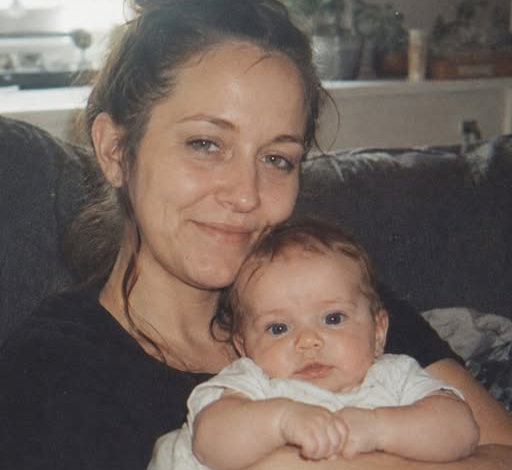
The moment a child is born is supposed to rearrange the world in beautiful ways. At least, that’s what Jennifer Callahan believed as she lay in a hospital bed at thirty-one years old, exhausted but glowing with the overwhelming shock of new motherhood. For months, she had imagined this exact moment in countless quiet daydreams: the soft hospital lighting, the first cry, the warmth of her newborn daughter against her chest, and the expression on her husband Alex’s face when he held their baby for the first time.
She imagined awe.
Joy.
Fear mixed with love.
What she did not imagine was suspicion.
Her daughter Sarah had arrived healthy and perfect — seven pounds, two ounces, with pale blue eyes and soft blonde hair. Jennifer noticed the features immediately but thought little of them. Babies often arrived lighter than expected. Genetics were complicated. Families carried hidden traits for generations. None of it seemed important compared to the tiny heartbeat resting against her chest.
Then she looked at Alex.
And instantly, something felt wrong.
Not nervous.
Not emotional.
Not overwhelmed.
Distant.
He stared at Sarah not like a father meeting his child, but like a man studying evidence. His eyes moved repeatedly between the baby and Jennifer as though trying to solve a puzzle no one else understood.
Finally, in a voice so careful it almost sounded rehearsed, he asked:
“Are you sure she’s mine?”
The room changed immediately.
Not physically.
Emotionally.
Some moments split your life into before and after so quickly you almost hear the divide happen inside yourself. Jennifer would later describe that question as the exact instant she stopped feeling safe in her marriage.
At first, exhaustion blurred her understanding. She had just given birth hours earlier. Her body hurt. Her emotions were raw and disoriented. Surely she misunderstood him.
But Alex continued.
“She doesn’t look like us.”
Jennifer tried explaining calmly. Babies’ features often changed over time. Hair darkened. Eye color shifted. Genetics didn’t operate like simple equations.
Alex barely listened.
Instead, he said the five words that shattered everything:
“I need a paternity test.”
Not next week.
Not after discussion.
Immediately.
Inside the delivery room.
While their daughter was still only hours old.
Jennifer later said what hurt most wasn’t only the accusation itself — it was how quickly Alex seemed willing to believe betrayal over trust. Two years of marriage dissolved beneath a single glance at a newborn’s face. Every promise they had built together suddenly felt conditional.
Still, she agreed to the test.
Not because she owed him proof.
But because part of her understood something terrifying already:
if she refused, he would spend years treating suspicion as certainty.
So she said yes.
What followed became far crueler than the test itself.
Only days after bringing Sarah home from the hospital, Alex announced he needed “space to think.” In reality, he abandoned his wife and newborn daughter to stay with his parents while waiting for test results he should never have demanded in the first place.
Jennifer was suddenly alone.
Recovering from childbirth.
Barely sleeping.
Learning how to care for a newborn.
Trying not to collapse emotionally while the man who was supposed to protect her questioned whether their child belonged to him at all.
Fortunately, she was not completely abandoned.
Her older sister Emily arrived almost immediately and quietly became the support system Jennifer desperately needed. She cooked meals Jennifer forgot to eat. Helped with nighttime feedings. Held Sarah when Jennifer cried privately in the bathroom so no one would hear. Emily didn’t waste energy pretending Alex’s behavior was understandable.
“He should be here,” she said repeatedly.
“This is not what a husband does.”
Jennifer knew that already.
Then things became even worse.
About a week after Alex left, his mother Linda called.
Jennifer had always believed they had a decent relationship. Linda was controlling and opinionated, but she had seemed welcoming enough during the marriage. Jennifer expected concern. Maybe awkwardness. Perhaps even an apology for her son’s behavior.
Instead, Linda delivered a warning.
If the paternity results came back negative, she promised Jennifer would “leave the marriage with nothing.” She spoke about lawyers, resources, connections — all with the chilling confidence of someone already convinced Jennifer was guilty.
Jennifer sat frozen in her living room listening to her mother-in-law threaten her while her newborn daughter slept nearby.
And for the first time, she realized something devastating:
Alex’s suspicion had not stayed private.
His family had already decided who she was.
Three weeks later, the results arrived.
Jennifer insisted Alex open them in front of her.
He sat across from her at the kitchen table trembling slightly as he unfolded the paperwork. Jennifer watched his expression carefully while he read.
Shock crossed his face first.
Then embarrassment.
Then something stranger.
Disappointment.
The test confirmed exactly what Jennifer had known from the beginning:
Sarah was his daughter.
Jennifer expected relief from him.
Maybe shame.
Maybe tears.
Instead, Alex looked almost angry.
That reaction stayed with her.
At the time, she couldn’t fully explain why.
She told him plainly:
“You accused me of cheating while I was holding our newborn daughter.”
Then she told him about Linda’s threats.
Alex looked genuinely surprised. He claimed he had no idea his mother had called Jennifer. Whether that was true or not hardly mattered anymore.
The damage had already happened.
For a few days afterward, things became eerily calm. Alex apologized repeatedly. He said insecurity had clouded his judgment. He begged Jennifer to let him repair things. Part of her desperately wanted to believe him because rebuilding felt easier than accepting what his accusation truly meant.
But something inside her kept returning to that look on his face.
That disappointment.
Why would a man seem disappointed his child was biologically his?
The question haunted her until one sleepless night when instinct finally overpowered denial.
Alex had fallen asleep on the couch after spending the evening trying to reconnect with Jennifer and Sarah. His phone rested on the coffee table nearby. Jennifer knew the passcode. Their marriage had once operated on complete openness.
At least she thought it had.
She picked up the phone.
And discovered four months of messages with another woman.
A coworker named Danielle.
The affair had been active during Jennifer’s pregnancy. Some messages discussed weekends Alex claimed he spent with friends. Others were sent while Jennifer believed he was working late.
Then Jennifer found the message that changed everything.
Alex had written that he would “find a way out of the marriage soon.”
Suddenly the paternity test made perfect sense.
He hadn’t accused Jennifer because he truly believed she cheated.
He accused her because he was cheating himself.
If Sarah had not been his child, Alex could leave guilt-free. He could become the betrayed husband instead of the unfaithful one. The test wasn’t about truth.
It was about escape.
That realization destroyed the final piece of Jennifer’s trust.
She didn’t scream.
Didn’t wake him.
Didn’t confront him immediately.
Instead, she photographed every message carefully.
Then she called a lawyer the next morning.
By the time Alex returned from work that evening, Jennifer and Sarah were gone.
With Emily’s help, she packed everything essential into their cars and moved into her sister’s home temporarily while divorce proceedings began.
At first, Alex denied everything.
He minimized the messages.
Claimed the relationship wasn’t physical.
Invented explanations for conversations that clearly revealed emotional betrayal at minimum.
Then Jennifer’s lawyer presented the screenshots.
The denials stopped.
The divorce unfolded slowly but decisively. Jennifer kept the house. Secured child support. Established custody arrangements centered around Sarah’s needs rather than Alex’s excuses.
And through it all, she began noticing something important:
her life, while smaller now, felt more honest.
There was no illusion left to maintain.
No pretending trust still existed where it had already died.
Months later, Jennifer sat at dinner with Emily while Sarah bounced happily nearby chewing on a teething ring.
Emily asked quietly:
“What will you tell her someday?”
Jennifer thought carefully before answering.
“The truth.”
Not a softened version.
Not one designed to protect reputations.
The truth:
that her father chose suspicion over trust.
That her mother chose honesty over comfort.
And that some relationships do not survive betrayal because survival would require pretending the betrayal never mattered.
Jennifer would later say the hardest part was not losing the marriage she actually had.
It was grieving the marriage she believed she had.
But motherhood changed her understanding of strength completely. Before Sarah, she might have tolerated dishonesty longer. Might have accepted apologies unsupported by action. Might have convinced herself preserving appearances mattered more than protecting peace.
Now everything was different.
Because she had a daughter watching her.
A daughter who would someday learn what love should feel like by observing the choices Jennifer made after being hurt.
And Jennifer refused to teach her that women should remain inside relationships built on lies simply because leaving feels difficult.
Sarah is older now.
Her pale blue eyes eventually darkened slightly, carrying traces of her father’s features after all — the same features he nearly used as justification to abandon her before he even knew her.
Jennifer says she no longer finds irony in that.
Only clarity.
Because genetics were never the real issue.
Trust was.
And once trust dies inside a marriage, no test in the world can bring it back.