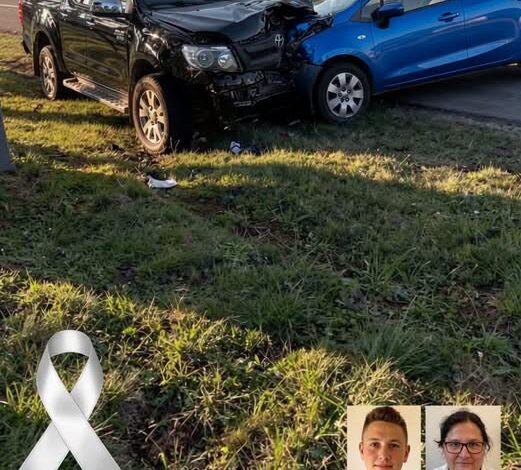
What should have been an ordinary ride home from class became one of the darkest nights in recent memory.
As the bus carried university students through the quiet roads of rural São Paulo, most were likely thinking about assignments, family dinners, weekend plans, or simply getting home after another long day. Instead, within moments, their journey ended in unimaginable tragedy.
A violent collision tore through the night, leaving twisted metal, shattered glass, and lives forever changed.
By the time the chaos gave way to silence, twelve young students had lost their lives, and dozens of others were fighting to survive.
For families waiting at home, the phone calls that followed would become memories they could never erase.
The devastating crash occurred near the town of Nuporanga, where students from the University of Franca were traveling back after evening classes. The route was a familiar one, traveled countless times by young people pursuing their education and dreaming about the futures they were working so hard to build.
That routine ended abruptly when the bus collided with a heavy truck.
The impact was catastrophic.
The force of the collision crushed large sections of the bus, scattering debris across the highway and trapping many passengers inside the mangled vehicle. Darkness, flashing emergency lights, and the smell of fuel quickly replaced the quiet rhythm of the countryside.
Emergency services responded within minutes.
Police officers, firefighters, and ambulance crews rushed to the scene, confronting one of the most difficult rescue operations many of them had ever experienced.
Working beneath powerful floodlights, firefighters carefully cut through twisted steel in an effort to reach those trapped inside. Paramedics moved from victim to victim, providing emergency treatment wherever they could while coordinating the transport of the injured to nearby hospitals.
Every second mattered.
Some passengers were rescued quickly.
Others required lengthy extrication efforts as first responders fought against collapsed sections of the bus.
Despite their determination, twelve students could not be saved.
They died at the scene, leaving classmates, relatives, professors, and an entire community struggling to comprehend the scale of the loss.
Twenty-one other passengers survived and were taken to medical facilities across the region.
Several suffered serious injuries requiring specialized treatment, prompting hospitals to coordinate resources to ensure every patient received appropriate care. Doctors, nurses, and trauma teams worked through the night as anxious families gathered in waiting rooms, desperate for updates.
For those who survived physically, the emotional recovery has only just begun.
Experiencing such a traumatic event often leaves lasting psychological wounds alongside visible injuries. Recognizing this, the University of Franca quickly organized counseling services and support for students, faculty members, and the families affected by the tragedy.
Grief counselors and mental health professionals have become an important part of the recovery process, helping survivors and loved ones begin coping with an experience few people are ever prepared to face.
Meanwhile, investigators immediately launched an extensive inquiry into what caused the collision.
Authorities secured the crash site and began carefully documenting every piece of evidence. Specialists examined the damaged vehicles, measured tire marks, photographed debris patterns, and worked to reconstruct the sequence of events leading up to the impact.
The truck driver was taken into police custody while receiving medical treatment, as investigators continued gathering information about the circumstances surrounding the crash.
Officials have emphasized that the investigation remains active.
Among the questions investigators are examining are whether mechanical failures played any role, whether road conditions contributed to the collision, and whether driver actions or other factors influenced the outcome.
Their goal is not only to determine exactly what happened but also to identify any circumstances that might help prevent similar tragedies in the future.
As news of the disaster spread across Brazil, messages of sympathy poured in from every corner of the country.
São Paulo Governor Tarcísio de Freitas publicly expressed his condolences to the victims’ families and declared three days of official mourning throughout the state.
Flags were lowered to half-staff as schools, businesses, and public institutions paused to honor the young lives lost.
The governor also pledged that the investigation would be conducted thoroughly and transparently, promising accountability wherever the evidence might lead.
Beyond the immediate investigation, the tragedy has reignited broader conversations about transportation safety.
Many people have questioned whether additional protections are needed on regional highways frequently used by buses carrying students and workers. Discussions have focused on roadway maintenance, traffic enforcement, heavy vehicle regulations, lighting, signage, and emergency response capabilities.
Transportation specialists and community leaders alike argue that every serious accident presents an opportunity to examine existing safety measures and identify improvements that could reduce future risks.
While investigators continue their work, the community has found its own ways to mourn.
Across Franca and neighboring towns, memorials have appeared almost overnight.
Candles flicker beneath photographs of the victims.
Flowers continue to accumulate.
Handwritten notes express sorrow, love, and support for grieving families.
Classmates gather quietly, sharing stories about friends whose dreams ended far too soon.
Professors remember students who had only recently begun building careers they hoped would change their lives and support their families.
Each photograph displayed at these memorials represents far more than another statistic.
They represent future teachers.
Future engineers.
Future healthcare workers.
Future entrepreneurs.
Young people whose ambitions were interrupted before they had the opportunity to fully unfold.
For parents, siblings, and friends, those dreams now exist only in memory.
As the immediate shock gradually gives way to mourning, another difficult journey begins.
Survivors will face months of physical rehabilitation and emotional healing.
Families will navigate funerals, anniversaries, and milestones forever marked by absence.
The university community will continue learning without classmates whose empty seats will quietly remind everyone of what has been lost.
In time, the damaged vehicles will be removed.
The highway will reopen.
Traffic will once again pass through Nuporanga as though nothing had happened.
But for the families forever connected to that night, life will never return to what it once was.
The investigation will eventually reach its conclusions.
Reports will be published.
Recommendations may follow.
Perhaps new safety measures will emerge from the lessons learned.
None of those outcomes, however important they may be, can restore the twelve young lives that were taken.
Their loss leaves an emptiness that statistics cannot measure.
As Brazil continues to mourn, this tragedy stands as a powerful reminder of both the fragility of life and the profound responsibility shared by everyone involved in transportation safety.
The hope now is that the careful search for answers will not only provide some measure of accountability but also help protect future students traveling the same roads in pursuit of their education and their dreams.
For the families left behind, no investigation can erase their grief.
But if the truth leads to safer roads and prevents even one similar tragedy, the legacy of those twelve students will extend far beyond the heartbreaking night when their journey came to an end.