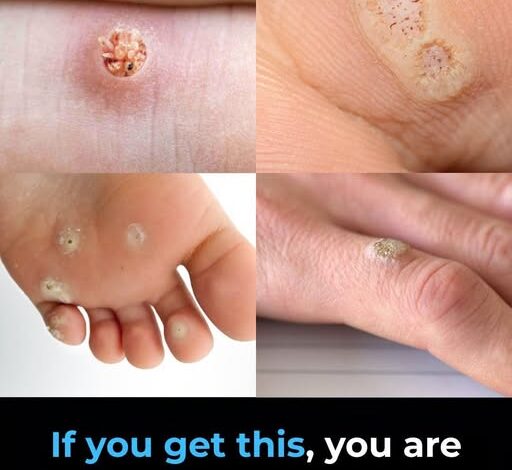
A small bump on the skin may seem harmless, but it should never be ignored without taking a closer look. Warts are among the most common skin conditions in the world, yet they are far more varied than many people realize. While some disappear on their own without causing more than mild annoyance, others can resemble more serious conditions or appear in sensitive areas that require prompt medical attention. Knowing the difference can spare unnecessary worry—and, in some cases, protect your long-term health.
Warts develop when certain strains of the human papillomavirus (HPV) enter the body through tiny cuts, scrapes, or other breaks in the skin. Once inside, the virus triggers an overgrowth of skin cells, creating the raised bumps many people recognize. Because there are more than a hundred different HPV strains, warts come in several forms, each with its own appearance, location, and level of concern.
The familiar common wart usually appears on the fingers, hands, or around the nails. These growths often feel rough to the touch and may contain tiny black dots, which are actually small clotted blood vessels. Although generally harmless, they can become bothersome if they snag on clothing or repeatedly crack and bleed.
Plantar warts tell a different story. Growing on the soles of the feet, they are forced inward by the pressure of standing and walking. Instead of protruding outward, they can feel like stepping on a pebble buried beneath the skin, making every step uncomfortable. Many people mistake them for calluses until persistent pain sends them looking for answers.
Flat warts are smaller and smoother than the common variety. They frequently develop in clusters and are especially common on children’s faces, as well as on the legs or hands. Because they blend more easily into the surrounding skin, they may go unnoticed until several appear at once.
Filiform warts have a distinctive appearance, growing in thin, finger-like projections. They often emerge around delicate areas such as the eyelids, lips, nose, or neck. While they are usually benign, their location makes self-treatment risky and increases the chance of irritation or infection.
Genital warts deserve special attention. Unlike other types, these are transmitted primarily through sexual contact and are caused by specific HPV strains. They may be small, flat, raised, or clustered together, sometimes resembling tiny cauliflower-like growths. Although the strains responsible for genital warts are generally considered low risk for cancer, their presence signals an HPV infection that should always be evaluated by a healthcare professional. Other high-risk HPV strains are linked to cancers of the cervix, anus, penis, vulva, vagina, and throat, making proper diagnosis and follow-up essential.
Not every growth that resembles a wart is actually a wart.
Certain skin cancers, precancerous lesions, and other benign skin conditions can closely mimic their appearance. That is why any growth that changes rapidly, bleeds without injury, develops multiple colors, refuses to heal, or grows irregularly should never be dismissed as “just a wart.” Early evaluation by a medical professional can make a significant difference if something more serious is developing beneath the surface.
For uncomplicated warts on thicker skin, many people begin with home treatment. Patience is important, as even effective methods often require weeks of consistent care before results become noticeable.
Salicylic acid remains one of the most widely recommended over-the-counter treatments. Applied regularly after soaking and gently filing the wart, it gradually removes the infected layers of skin until healthy tissue replaces them.
Some people have success using duct tape therapy. By covering the wart continuously and periodically removing dead skin between applications, the constant irritation may stimulate the body’s immune response to attack the virus. Scientific studies have produced mixed results, but many individuals still find the method worthwhile because it is inexpensive and low risk.
Natural remedies also receive considerable attention. Diluted apple cider vinegar, aspirin paste, and tea tree oil are among the most popular options. While some people report improvement, scientific evidence supporting these treatments remains limited. More importantly, they must be used cautiously. Strong concentrations or excessive application can burn healthy skin, especially in children or on sensitive parts of the body.
Regardless of the treatment chosen, some situations call for professional care instead of home remedies.
A wart that bleeds repeatedly, becomes increasingly painful, changes in size or color, spreads rapidly, or appears on the face, eyes, mouth, or genital region should always be examined by a healthcare provider. Individuals with diabetes, poor circulation, or weakened immune systems should also avoid treating warts on their own without medical guidance, as even minor skin injuries can lead to complications.
Preventing warts is often easier than treating them.
Because HPV thrives in warm, damp environments, wearing sandals in public showers, locker rooms, and around swimming pools can reduce the chance of picking up the virus. Avoid sharing razors, towels, nail clippers, socks, or shoes, since HPV can spread through contaminated surfaces. Refraining from picking at existing warts also lowers the risk of transferring the virus to other areas of your own body or to other people.
Vaccination offers another powerful layer of protection. While it does not prevent every strain of HPV, recommended HPV vaccines protect against many of the high-risk types associated with several cancers, as well as the strains responsible for most cases of genital warts. For many people, vaccination is one of the most effective steps they can take to reduce future health risks.
In the end, a wart may be nothing more than a temporary inconvenience—or it may be a signal that deserves closer attention. Understanding the different types, recognizing the warning signs, using safe treatment methods, and knowing when to seek medical advice can make all the difference. A few moments of caution today may prevent months of frustration and, in some cases, protect you from far more serious health concerns in the future.