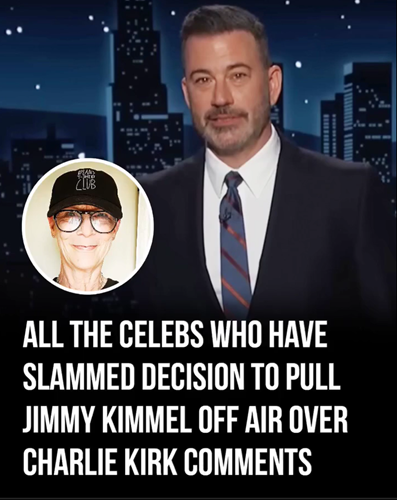
The rumor spread fast.
Within hours, social media was flooded with claims that Jimmy Kimmel Live! had been suspended indefinitely. Headlines appeared, videos circulated, and comment sections exploded with speculation. Some people declared it proof of growing censorship in entertainment. Others assumed ratings had finally caught up with late-night television. Many simply wondered whether one of America’s most recognizable hosts had suddenly disappeared from the air.
But there was one problem.
No official announcement supported the claim.
As confusion spread online, industry observers began urging caution, reminding audiences that viral stories often move faster than verified information. Despite countless posts suggesting otherwise, ABC had not announced the cancellation or indefinite suspension of Jimmy Kimmel Live!. The show remained part of the network’s late-night lineup, and no official statement indicated a permanent removal.
Yet the reaction itself revealed something fascinating.
The mere suggestion that Jimmy Kimmel’s show could vanish sparked a national conversation about comedy, free expression, media influence, and the future of late-night television.
For more than two decades, Jimmy Kimmel has occupied a unique place in American entertainment. Since launching Jimmy Kimmel Live! in 2003, he has evolved from a comedic host into one of television’s most recognizable cultural commentators.
His monologues frequently extend beyond celebrity gossip and movie promotions. Over the years, he has tackled healthcare debates, gun violence, political controversies, and personal family experiences that resonated with millions of viewers.
That blend of humor and sincerity helped transform the show into something larger than a nightly comedy program.
It became part of the national conversation.
Unlike scripted television, late-night shows operate almost in real time. Hosts react to breaking news, social trends, election results, and cultural controversies within hours of them happening. Their influence often extends far beyond television screens, especially in an era where clips spread across YouTube, TikTok, Instagram, and X within minutes.
A single joke can become a headline.
A monologue can spark debate across the country.
And a rumor about a show’s future can ignite speculation overnight.
The entertainment industry has seen similar situations before.
When the Writers Guild of America and SAG-AFTRA strikes brought Hollywood productions to a halt in 2023, numerous late-night programs temporarily disappeared from television. Audiences immediately began questioning whether some shows would ever return.
The reality was far less dramatic.
Production had paused because the writers and performers responsible for creating those programs were legally participating in labor actions. Once agreements were reached, most of the affected shows resumed operations.
Still, the situation demonstrated how quickly uncertainty can fuel assumptions.
In today’s media environment, people often encounter headlines before facts.
A delayed broadcast becomes a cancellation.
A temporary absence becomes a permanent departure.
Speculation fills the gaps long before official information arrives.
That dynamic has become especially significant for late-night television, a format already facing major changes.
For decades, late-night programs dominated after-hours entertainment. Millions of viewers tuned in at the same time each night to watch interviews, comedy sketches, and monologues.
Today, that audience is fragmented.
Streaming platforms compete for attention.
Podcasts attract millions of listeners.
Social media creators generate content around the clock.
Younger audiences often encounter late-night hosts not through television broadcasts but through short clips shared online.
As a result, traditional late-night television has been forced to evolve.
Hosts no longer compete only against one another.
They compete against the entire internet.
This transformation has increased both opportunity and scrutiny.
A successful segment can reach millions globally within hours.
At the same time, every joke, opinion, and guest appearance is instantly dissected by audiences from every political and cultural perspective.
For networks, managing that reality requires constant balance.
Broadcast companies like ABC must support creative freedom while also protecting relationships with advertisers, affiliates, and viewers.
That balancing act has become increasingly complicated in a deeply polarized media landscape.
Some viewers appreciate political commentary and social critique.
Others prefer comedy that avoids current events altogether.
Neither side represents the entire audience, forcing networks to navigate competing expectations carefully.
This tension often fuels discussions about censorship, accountability, and creative expression.
Whenever a prominent host becomes controversial, familiar questions emerge.
Should comedians be free to say anything?
Do advertisers exert too much influence?
Are networks responding to public concerns or simply avoiding risk?
The answers are rarely simple.
Entertainment has always existed within a framework of audience reaction and commercial realities.
What has changed is the speed.
A controversy that once unfolded over weeks can now erupt and spread worldwide in a matter of hours.
Because of that speed, misinformation often gains traction before verification catches up.
That is why official confirmation matters.
If a major network intended to suspend or cancel a flagship program like Jimmy Kimmel Live!, the decision would almost certainly be accompanied by formal announcements, press releases, and extensive industry reporting.
Such changes affect advertisers, production staff, affiliates, talent contracts, and programming schedules.
They do not typically happen in silence.
As of the most recent publicly available information, no such confirmation exists.
Yet the conversation surrounding the rumor remains meaningful.
It highlights broader concerns about the future of entertainment, the influence of public pressure, and the evolving relationship between media companies and audiences.
It also underscores Jimmy Kimmel’s significance within modern television.
After more than twenty years on air, his presence has become part of the nightly routine for countless viewers. Whether audiences agree with his opinions or disagree with them entirely, his role in shaping cultural discussions is difficult to ignore.
His longevity reflects not only personal success but also the enduring relevance of late-night television itself.
The format may be changing.
Viewing habits may be shifting.
Competition may be growing.
But people continue to seek voices that help interpret the day’s events through humor, perspective, and conversation.
That demand remains.
Ultimately, the story isn’t really about whether a rumor appeared online.
It’s about why so many people reacted to it.
The response revealed how deeply media personalities become woven into public life and how quickly uncertainty can generate widespread discussion.
For now, the facts remain straightforward.
No verified announcement confirms that Jimmy Kimmel Live! has been suspended indefinitely.
No official statement from ABC supports claims of permanent removal.
And until credible evidence suggests otherwise, speculation should remain separate from reality.
In an era where information travels faster than ever, the most valuable response is often the simplest one: pause, verify, and follow the facts.
Because when conversations about free expression, entertainment, and media influence are guided by evidence rather than rumor, the discussion becomes far more meaningful—and far more useful for everyone involved.