Why Mysterious Orange or Bleached-Looking Stains Keep Appearing on Your Towels, What Everyday Skincare Ingredients Like Benzoyl Peroxide Are Really Doing to Your Fabrics, and the Simple, Practical Ways You Can Prevent, Fix, and Stop Ruining Your Towels Without Giving Up Your Acne Routine

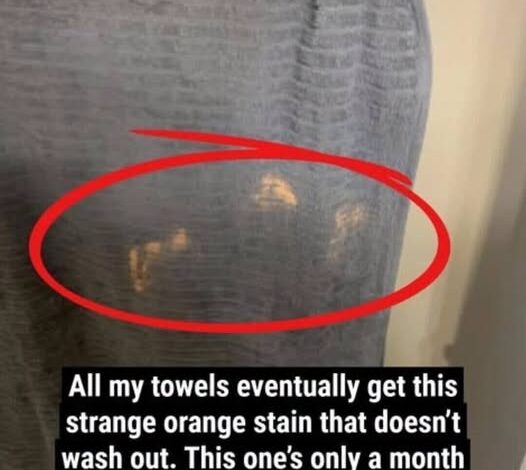
If you’ve ever pulled a freshly washed towel out of the dryer only to notice strange orange, pink, or faded patches that weren’t there before, you’re not alone. Many people assume their detergent failed, the washing machine damaged the fabric, or that the towel somehow picked up an unusual stain. They wash it again, switch laundry products, scrub the affected area, and hope the discoloration disappears. But when nothing changes, the mystery only becomes more frustrating.
The truth is surprisingly simple—and it has nothing to do with your laundry routine.
In many cases, those faded spots are caused by benzoyl peroxide, one of the most common and effective ingredients found in acne treatments. Whether it’s in a face wash, spot treatment, cleanser, or medicated cream, benzoyl peroxide is widely used because it helps fight acne-causing bacteria and reduce breakouts. Unfortunately, it has another well-known characteristic: it can act as a mild bleaching agent when it comes into contact with certain fabrics.
Unlike a typical stain, benzoyl peroxide doesn’t leave something behind.
Instead, it takes something away.
Rather than coating the towel with residue, it gradually removes the dye embedded within the fabric fibers. The color isn’t being covered or dirtied—it is literally being stripped from the material itself. Once that happens, there is nothing for detergent or stain remover to restore.
That’s why repeated washing never solves the problem.
The towel isn’t dirty.
It’s permanently discolored.
The fabric itself remains perfectly usable, but the original color has been altered in a way that ordinary laundering cannot reverse.
What surprises many people is how easily the damage can occur.
You don’t have to spill an acne treatment directly onto a towel to create those faded marks. Often, the process is gradual and almost invisible. After applying a medicated face wash, cream, or spot treatment, tiny amounts of benzoyl peroxide may remain on your skin or hands. When you later dry your face, wipe your hands, or rest your skin against a towel before the product has fully absorbed, small traces transfer onto the fabric.
Over time, those repeated contacts begin affecting the dye.
Dark-colored towels are especially vulnerable because the loss of pigment becomes much more noticeable against deep blues, grays, greens, or black fabrics. As the bleaching progresses, irregular orange, pink, yellowish, or pale patches gradually appear, often looking like mysterious stains despite being permanent color loss.
Fortunately, understanding the cause makes preventing future damage much easier.
One of the simplest solutions is to reserve a few white towels specifically for your skincare routine. Because white fabric contains no colored dye to bleach, benzoyl peroxide cannot create the same visible fading. Many people keep a dedicated “skincare towel” near the bathroom sink for washing and drying their face after using acne treatments.
Another helpful habit is allowing medicated products enough time to absorb before using a towel.
Giving creams and treatments several minutes to dry on the skin reduces the amount of product that transfers onto fabrics. This small adjustment can significantly decrease the likelihood of discoloration while still allowing you to benefit from your skincare routine.
Washing your hands thoroughly after applying benzoyl peroxide products is equally important.
It’s easy to forget that fingertips carrying invisible residue may later touch towels, pillowcases, clothing, or even bathrobes. A quick rinse removes much of the remaining product and helps protect household fabrics from accidental bleaching.
If you already have towels showing faded patches, there’s no need to throw them away.
Although their original appearance cannot usually be restored, they remain perfectly functional. Many people simply give these towels a second life by using them for cleaning, exercising, gardening, pet care, or other household tasks where appearance matters far less than absorbency.
In that way, even a damaged towel can continue serving a useful purpose.
Most importantly, there is usually no reason to stop using a skincare product that effectively treats acne simply because it affects fabric. Benzoyl peroxide has helped countless people manage breakouts successfully, and for many individuals its benefits far outweigh the inconvenience of protecting a few towels.
The key is making a handful of small adjustments rather than abandoning a treatment that works.
A dedicated white towel.
A few extra minutes for products to absorb.
Clean hands after application.
These simple habits can preserve your favorite colored towels while allowing you to continue caring for your skin without unnecessary frustration.
Once you understand what’s happening, those mysterious faded patches lose much of their mystery. They aren’t evidence of poor laundry habits, defective detergent, or washing machine problems. They’re simply the result of a well-known chemical reaction between benzoyl peroxide and fabric dyes.
With a little awareness and a few practical changes, you can keep both your skincare routine and your towels in great shape—saving yourself money, avoiding unnecessary replacements, and eliminating one more household mystery for good.