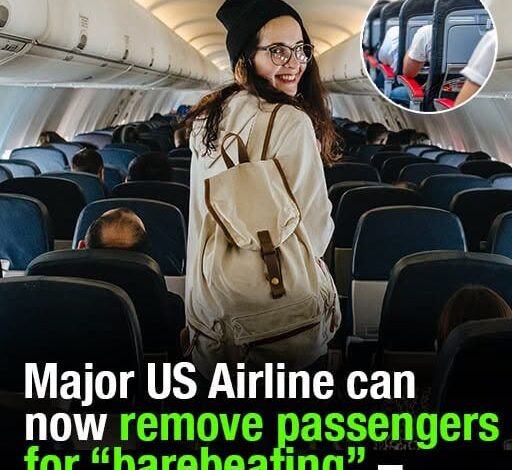
The familiar sound of a stranger’s video blaring across an airplane cabin may soon become far less common. After years of complaints from frustrated travelers, United Airlines has taken a decisive step by formally prohibiting passengers from playing audio aloud without headphones. What many people once dismissed as simple bad manners is now addressed as a clear violation of the airline’s onboard rules, signaling a broader shift in how airlines are responding to changing passenger behavior in the digital age.
For many frequent flyers, the announcement comes as welcome news.
Few experiences are more frustrating than settling into a long flight only to hear someone else’s movie, social media videos, music, or game echoing through the cabin. In the close quarters of an aircraft, even a single device playing at full volume can affect dozens of nearby passengers, turning what should be a shared, relatively peaceful environment into an uncomfortable one.
United’s revised Contract of Carriage reflects that growing concern.
Under the updated policy, passengers are expected to use headphones or keep their devices completely silent when listening to audio. The rule is more than a polite suggestion. Flight attendants are now given clear authority to intervene if someone ignores the requirement.
The process is straightforward.
If a passenger is playing audio without headphones, the crew can instruct them to stop or put on headphones. Should that person refuse to comply, the consequences may become significantly more serious. The airline’s policy allows for passengers who continue violating the rule to be denied transportation or otherwise removed from travel in accordance with the airline’s procedures and applicable regulations.
The message is unmistakable.
Courtesy is no longer optional when it comes to personal electronics.
That shift reflects how dramatically air travel has changed over the past decade.
Not long ago, passengers downloaded a movie before boarding, read a book, or simply looked out the window during the flight. Today, aircraft are becoming increasingly connected. High-speed onboard internet—including satellite-based services such as Starlink on some airlines and expanding broadband offerings across the industry—has transformed the in-flight experience. Travelers can now stream movies, watch live sports, browse social media, play online games, attend virtual meetings, and consume endless hours of digital entertainment while cruising thousands of feet above the ground.
Those technological advances have made flying more convenient.
They have also introduced new challenges.
As internet speeds improve, the number of passengers watching videos and listening to media throughout an entire flight continues to grow. Without clear expectations, the potential for noise disturbances naturally increases. A cabin filled with dozens of people simultaneously playing audio aloud would quickly become chaotic, making an already confined environment even more stressful.
United’s policy recognizes that reality.
The goal is not to discourage passengers from enjoying their devices but to ensure they do so without disrupting everyone around them. Headphones have become a simple but essential part of modern travel, allowing individuals to enjoy entertainment while respecting the shared nature of the cabin.
Reaction to the announcement has been swift.
Across social media, many travelers praised the decision, describing it as a long-overdue effort to enforce basic courtesy rather than introducing an entirely new expectation. Frequent flyers shared stories of enduring loud videos, music, and games during long flights, expressing relief that cabin crews now have clearer authority to address situations that previously led to uncomfortable confrontations.
Not everyone, however, views the policy without concern.
Some parents have questioned how the rule will apply to young children who may dislike wearing headphones or struggle to keep them on throughout a flight. Others have wondered how exceptions might be handled in situations involving very young travelers or individuals with particular needs.
United’s position remains consistent.
The expectation applies throughout the cabin, regardless of age, with passengers expected to use headphones or mute their devices whenever audio is played. Flight crews retain discretion in managing individual situations, but the underlying principle remains the same: personal entertainment should not become a disturbance for everyone nearby.
The policy also highlights a broader trend within the airline industry.
As aircraft become more technologically advanced, airlines are increasingly balancing individual convenience with collective comfort. Faster internet, larger personal devices, and nearly unlimited digital content have changed passenger expectations, but they have also made clear rules more important than ever. Maintaining a pleasant cabin environment now involves more than seat assignments and carry-on baggage—it also includes how travelers use the technology they bring onboard.
Ultimately, the issue is less about headphones than about shared responsibility.
An airplane cabin is one of the few places where hundreds of strangers spend hours together in an enclosed space with little opportunity to escape distractions. Small acts of consideration—keeping conversations quiet, respecting personal space, and listening to media privately—can make a significant difference in everyone’s travel experience.
United’s updated policy reflects that simple idea.
As onboard connectivity continues to improve and digital entertainment becomes an even larger part of flying, expectations for passenger behavior are evolving alongside the technology. What once may have been dismissed as an annoying habit is now recognized as a disruption that airlines are prepared to address more directly.
At 35,000 feet, every passenger shares the same cabin, the same air, and the same limited space. In that environment, personal choices inevitably affect those nearby. By requiring headphones for audio, United is reinforcing a straightforward principle of modern travel: enjoying your own entertainment should never come at the expense of everyone else’s journey.