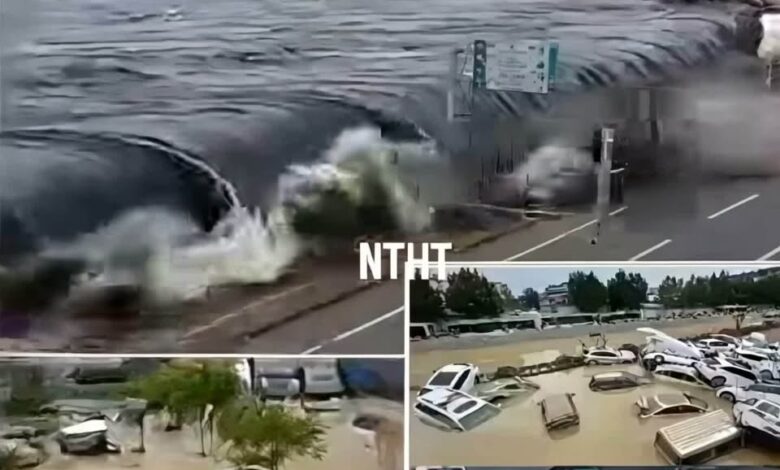
The Pacific Ocean is beginning to reveal the growing power of Hurricane Barbara, and communities along Mexico’s western coastline are watching closely.
What started as a weather system far offshore has evolved into a source of mounting concern, bringing stronger winds, rougher seas, and increasing uncertainty to thousands of residents living along vulnerable coastal regions. As dark clouds gather and ocean swells grow larger, families are preparing for the possibility that the coming hours could bring dangerous conditions to their communities.
Across parts of Jalisco, Colima, Michoacán, and Nayarit, preparations have intensified.
Residents are securing homes, reinforcing rooftops, boarding windows, and moving important belongings away from areas prone to flooding. Emergency supply kits are being checked and updated. Families are reviewing evacuation routes and making contingency plans should conditions worsen.
What was an ordinary week only days ago has rapidly transformed into a period of vigilance and anticipation.
Many people now find themselves watching weather updates throughout the day, listening for new forecasts and hoping the storm remains manageable.
Emergency shelters have begun opening their doors to residents seeking safer locations. Local authorities have increased monitoring efforts, while emergency response teams remain on standby, ready to assist if flooding, landslides, or storm-related emergencies occur.
The atmosphere is one of preparation rather than panic.
But the concern is real.
Meteorologists continue emphasizing that a hurricane’s most dangerous impacts often extend far beyond the center of the storm itself.
While public attention naturally focuses on the eye and projected track, history has repeatedly shown that heavy rainfall, flash flooding, landslides, and dangerous surf frequently cause the greatest destruction.
In many cases, communities located well away from a hurricane’s center experience severe consequences.
That possibility remains a major concern with Hurricane Barbara.
Forecasters are closely monitoring rainfall projections across multiple regions. Rivers and streams are being watched carefully as water levels rise, while saturated soil in mountainous terrain increases the potential for mudslides and slope failures.
In communities located near hillsides and steep terrain, residents understand that heavy rainfall can create risks that persist long after the strongest winds have passed.
A single landslide can block roads, damage homes, and isolate entire neighborhoods.
Along the Pacific coast, the ocean itself presents another serious threat.
Waves have already begun increasing in size and intensity, creating hazardous conditions along beaches and shorelines. Areas that typically attract tourists, swimmers, and fishermen have become increasingly dangerous as rough surf and strong currents develop.
Officials are urging residents and visitors to stay away from beaches, rocky shorelines, and waterfront areas where large waves can arrive unexpectedly.
Storm-driven surf possesses tremendous force.
Even experienced swimmers can be caught off guard.
The danger extends beyond direct wave impacts.
Coastal flooding can occur when powerful waves combine with elevated water levels, allowing seawater to surge into low-lying areas and damage roads, businesses, and homes.
Although Hurricane Barbara’s projected path remains offshore, experts continue stressing that distance does not eliminate risk.
Tropical systems influence enormous areas.
Their effects can stretch hundreds of kilometers beyond the center of circulation.
Outer rain bands may generate intense downpours far inland.
Strong wind gusts can develop unexpectedly.
Flooding can occur in locations that never experience the storm’s strongest core winds.
Dry ravines and drainage channels can transform rapidly into fast-moving waterways.
Urban areas may face challenges as drainage systems struggle to handle sudden volumes of rain.
These secondary impacts often create some of the greatest dangers during tropical weather events.
Emergency management agencies throughout the region are coordinating closely to prepare for a variety of scenarios.
Response personnel have been strategically positioned.
Communication systems remain active.
Shelters continue operating.
Local governments are providing updates through television, radio, social media, and emergency alert systems to ensure residents receive timely information.
Officials continue encouraging the public to rely on verified forecasts and follow instructions from local authorities.
Preparation now can prevent emergencies later.
Adding another layer of attention is Tropical Storm Cosme, which is also active in the Pacific.
While the two systems currently represent separate weather events, the presence of multiple tropical systems serves as a reminder that hurricane season is still in its early stages.
Meteorologists continue monitoring both storms carefully, recognizing how quickly tropical weather patterns can evolve.
Conditions that appear stable today may change significantly within a short period.
For many communities, Hurricane Barbara represents more than a temporary weather threat.
It has become part of a broader conversation about increasingly intense weather events and the challenges coastal regions face in adapting to them.
Scientists continue studying the relationship between ocean temperatures, atmospheric conditions, and tropical cyclone behavior. Warmer ocean waters provide energy that can fuel storm development and influence rainfall intensity.
While no individual storm can be explained by a single factor, many researchers view these events within the context of larger environmental trends that are reshaping weather patterns around the world.
As these discussions continue, communities remain focused on the immediate task at hand: staying safe.
One of the most encouraging aspects of approaching storms is often the way communities come together.
Neighbors help one another secure property.
Families check on elderly relatives.
Volunteers assist vulnerable residents.
Local organizations distribute supplies and information.
In moments of uncertainty, cooperation often becomes one of the most valuable resources available.
That spirit of resilience is already visible throughout affected areas.
People understand the risks.
But they also understand the importance of preparation, mutual support, and calm decision-making.
As Hurricane Barbara continues moving across the Pacific, the full extent of its impact remains uncertain.
Forecasts will continue to evolve.
Conditions may change.
New challenges may emerge.
For now, authorities emphasize caution, preparation, and awareness.
Whether through heavy rain, flooding, dangerous surf, strong winds, or landslide threats, the storm possesses the potential to disrupt lives across a wide region.
Residents along Mexico’s Pacific coast continue watching the horizon, listening for updates, and preparing for whatever comes next.
And while storms eventually pass, each hurricane season leaves behind valuable lessons about preparedness, community strength, and the importance of respecting nature’s power.
In the face of uncertainty, those lessons remain among the strongest tools communities possess.