The best lessons of childhood rarely arrived in classrooms.
They came on long afternoons when our feet were dusty, our hands were scratched, and the only map we needed was our own curiosity. We wandered through fields and wooded paths with no expectation of finding anything extraordinary, yet somehow we always did. A strange stone. An abandoned bird’s nest. A crooked branch that became a sword. Or, if we were lucky, the thick underground rhizome of a bamboo plant waiting beneath the soil.
To anyone passing by, it looked like nothing.
Rough.
Scarred.
Covered in dirt.
Hidden beneath the surface where almost no one would notice it.
But to us, it was treasure.
Digging it free took patience. The roots clung stubbornly to the earth, twisting through the ground as though they refused to surrender their place. Every careful pull revealed another section, thicker and more intricate than the last. By the time we finally held it in our hands, we understood—without anyone needing to explain—that the strongest part of the bamboo had never been the tall green stalk reaching toward the sky.
Its true strength had always been underground.
Invisible.
Quiet.
Holding everything together.
Those afternoons were never simply games invented to fill empty hours.
Without realizing it, we were apprenticing ourselves to an ancient truth about life: the things that matter most are often the things no one sees.
The bamboo rhizome became our first lesson in resilience.
Above the ground, bamboo appears graceful and effortless, swaying gently with every breeze. Yet beneath the surface lies an astonishing network of roots stretching outward, storing energy, supporting new growth, and connecting one stalk to another. What looked like separate plants were, in many cases, parts of the same living system.
That discovery carried a kind of quiet wisdom.
Real strength rarely announces itself.
It does not need applause.
It does not compete for attention.
Instead, it grows patiently where few people think to look, preparing for storms long before they arrive.
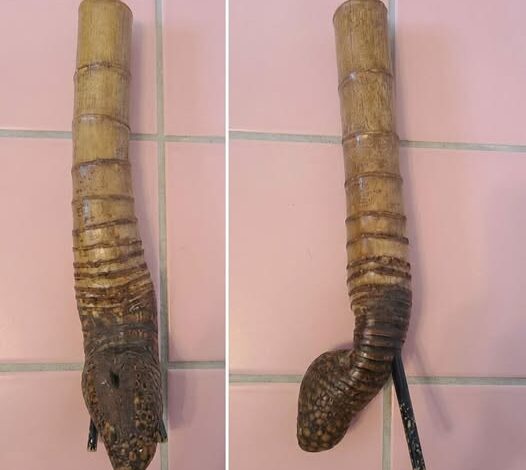
As children, we transformed those rough pieces of rhizome into whatever our imaginations required. They became toys, carvings, decorations, or curious keepsakes displayed proudly despite their imperfections. We weren’t interested in buying something new. We were fascinated by uncovering possibilities hidden inside ordinary things.
Every creation carried the memory of where it came from.
The soil beneath our fingernails.
The effort of digging.
The excitement of discovering something overlooked by everyone else.
Looking back now, it feels as though those simple moments taught lessons that adulthood often tries to erase.
Somewhere along the way, many of us stopped searching beneath the surface.
Instead of exploring forests and fields, we scroll endlessly through glowing screens.
Instead of wondering what can be created with our own hands, we search for the next recommendation, the next trend, the next source of approval. Algorithms decide what deserves our attention, quietly replacing curiosity with convenience.
The hunt continues.
Only the treasure has changed.
Or perhaps it hasn’t.
Perhaps we’ve simply forgotten where to look.
The bamboo rhizome still whispers the same lesson it always did.
Everything visible depends on what remains unseen.
A towering grove exists because unseen roots have spent years strengthening the ground below.
A lasting friendship survives because of conversations, trust, forgiveness, and countless ordinary moments no one else witnesses.
A successful career is supported by quiet discipline practiced long before recognition arrives.
Confidence grows from struggles overcome in private, not compliments received in public.
Even our sense of identity is rooted in experiences, values, failures, and relationships that rarely appear in photographs or social media posts.
What people admire is often only the visible stalk.
They seldom see the years of growth beneath it.
Nature understands something we sometimes forget.
Nothing enduring is built from appearances alone.
Roots come first.
Always.
When storms arrive, shallow roots fail quickly.
Deep ones bend without breaking.
Perhaps that is why those childhood discoveries remain so vivid after all these years.
They were never really about bamboo.
They were about learning to value foundations instead of surfaces.
To understand that hidden effort often matters more than visible success.
To recognize that patience produces stronger things than shortcuts ever can.
Even now, if you hold an old bamboo rhizome in your hands, its rough surface tells a quiet story. Every scar marks a season of growth. Every twist reflects obstacles it found a way around. Every branching root speaks of connection rather than isolation.
It reminds us that life is rarely sustained by what stands tallest.
It is sustained by what reaches deepest.
In a world increasingly captivated by instant results and constant visibility, that lesson feels more valuable than ever.
Not everything meaningful asks to be noticed.
Some of the greatest work happens underground, beyond applause and beyond recognition, preparing possibilities no one else can yet imagine.
Our relationships.
Our character.
Our resilience.
Our purpose.
Each depends on roots patiently woven through years of experience, love, failure, and hope.
Those roots may never be celebrated.
Most people will never see them.
But they are the reason everything above the surface continues to grow.
Perhaps that is the greatest gift those dirt-streaked afternoons gave us.
They taught us to look beneath appearances.
To respect quiet strength.
To believe that what is hidden is not necessarily unimportant—often, it is the very thing holding everything else together.
Because in the end, the tallest bamboo is never standing alone.
Its strength has always belonged to the unseen network beneath the earth, quietly intertwined, patiently enduring, and faithfully supporting every green shoot reaching toward the light.