The first nightmare came three nights after we got home from the hospital.
Maisie woke screaming.
Not crying.
Not whimpering.
Screaming with the kind of terror that sounds ripped out of someplace older than language.
I reached her before I was fully awake, nearly tripping over the mattress I had dragged beside my bed so she would not sleep alone. Her small body thrashed beneath the blanket, cheeks wet, curls stuck damply against her forehead.
“Don’t let him be mad,” she gasped.
My heart stopped.
I gathered her into my lap immediately, holding her so tightly she could probably feel my pulse hammering through my chest.
“He’s not here,” I whispered. “You’re safe. Baby, listen to me. You are safe.”
But children do not leave danger all at once.
Their bodies keep remembering after rooms change.
Maisie clung to my shirt with both fists.
“I didn’t mean to spill the juice,” she sobbed.
The words hollowed me out.
Because that was the thing about violence in families:
the actual moment is never the only injury.
Fear spreads backward.
Into ordinary accidents.
Into spilled drinks and untied shoes and laughter that becomes too loud.
A child starts believing safety depends on never making mistakes.
And I knew that feeling intimately.
I had spent half my life carrying it.
I rocked her slowly until the shaking eased.
Outside my apartment window, rain tapped softly against the railing. A passing car hissed through wet streets below. Somewhere in another building, a dog barked once and fell silent again.
Ordinary sounds.
Safe sounds.
I wanted to build her entire world from safe sounds now.
When Maisie finally drifted back to sleep against my shoulder, I stayed awake watching her.
The bruise near her collarbone had yellowed slightly at the edges. Doctors documented it carefully before discharge. The photographs lived now inside case files, evidence folders, systems larger than my family’s denial.
Proof.
I used to think proof changed people automatically.
It doesn’t.
It only removes their ability to pretend they misunderstood.
My mother still sent messages occasionally despite the block. Emails now. Voicemails from unfamiliar numbers.
You’re punishing everyone over one bad moment.
Families forgive.
Your father is devastated.
Maisie needs stability.
Stability.
Funny word.
As though children become unstable from protection rather than violence.
I deleted most messages without listening fully. But every now and then curiosity betrayed me, and I would hear Diane Caldwell’s voice carrying the same exhausted irritation she used my entire childhood whenever emotions interrupted appearances.
Never remorse.
Only inconvenience.
The investigation moved faster than anyone expected.
Maybe because Brooke gave them everything.
Not only the recording from the cookout, but months of voice memos she had hidden in recipe folders, purse linings, old email drafts sent only to herself.
Tiny archives of fear.
One captured Ray slamming his hand against a garage wall while screaming at her stepson for dropping fishing bait.
Another recorded Diane saying:
“You know how your father gets. Don’t provoke him.”
That sentence appeared repeatedly.
Don’t provoke him.
As if anger were a force summoned by children rather than chosen by grown men.
The district attorney eventually explained that patterns matter in family violence cases. Isolated incidents leave room for reinterpretation. Context changes everything.
And suddenly Ray Caldwell had context.
Not reputation.
Not excuses.
Not decades of church barbecues and neighborhood handshakes.
Context.
The first time he was formally charged, my mother stood beside him outside the courthouse wearing pearls.
Pearls.
I remember staring at them on television coverage with detached disbelief. She looked less like the wife of a man accused of hurting a child and more like someone attending a charity luncheon.
Reporters asked whether she believed the allegations.
“I believe families should handle private matters privately,” she answered.
Private.
That word nearly made me laugh out loud.
Privacy had protected him longer than innocence ever did.
Maisie started therapy in October.
Her therapist’s office had soft yellow walls, baskets of stuffed animals, and a tiny sand tray where children could build worlds safely enough to explain what hurt them.
The first session, Maisie barely spoke.
She arranged toy horses in perfect straight lines and refused to look directly at anyone.
The second session, she asked whether angry people can smell fear.
The therapist told me afterward as gently as possible:
“She has spent a long time monitoring adult emotions.”
I nodded because I knew.
Children raised around unpredictable anger become emotional meteorologists. They track tone shifts. Footsteps. Door sounds. Silence itself.
They survive by anticipating storms.
What terrified me most was realizing how close I came to teaching her those skills permanently.
One afternoon after therapy, we stopped for ice cream.
Maisie sat swinging her legs beneath the booth while chocolate melted down her cone faster than she could lick it.
Suddenly she asked:
“Did Grandpa hate me?”
The question arrived so casually I almost missed the devastation inside it.
I put down my spoon carefully.
“No,” I said slowly. “Grandpa wanted control more than kindness sometimes.”
She frowned slightly.
“That’s bad.”
“Yes.”
“Why didn’t Grandma stop him?”
There it was.
The question adults always struggle with most.
Not why violent people hurt others.
Why everyone else adjusts around them.
I looked out the diner window briefly before answering.
“Sometimes people get so used to bad behavior that they start protecting the person causing harm instead of the people getting hurt.”
Maisie thought hard about that.
Then:
“Did that happen to you too?”
Children see more than we survive comfortably.
I swallowed carefully.
“Yes,” I admitted.
She nodded once like something important had finally clicked into place.
Then she handed me the last bite of her cone because she said it tasted “too melty.”
Healing works strangely like that.
One moment you are discussing generational violence with your six-year-old daughter.
The next, you are wiping ice cream from her fingers while she laughs at a pigeon stealing fries outside.
Life keeps insisting on itself even after terrible things happen.
Brooke left the house two months later.
Not dramatically.
No screaming match.
No grand confrontation.
She packed quietly while Ray attended a church breakfast and moved into a rented duplex across town with her stepson.
When she told Diane, our mother reportedly said:
“You’re abandoning your family over politics.”
Politics.
Another word people use when truth becomes unbearable.
Brooke called me that night crying so hard I could barely understand her.
For years, that sound would have activated my instinct to rescue her emotionally.
This time I listened differently.
“I don’t know who I am without them,” she whispered.
And underneath all my anger, grief answered softly:
Neither do I.
Because leaving dysfunctional families creates an identity crisis people rarely discuss honestly. Once survival roles disappear — peacemaker, fixer, invisible daughter, emotional translator — silence rushes in where purpose used to live.
Who are you if you stop managing everyone else’s damage?
I was still learning.
Some mornings I woke convinced I had overreacted despite everything. Trauma does that too. Especially when entire childhoods trained you to distrust your own perceptions.
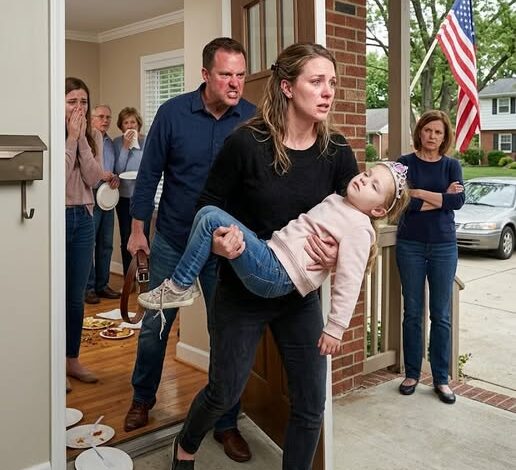
Then I would remember Maisie unconscious in my arms.
And clarity returned instantly.
The preliminary hearing happened in winter.
Snow gathered gray along courthouse sidewalks while reporters clustered near the entrance wrapped in scarves and gloves. By then, the story had spread beyond Franklin.
People love public outrage once someone else names the violence first.
Former neighbors suddenly remembered Ray’s temper.
Church members recalled “uncomfortable moments.”
Old classmates messaged me privately saying:
I always thought something felt wrong in your house.
Funny how hindsight fills with brave people.
Inside the courtroom, Ray looked smaller than I remembered.
Age finally visible.
Jowls sagging slightly.
Hands less steady.
But when his eyes met mine across the room, I recognized the same expectation immediately:
that I would lower my gaze first.
I didn’t.
That mattered more than I can explain.
The prosecutor played portions of Brooke’s recordings. Not all. Just enough.
Ray’s voice filled the courtroom again:
Trash behavior comes from trash raising.
Then another clip:
You wanna cry? I’ll give you something worth crying for.
Maisie was not present.
Thank God.
No child should hear themselves become evidence.
My mother sat rigid beside him throughout the hearing, staring forward as though stillness itself might preserve dignity.
When the prosecutor described Maisie losing consciousness, Diane finally closed her eyes.
Not when the recordings played.
Not when witnesses testified.
Only when forced to imagine what nearly happened physically.
Even then, I could not tell whether she grieved my daughter or the collapse of the family image she spent decades polishing.
Afterward, outside the courthouse, a reporter asked whether I felt justice was finally happening.
I surprised myself by answering honestly.
“I think consequences are happening,” I said. “Justice would’ve been my daughter never needing protection from family in the first place.”
That quote spread online more than anything else.
Messages flooded my inbox afterward.
Women.
Men.
Adult children.
People carrying stories they had buried for years because everyone around them called cruelty discipline, temper, stress, culture, tradition.
One message simply read:
My grandfather used belts too. Thank you for saying it out loud.
I cried reading that.
Not because I felt heroic.
Because pain multiplies silently inside families until somebody risks becoming “the difficult one” by naming it publicly.
That role costs people dearly.
But silence costs children more.
Spring arrived slowly after that.
Maisie learned to ride her bike without training wheels.
Brooke started therapy.
I painted the apartment kitchen yellow because I wanted at least one room in my life chosen entirely for joy instead of practicality.
Some nights fear still visited unexpectedly.
A slammed door downstairs.
An unknown number calling.
The sight of a belt hanging in a department store aisle.
Trauma lingers physically long after danger changes addresses.
But slowly, new things began occupying space beside fear.
Peaceful things.
Saturday pancakes.
Library trips.
Maisie singing badly in the back seat with all the windows down.
The relief of unlocking my own front door and knowing no one inside demanded I become smaller to survive there.
One evening while helping Maisie brush her teeth, I noticed she was humming softly to herself.
No flinching.
No careful listening for adult moods.
No fear underneath the sound.
Just a little girl making up songs about bubblegum toothpaste.
I had to look away for a second because gratitude hurt unexpectedly sometimes.
She caught me wiping my eyes.
“Mommy?”
I smiled quickly.
“Nothing, baby.”
But it wasn’t nothing.
It was the realization that cycles do break eventually.
Not cleanly.
Not all at once.
They break each time someone chooses truth over comfort.
Protection over appearances.
A child’s safety over family loyalty.
I used to believe strength looked loud.
Now I think it often looks quieter than that.
A mother answering honestly.
A sister finally handing over recordings.
A little girl learning she never has to earn gentleness by becoming afraid enough.
And maybe that is the real beginning of healing:
not pretending terrible things never happened,
but building a life where love no longer requires anyone to survive them in silence.