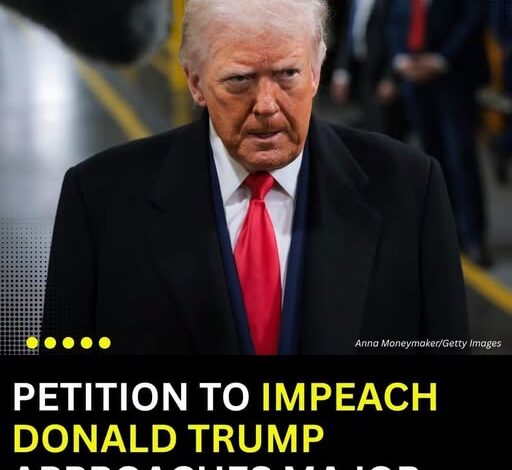
The petition itself is unlikely to change the law, but its rapid spread says something about the political moment in which it emerged. For many of the people adding their names, the campaign is less about expecting a legal victory and more about expressing a deeply held belief that the controversies surrounding Donald Trump’s presidency should continue to be scrutinized. To them, signing the petition is a symbolic statement that the debates over investigations, impeachments, and accountability should not simply fade with time.
Supporters often describe the effort as a way to keep public attention focused on issues they believe remain unresolved. Even if the petition cannot directly alter constitutional requirements or remove anyone from office, they see participation as a form of civic expression. Each signature represents, in their view, a personal declaration that public officials should continue to face examination for their actions.
For many participants, the campaign carries emotional significance that extends beyond its practical effect. Rather than viewing it as a legal mechanism, they regard it as an opportunity to register dissatisfaction, encourage public discussion, and demonstrate that concerns about past events remain important to a substantial number of Americans.
Critics, however, see the petition very differently.
Opponents argue that it reflects a political culture increasingly defined by ongoing conflict rather than resolution. In their view, campaigns of this kind reinforce divisions instead of encouraging the country to focus on future challenges. They contend that repeated efforts aimed at revisiting past political battles risk deepening polarization rather than fostering broader public trust.
Many also point to the petition’s legal limitations.
Under the U.S. Constitution, a public petition cannot independently disqualify a presidential candidate, overturn election results, or alter constitutional eligibility requirements. Any such changes would require established legal or constitutional processes rather than public signature campaigns alone. Because of that, critics argue that the petition’s practical impact is extremely limited, regardless of how many supporters it attracts.
Some believe the campaign risks creating unrealistic expectations by suggesting that widespread public support alone could produce outcomes that the legal system does not permit. Others argue that symbolic political actions remain valuable, even when they carry no direct legal force, because they allow citizens to express their views on matters of public importance.
The contrasting reactions illustrate just how divided public opinion remains.
To supporters, the petition represents accountability.
To opponents, it represents another chapter in an already prolonged cycle of political confrontation.
Those differing interpretations highlight how the same political event can carry very different meanings depending on an individual’s perspective.
More broadly, the debate reflects the continuing influence Donald Trump has on American political life. Years after many of the events that generated national controversy, discussions surrounding his presidency, legal challenges, and public legacy continue to shape political conversations across the country.
Whether viewed as a meaningful act of civic engagement or as a largely symbolic political statement, the petition demonstrates that disagreements over accountability, constitutional processes, and presidential leadership remain active subjects of public debate.
Its ultimate significance may lie less in the number of signatures it gathers than in what it reveals about the current political climate. The campaign underscores that questions surrounding Trump’s legacy continue to inspire strong opinions on both sides, with supporters and critics alike remaining deeply engaged in the broader conversation about the direction of American democracy.
Regardless of where the petition ultimately ends, it serves as another reminder that the political divisions surrounding Donald Trump have not disappeared. Instead, they continue to shape public discourse, influence civic participation, and fuel ongoing debates about accountability, institutions, and the future of U.S. politics.