The porch light was already on when Michael took the curve.
At home, his eight-year-old daughter had placed his dinner plate at the head of the table.
His son was sitting by the window, watching every pair of headlights that passed the house.
And Michael’s wife, Sarah, had just sent him a text.
Dinner’s getting cold. Drive safe. Love you.
Michael never read it.
At 7:18 that evening, on a road he’d driven hundreds of times, his truck crossed into the final seconds of his life.
There was no warning dramatic enough to match what happened next.
No time to understand.
No time to call home.
Just headlights appearing where they shouldn’t have been.
A horn.
Brakes.
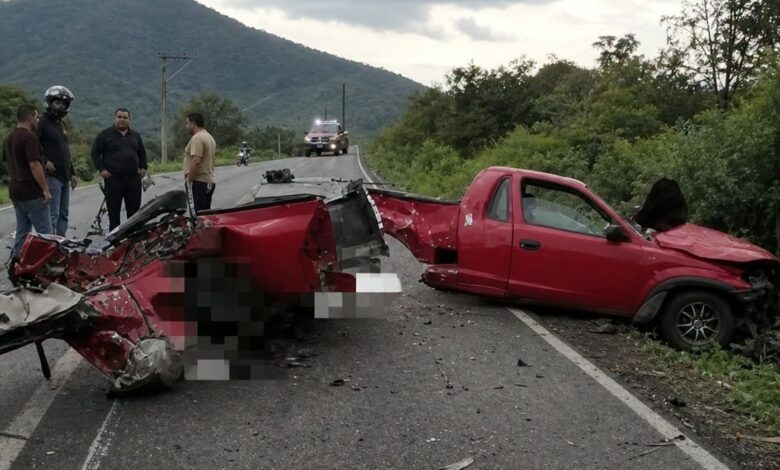
Then the sound of metal folding into metal.
The collision was so violent that people inside nearby houses heard it.
Daniel Harper was driving several cars behind Michael.
He would later say the strangest thing was the silence immediately afterward.
The crash itself had been enormous.
Then suddenly there was nothing.
No traffic.
No horns.
Just steam rising from two destroyed vehicles beneath the yellow glow of a streetlight.
Daniel stopped his car.
So did three others.
People ran toward the wreckage.
“Call 911!”
“Is anyone inside?”
“Don’t move him!”
“There’s another car!”
Daniel reached Michael’s truck first.
The front end was crushed.
Glass covered the pavement.
Michael was conscious.
Barely.
“Sir?”
Daniel leaned toward the broken window.
“Can you hear me?”
Michael’s eyes moved.
“Yes.”
“My name’s Daniel. Help is coming.”
Michael tried to move and immediately cried out.
“Don’t move,” Daniel told him. “Just stay with me.”
Michael’s breathing was shallow.
He looked confused, as though his mind hadn’t yet caught up with what his body already knew.
“My phone.”
“We’ll get it.”
“My wife.”
Daniel found the phone on the floorboard but couldn’t safely reach it through the twisted metal.
“What’s your wife’s name?”
“Sarah.”
“Okay. Sarah. We’ll call Sarah.”
Michael closed his eyes.
Daniel touched his shoulder.
“Hey. Stay with me.”
Michael opened them again.
“My kids are waiting.”
Those words followed Daniel for years.
Not I’m dying.
Not I’m hurt.
My kids are waiting.
Another stranger, a nurse named Rebecca who happened to be driving home from work, arrived moments later.
She crouched beside the truck.
Her face changed when she saw Michael.
Daniel noticed.
He didn’t ask what that expression meant.
“What’s your name?” Rebecca asked.
“Michael.”
“Michael, I’m Rebecca. I’m a nurse. An ambulance is coming.”
“How long?”
“Soon.”
In the distance, sirens finally began to rise.
Michael heard them.
“So loud,” he whispered.
Rebecca smiled despite the tears gathering in her eyes.
“That’s a good sound.”
Michael looked toward Daniel.
“Tell my wife…”
He stopped.
“Tell her yourself,” Daniel said quickly. “You’re going to tell her.”
It was the kind of lie strangers tell when truth would be cruel and useless.
Michael seemed to understand anyway.
“Tell her I was coming home.”
Daniel’s throat tightened.
“You were coming home.”
“I wasn’t…”
Michael struggled for breath.
“I wasn’t somewhere else.”
“I know.”
“Tell the kids…”
His voice disappeared.
Daniel leaned closer.
“What do you want me to tell them?”
Michael’s eyes filled.
“I love them.”
“I’ll tell them.”
“Promise?”
Daniel took the hand of a man he’d never met.
“I promise.”
The paramedics arrived less than ten minutes after the first emergency call.
To everyone waiting beside that wreckage, it felt like an hour.
They worked quickly.
Police closed the road.
Firefighters began cutting into the truck.
Commands moved through the darkness.
Equipment hit pavement.
Lights flashed against the trees.
But sometimes extraordinary effort meets an injury that happened too quickly and too violently.
Michael died before they could get him to the hospital.
He was forty-two years old.
At his house, Sarah knew none of this.
At 7:25, she reheated the potatoes.
At 7:31, she called Michael.
No answer.
At 7:36, she tried again.
“He’s probably driving,” she told the children.
Their daughter, Lily, frowned.
“Daddy always answers.”
“Not when he’s driving.”
That was true.
Michael had lectured the children about phones in cars so often that Lily could repeat the speech.
Nothing on a screen is more important than getting home.
At 7:42, Sarah looked outside.
The porch light illuminated an empty driveway.
“Can we eat?” their son, Noah, asked.
“Let’s give Dad five more minutes.”
Five minutes became ten.
Then twenty.
The food cooled again.
At 8:03, Sarah called Michael for the fourth time.
This time someone answered.
“Hello?”
A man’s voice.
Sarah stood immediately.
“Who is this?”
There was a pause.
“Ma’am, I’m Officer Collins with the county police.”
Everything inside her went cold.
“Why do you have my husband’s phone?”
The officer didn’t answer that question directly.
“Are you Sarah Bennett?”
“Yes.”
“Are you at home?”
“Where is Michael?”
“Ma’am, I need you to stay where you are. Officers are on their way to speak with you.”
“No.”
The children looked up.
“Mom?” Lily asked.
Sarah turned away.
“No. Tell me where my husband is.”
The officer’s voice softened.
“There’s been a serious accident.”
The human mind does strange things when it hears words it cannot accept.
Sarah looked at Michael’s plate.
She noticed the gravy beginning to form a skin.
She noticed one of Noah’s socks was inside out.
She noticed the kitchen clock was three minutes fast.
Anything except the sentence she’d just heard.
“Is he okay?”
Another pause.
That pause told her everything.
Still, she asked again.
“Is my husband okay?”
The officer said her name.
And Sarah screamed.
Later, she couldn’t remember dropping the phone.
She couldn’t remember Lily beginning to cry.
She couldn’t remember Noah repeatedly asking what happened.
She remembered only the knock.
Two officers.
One chaplain.
Three people standing beneath the porch light Michael had installed himself.
She didn’t want to open the door.
Because as long as the door remained closed, perhaps the words outside weren’t real.
Eventually she opened it.
“I’m very sorry.”
That was how one life ended and another began.
There was Sarah before those words.
And Sarah after them.
There were children who had a father at breakfast that morning.
And children who didn’t by bedtime.
The next several days became a blur of decisions nobody should have to make while grieving.
Funeral home.
Flowers.
Clothes.
Phone calls.
Insurance.
School.
Family.
Michael’s mother collapsed when she heard.
His brother drove through the night.
Coworkers arrived carrying food Sarah didn’t remember eating.
People kept saying:
“If you need anything…”
Sarah wanted to scream:
“I need Michael.”
But nobody could bring that.
Daniel attended the funeral.
He stood in the back because he didn’t know whether he belonged there.
He had almost convinced himself to leave when Sarah approached him.
“You were with him?”
Daniel nodded.
Her face crumpled.
“Was he alone?”
“No.”
That question mattered more to her than he expected.
“He wasn’t alone?”
“No. I was holding his hand.”
Sarah covered her mouth.
Daniel continued carefully.
“There was a nurse there too. We talked to him. He knew people were helping.”
“Was he scared?”
Daniel could have lied.
Instead he said:
“Yes. But he was thinking about you.”
Sarah closed her eyes.
“He said your name.”
Then Daniel remembered his promise.
“He wanted you to know he was coming home.”
Sarah looked at him.
“What?”
“He said, ‘Tell her I was coming home.’”
Her knees seemed to weaken.
Daniel reached toward her, but Michael’s brother caught her first.
“He said he loved the kids,” Daniel continued. “He made me promise I’d tell them.”
Sarah cried against her brother-in-law’s shoulder.
“He was seven minutes away.”
Daniel didn’t understand.
“From home,” she said. “He was seven minutes away.”
Seven minutes.
Such a tiny measurement.
People waste seven minutes looking for keys.
Standing in checkout lines.
Scrolling through phones.
Waiting for coffee.
For Michael’s family, seven minutes became an impossible distance.
For months afterward, Noah continued listening for his father’s truck.
Sometimes an engine slowed outside and his head would rise automatically.
Lily stopped sitting in Michael’s chair.
Nobody had told her not to.
She simply couldn’t.
Sarah left his shoes beside the back door for eleven weeks.
She knew he wasn’t returning.
Grief doesn’t always care what you know.
Eventually the road reopened.
The glass was swept away.
The damaged guardrail was replaced.
Traffic returned.
People drove that curve while drinking coffee, arguing with passengers and thinking about what they would make for dinner.
To strangers, it became an ordinary road again.
To Sarah, it never did.
She avoided it for nearly a year.
Then, on the anniversary of Michael’s death, she drove there with Lily and Noah.
They placed flowers near the roadside.
Noah stood silently for a long time.
“Is this where Daddy died?”
Sarah nodded.
“Was he trying to come home?”
“Yes.”
“Then why didn’t he?”
There are questions children ask that adults cannot repair with language.
Sarah knelt beside him.
“Because something terrible happened.”
Noah thought about that.
Then he asked:
“Did he know we were waiting?”
Sarah began crying.
“Yes.”
“How?”
“Because dads know things like that.”
It wasn’t scientifically true.
It was emotionally true enough.
Years passed.
Lily grew taller.
Noah stopped listening for trucks.
Sarah eventually packed away Michael’s shoes.
But some things remained.
The porch light.
She never changed it.
Every evening, she switched it on.
At first, it had been for Michael.
Later, it became something else.
A reminder.
Come home.
Drive carefully.
Don’t assume there will always be another dinner.
Another apology.
Another bedtime.
Another chance to say what you meant to say.
Because accidents don’t end when tow trucks remove the wreckage.
They travel.
They enter houses miles away.
They sit at dinner tables.
They appear in empty chairs.
They live inside birthdays someone should have attended and photographs someone should have been standing in.
They become the missing voice in every family story told afterward.
For Daniel, the crash became a memory he never wanted but couldn’t discard.
For Rebecca, it became another reminder that medical training cannot save everyone.
For Sarah, it divided her life into before and after.
And for two children waiting beside a cooling dinner, it became the night they learned one of life’s hardest truths.
Sometimes someone can love you completely.
They can keep their promise.
They can leave work on time.
They can be headed directly toward you.
They can be only seven minutes from home.
And still never make it through the door.
That is why Sarah still turns on the porch light.
Not because she’s waiting anymore.
But because once, on an ordinary evening, someone she loved was trying desperately to get home.
And she wants the light to remember that he was coming.