A TikToker tried to gain attention at a biker event, but the reaction wasn’t what they expected

The livestream was supposed to make Tomson Morrison famous.
Instead, it nearly destroyed everything he had built.
At twenty-two years old, Tomson had mastered the art of getting attention online. With more than 847,000 followers on TikTok, he knew exactly what triggered views, comments, and shares.
Outrage.
Conflict.
Shock.
The more controversial the content, the faster it spread.
At first, his videos had been harmless pranks and social experiments. But as his audience grew, so did the pressure to stay relevant. Every viral success created a new challenge: how do you top the last stunt?
By the summer of that year, Tomson had become addicted to engagement.
Views weren’t just numbers anymore.
They were validation.
And validation demanded bigger risks.
That mindset led him to a small roadside diner on a Saturday morning with a gallon of bright pink paint and a terrible idea.
His cameraman and longtime friend Jordan followed behind, carrying equipment and checking livestream settings.
“This one’s going to explode,” Tomson said, grinning at his phone screen.
Jordan laughed nervously.
“You sure about this?”
“Trust me.”
Then Tomson saw them.
A row of motorcycles stretched across the parking lot.
Beautiful machines.
Polished chrome.
Custom paint jobs.
Carefully maintained.
The owners were nowhere in sight.
Perfect.
“What do we have here?” Tomson said to his viewers.
The livestream instantly lit up.
Comments flooded the screen.
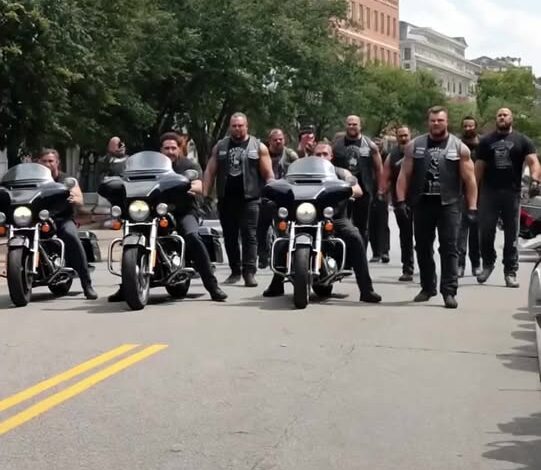
Inside the diner, members of the Desert Eagles Motorcycle Club were finishing breakfast.
Most were in their sixties and seventies.
Retired veterans.
Former mechanics.
Business owners.
Grandfathers.
Friends who had spent decades riding together.
That morning wasn’t about motorcycles.
It was about children.
They were preparing for a charity ride raising money for families dealing with serious childhood illnesses.
But Tomson didn’t know that.
Or care.
To him, they were props.
Content.
An opportunity.
He stepped toward the nearest bike.
“Today,” he announced dramatically into the camera, “we’re conducting a social experiment.”
Thousands of viewers joined.
Jordan moved around filming from different angles.
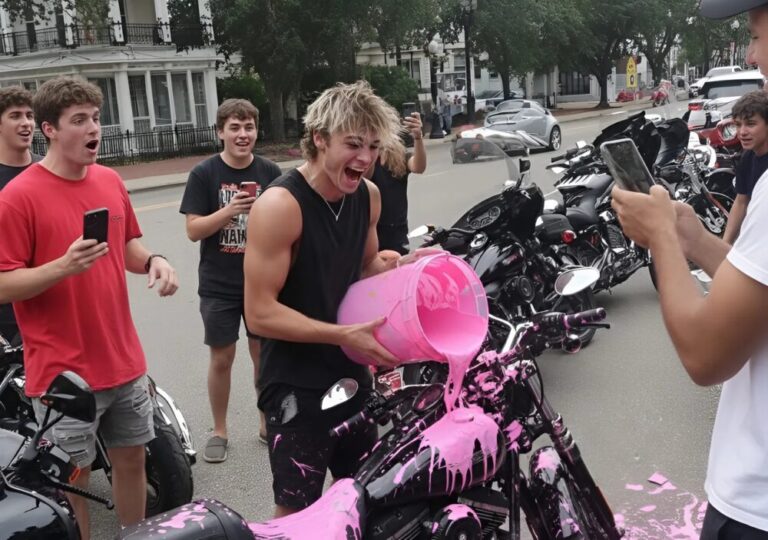
Tomson twisted open the paint container.
Bright pink liquid sloshed inside.
His audience exploded with excitement.
“No way!”
“Do it!”
“This is insane!”
Tomson smiled.
Then he poured.
Pink paint cascaded across the motorcycle’s fuel tank.
The color spread over polished metal like a wound.
The comments went wild.
So Tomson moved to another bike.
And another.
Paint dripped from seats, handlebars, and chrome surfaces.
The livestream numbers climbed higher.
Inside the diner, nobody noticed.
At first.
Then a waitress glanced outside.
Her face immediately changed.
“Oh my God.”
Several riders looked up.
“What is it?”
The waitress pointed toward the parking lot.
Every conversation stopped.
The bikers rushed toward the windows.
What they saw stunned them.
Outside stood a young man filming himself while deliberately vandalizing their motorcycles.
Pink paint covered machines that many of them had spent years restoring and maintaining.
One rider cursed.
Another slammed his coffee cup onto the table.
Several immediately headed for the door.
But one man remained calm.
Wayne Patterson.
Age sixty-four.
Gray beard.
Weathered face.
Steady eyes.
His motorcycle sat among those being damaged.
And unlike most of the others, that motorcycle was irreplaceable.
It had been a gift from his wife.
The final gift she ever gave him before cancer took her life.
The bike wasn’t simply transportation.
It was memory.
Love.
Loss.
A connection to someone he still missed every day.
Even so, Wayne raised a hand.
“Everybody relax.”
The room fell silent.
“Let’s handle this properly.”
Outside, Tomson continued performing for his audience.
“These gas-guzzling dinosaurs are destroying the environment,” he declared dramatically.
His viewers cheered him on.
More likes.
More comments.
More attention.
Everything was going exactly as planned.
Then the diner doors opened.
The Desert Eagles stepped outside.
Tomson immediately smiled.
Finally.
The confrontation.
The part viewers loved most.
But what happened next wasn’t what he expected.
Wayne approached calmly.
No yelling.
No threats.
No aggression.
Just calm.
The older man looked at the paint-covered motorcycle.
Then back at Tomson.
“You know,” Wayne said quietly, “my wife bought me that bike.”
Tomson blinked.
The statement caught him off guard.
“She passed away six years ago.”
Silence.
Even the livestream comments slowed.
Wayne rested a hand on the damaged motorcycle.
“It’s one of the few things I still have that reminds me of her.”
Something shifted.
For the first time, the motorcycles stopped looking like objects.
They belonged to people.
Real people.
With stories.
Memories.
Lives.
One of the other bikers stepped forward angrily.
But Wayne stopped him.
“No.”
Then he pulled out his phone.
Instead of retaliating, he began photographing the damage.
Carefully.
Methodically.
Documenting everything.
Tomson suddenly felt uncomfortable.
The confrontation he wanted wasn’t happening.
The outrage felt different now.
Real.
Human.
“What’s your name?” Wayne asked.
“Tomson.”
“Your real name.”
The question lingered.
For the first time all day, Tomson hesitated.
The bikers eventually left.
No threats.
No revenge.
No dramatic showdown.
Just disappointment.
That somehow felt worse.
Two weeks later, Tomson found himself in trouble.
Real trouble.
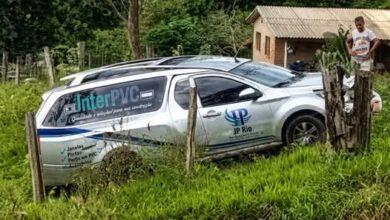
He and Jordan were driving through a remote desert area while filming travel content when their vehicle broke down.
The engine died.
Cell service disappeared.
Night approached.
Temperatures dropped rapidly.
Hours passed.
Nobody came.
The situation became frightening.
Jordan wrapped his arms around himself.
“What if nobody finds us?”
Tomson stared into the darkness.
For once, he had no answers.
Then headlights appeared.
Far away.
Approaching slowly.
Relief flooded through both men.
As the lights grew closer, they realized something.
Motorcycles.
Several of them.
Tomson’s stomach dropped.
The Desert Eagles.
Of all people.
The riders stopped around the stranded vehicle.
Tomson braced himself.
This was it.
Payback.
Revenge.
He deserved it.
Instead, Wayne climbed off his motorcycle carrying a blanket.
“You boys okay?”
Tomson stared.
“What?”
Wayne handed him water.
“You look cold.”
Jordan accepted another blanket.
Confusion spread across both faces.
“You’re helping us?” Tomson asked.
Wayne smiled.
“Of course.”
“But after what I did—”
“That’s exactly why.”
The words hit harder than any insult could have.
Over the next hour, the bikers helped repair the vehicle enough to reach safety.
They shared food.
Water.
Stories.
Laughter.
Not once did they mention revenge.
Not once did they make Tomson feel small.
Finally, Wayne explained why.
“My wife used to say something.”
“What?”
Wayne looked toward the stars.
“Hurt people create more hurt.”
Silence.
“But somebody has to decide when the cycle ends.”
Those words stayed with Tomson long after the desert disappeared behind him.
For the first time, he began questioning everything.
His content.
His motivations.
The person he had become.
The Desert Eagles weren’t villains.
They were volunteers.
Veterans.
Community leaders.
People who spent weekends raising money for children and helping families in crisis.
And he had treated them like props for internet entertainment.
The realization was painful.
But necessary.
Over the following months, Tomson changed.
Gradually.
Authentically.
Instead of filming pranks, he began documenting real stories.
The Desert Eagles allowed him to accompany them on charity rides.
He filmed fundraising events.
Community projects.
Veteran support programs.
Families receiving assistance.
For the first time, his audience saw something different.
Not outrage.
Meaning.
Surprisingly, people loved it.
His followers responded positively.
Many admitted they preferred the new content.
Tomson’s platform evolved from controversy to storytelling.
His numbers remained strong.
But more importantly, his work mattered.
Nearly a year later, he attended another charity event alongside the Desert Eagles.
A young girl receiving support through one of their programs spotted the bikers and ran toward them.
Then she noticed Tomson standing nearby.
Her face lit up.
“Look!” she shouted excitedly.
“It’s the angels on motorcycles!”
The crowd laughed.
Wayne smiled.
Tomson felt something tighten in his chest.
Not embarrassment.
Gratitude.
Because he finally understood.
The most powerful stories weren’t built through destruction.
They were built through compassion.
The Desert Eagles continued riding every weekend.
Helping people.
Supporting causes.
Changing lives quietly.
And Tomson continued telling those stories.
The young influencer who once chased attention at any cost had discovered something far more valuable.
Purpose.
Looking back, he often thought about that morning outside the diner.
The paint.
The livestream.
The mistake.
It could have become a story about revenge.
Instead, it became a story about growth.
Because sometimes the people we wrong have the power to teach us the most important lessons.
And sometimes kindness accomplishes what anger never can.
For Tomson Morrison, that lesson arrived on two wheels, beneath the desert stars, from a group of bikers he once believed were his enemies.