Beautiful 3-Bedroom, 2.5-Bath Home in Grayson, KY — Spacious Family Living with Fenced Yard, Modern Kitchen, and Two-Car Garage at 572 Clydesdale Drive

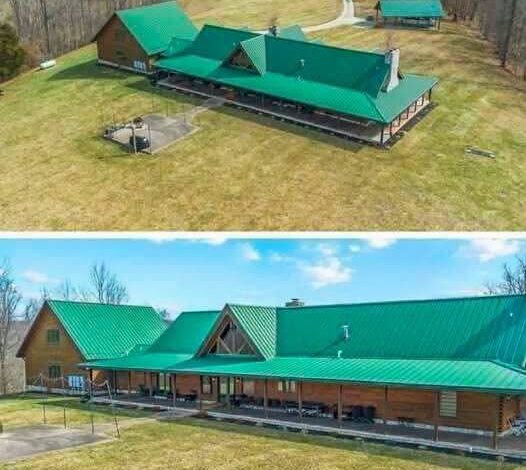
By the time the SOLD sign appeared outside 572 Clydesdale Drive, one family was celebrating.
Several others were quietly grieving.
From the street, there was nothing extraordinary about the house. It wasn’t a mansion or some architectural masterpiece destined for magazines. It was simply a comfortable home in Grayson with a fenced yard, updated appliances, enough bedrooms for a growing family, and access to a school district people wanted.
But the moment the listing went live, the house stopped being just a collection of rooms.
It became a possibility.
And possibilities can make people do strange things.
The first couple arrived with their young daughter.
She ran straight toward the bedroom facing the backyard and announced that it was hers.
Her parents laughed.
But her mother didn’t.
Not really.
She was already imagining a bed against the wall. School clothes hanging in the closet. Birthday parties outside. Their daughter walking through the front door after her first day at a new school.
They weren’t simply touring a property.
They were mentally moving in.
Their current apartment lease expired in six weeks. Rent had increased twice in three years, and they were exhausted from living somewhere that never felt permanent.
572 Clydesdale Drive represented something they desperately wanted.
Stability.
Another buyer had a completely different reason for being there.
His parents lived less than fifteen minutes away.
His father had recently stopped driving at night, and his mother was beginning to need help with appointments.
For years, he had lived almost an hour away.
That distance had once seemed manageable.
Now every phone call made it feel larger.
He walked through the kitchen barely noticing the countertops.
He was calculating travel time.
Twelve minutes to his parents.
Eight minutes to the pharmacy.
Ten minutes to the hospital.
To him, the house wasn’t about square footage.
It was about being close enough when somebody needed him.
Then came another family.
They loved everything immediately.
Perhaps too immediately.
The husband checked the fence twice because they had a dog that escaped constantly.
His wife stood at the kitchen island and whispered, “I can see us here.”
Four dangerous words.
Because once someone can see a life inside a house, the numbers become harder to evaluate rationally.
The asking price had already pushed them toward the upper end of their budget.
Then they learned there were multiple offers.
Suddenly the conversation changed.
Could they offer another $5,000?
Probably.
Another $10,000?
Maybe.
Could they waive something?
Increase the down payment?
Borrow from savings they’d promised not to touch?
The house hadn’t changed.
Their fear of losing it had.
That’s what competitive real estate can do.
A home is one of the largest financial decisions most people will ever make, yet the decision often happens under conditions almost perfectly designed to produce emotion.
You have limited time.
Other people want the same thing.
Your finances are exposed.
Your future feels involved.
And someone may call tomorrow and tell you that if you don’t decide immediately, the opportunity disappears.
So people stretch.
They calculate.
They recalculate.
They sit in parked cars discussing numbers that would have terrified them six months earlier.
At 572 Clydesdale Drive, offers began accumulating.
Every new one increased the pressure on everyone else.
One buyer had spent years rebuilding his credit after a difficult divorce.
His mortgage approval was finally strong enough.
Barely.
He knew another large increase could push the monthly payment beyond what felt comfortable.
But he also knew how long it had taken to get this far.
Walking away didn’t feel like declining a house.
It felt like returning to the beginning.
He increased his offer.
Then spent the night wondering whether he’d made a mistake.
Another couple did the opposite.
They stepped back.
They had promised each other before the search began that they wouldn’t become emotionally attached to any property.
Then they walked into Clydesdale Drive.
They loved the backyard.
They loved the natural light.
They loved the quiet street.
Their offer was competitive, but when they were asked whether they wanted to improve it, they looked at their budget again.
They could have gone higher.
Technically.
But “can afford” and “can comfortably live with” aren’t always the same thing.
They withdrew.
On the drive home, neither spoke much.
The decision was financially responsible.
It still hurt.
That’s another truth hidden behind real estate statistics.
When reports say a property received seven offers, we picture competition.
What we rarely picture are six private disappointments.
Six conversations afterward.
Six families opening listing apps again that evening.
Six versions of a future disappearing with one phone call.
Eventually, the seller accepted an offer.
One family got the message they’d been hoping for.
They celebrated.
Maybe they ordered dinner because nobody felt like cooking.
Maybe they called their parents.
Maybe their children started arguing over bedrooms before the inspection was even scheduled.
For them, 572 Clydesdale Drive became the place where something began.
For everyone else, it became the house they almost bought.
Those homes stay with people.
Years later, someone may drive through the neighborhood and instinctively slow down.
They’ll notice whether the shutters changed.
Whether the fence is still there.
Whether someone planted flowers beside the porch.
And for a few seconds they’ll remember the life they imagined inside.
That’s why buying a home can feel so much bigger than a financial transaction.
People aren’t purchasing drywall, plumbing, roofing, and land.
They’re purchasing ordinary Tuesdays that haven’t happened yet.
Christmas mornings.
Dogs sleeping beside back doors.
Children doing homework at kitchen tables.
Parents visiting for dinner.
Arguments in hallways.
Coffee before work.
Birthdays.
Illnesses.
Reconciliations.
A thousand completely ordinary moments that together become a life.
The danger is that imagining those moments can make almost any sacrifice feel reasonable.
Sometimes it isn’t.
There is courage in making the winning offer.
There can also be courage in walking away.
Because the goal isn’t merely to acquire a house.
It’s to build a life you can afford to live once the excitement of getting the keys disappears.
Eventually, the listing photographs for 572 Clydesdale Drive were taken down.
The appointments stopped.
The offers became paperwork.
The SOLD sign disappeared.
And the neighborhood returned to normal.
One family unpacked boxes inside.
Everyone else continued searching.
From the outside, nothing dramatic had happened.
A house had been listed.
People made offers.
Someone bought it.
That’s real estate.
But beneath those simple facts were people measuring money against security, proximity against sacrifice, hope against fear.
Some stretched.
Some stopped.
One won.
Others wondered whether losing had secretly protected them.
And perhaps that’s what every SOLD sign conceals.
It tells us who bought the property.
It tells us nothing about everyone who pictured themselves living there.
Behind every successful offer are other futures that almost happened.
Other families who stood in the same kitchen.
Opened the same closets.
Looked through the same windows.
And whispered some version of:
“Maybe this could finally be home.”
Only one family eventually carried boxes through the front door.
But for a brief moment, the house belonged to every person who dared to imagine a life inside it.