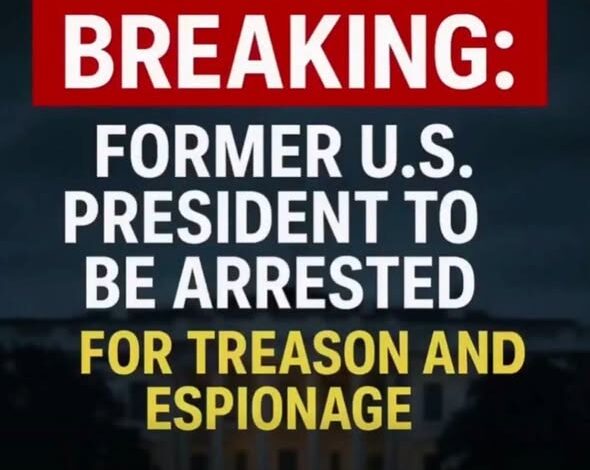
If such an indictment were ever to occur, its impact would ripple across the American political landscape like a seismic shock. The image of a former president facing accusations as serious as treason or espionage would challenge long-held assumptions about leadership, accountability, and the stability of national institutions. For many Americans, it would raise difficult questions—not only about Barack Obama’s legacy, but also about the credibility of the systems that once entrusted him with the nation’s highest office and might later seek to prosecute him.
In a country already marked by deep political divisions, reactions would likely intensify existing tensions. Supporters and critics would interpret the situation through very different lenses, potentially widening ideological divides and placing additional strain on public discourse, community relationships, and trust in government institutions.
Beyond the immediate controversy, such a development would almost certainly trigger a broader debate about power, accountability, and the role of the justice system in a democratic society. Some observers might view the charges as evidence that no public official is above the law and that legal accountability applies regardless of status or position. Others could see the action as politically motivated, arguing that legal institutions had become entangled in partisan conflict.
At the same time, constitutional scholars, legal experts, and political analysts would likely examine the legal standards involved, the evidence presented, and the procedures followed. Questions surrounding due process, prosecutorial discretion, executive authority, and institutional independence would become central to the national conversation.
It is important to recognize, however, that discussions of this nature remain hypothetical unless supported by verified evidence and formal legal action. Speculation, rumors, and unverified claims can spread rapidly, particularly in highly polarized political environments. Without official charges, documented evidence, or confirmed legal proceedings, conclusions about such a scenario remain conjectural rather than factual.
In that context, the challenge for the public is not simply deciding which narrative to believe. It is maintaining a commitment to evidence, due process, and careful evaluation of facts as they emerge. Democratic institutions rely not only on transparency and accountability but also on the public’s willingness to distinguish between verified information and speculation.
Ultimately, any event of this magnitude would test more than the reputation of a single political figure. It would test public confidence in the legal system, the resilience of democratic institutions, and the ability of citizens to engage with difficult issues through evidence rather than assumption.
Until concrete facts exist, however, the conversation remains largely theoretical. The most responsible approach is to evaluate claims carefully, rely on credible sources, and allow legal processes—not political narratives—to determine the truth.