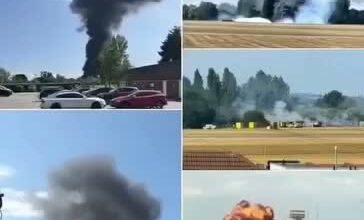
Just after sunrise, Colombia’s morning was shattered in an instant. At approximately 7:30 a.m., a powerful 7.4-magnitude earthquake struck deep beneath the region near San José del Palmar, unleashing devastation that rapidly spread across multiple cities. Within moments, ordinary routines gave way to panic as buildings shook violently, streets filled with dust, and thousands of people rushed outside, unsure of what would still be standing when the ground finally stopped moving.
The earthquake quickly became one of the country’s most devastating disasters in years. Initial reports indicated that at least 47 people had lost their lives, while many more suffered injuries ranging from minor wounds to life-threatening trauma. Emergency responders raced toward the hardest-hit communities, knowing that every passing minute could mean the difference between rescue and tragedy for those trapped beneath collapsed structures.
Among the cities most severely affected were Pereira and Manizales, where the force of the quake left widespread destruction in its wake. Homes that had stood for generations crumbled within seconds, while historic churches sustained catastrophic damage. One of the most striking images to emerge came from Manizales Cathedral, where its iconic spire collapsed after the violent shaking, sending debris crashing below as worshippers and nearby pedestrians fled in fear. The landmark, long regarded as a symbol of the city, suddenly became a painful reminder of the disaster’s immense power.
The destruction extended far beyond individual buildings. Officials reported that more than 30 structures in Manizales alone had been destroyed or rendered unsafe. Entire neighborhoods were left scarred by collapsed walls, shattered windows, and streets littered with concrete, brick, and twisted metal. Families who had awakened expecting an ordinary day instead found themselves searching desperately for loved ones amid scenes of confusion and heartbreak.
Cali also suffered significant damage as multiple buildings gave way under the force of the earthquake. Reports indicated that at least 20 structures collapsed, creating additional challenges for already overwhelmed emergency crews. Hospitals, themselves shaken by repeated aftershocks, were forced to move vulnerable patients outdoors as a precaution. Doctors, nurses, and medical staff continued caring for the sick and elderly in open spaces, balancing urgent treatment with the constant fear that weakened buildings could collapse without warning.
In the department of Chocó, the devastation unfolded with equal intensity. Entire sections of neighborhoods reportedly gave way as residents sprinted through streets filled with dust and falling debris. Parents clutched frightened children, neighbors helped lift injured people from the ground, and strangers became rescuers in a matter of seconds. As clouds of dust filled the air, daylight dimmed into an eerie haze, making familiar streets almost unrecognizable.
For many survivors, the moments immediately after the earthquake were marked by uncertainty and instinct. Mobile phone networks became overloaded as families tried desperately to contact one another. Sirens echoed across damaged communities while rescue workers searched unstable buildings for anyone who might still be trapped inside. Every aftershock renewed anxiety, forcing people to remain outside even as they worried about everything they had left behind.
The impact of the earthquake reached far beyond Colombia’s borders. Tremors were reportedly felt across neighboring Ecuador, Panama, and Venezuela, reminding millions of the immense power generated beneath the Earth’s surface. Although the strongest destruction occurred within Colombia, the widespread shaking underscored how seismic events of this magnitude can affect an entire region in just a matter of moments.
As rescue operations intensified, national leaders pledged immediate assistance for the affected communities. Colombia’s president promised emergency aid, humanitarian support, and a long-term commitment to rebuilding damaged towns and cities. Government agencies, emergency responders, and volunteers began coordinating relief efforts, working to restore essential services while delivering food, water, medical supplies, and temporary shelter to those displaced by the disaster.
Yet for thousands of families, thoughts of reconstruction remained distant. As night approached, many stood silently before the shattered remains of homes they had spent years building. Familiar streets had become fields of debris, treasured belongings lay buried beneath collapsed roofs, and countless lives had been changed forever in the span of a few terrifying seconds.
For those who survived, the future suddenly became uncertain. Plans, routines, and expectations vanished alongside the buildings that once defined their neighborhoods. In the immediate aftermath of such overwhelming destruction, survival became the only priority. Everything else—including rebuilding homes, restoring communities, and recovering from unimaginable loss—would have to wait for another day.