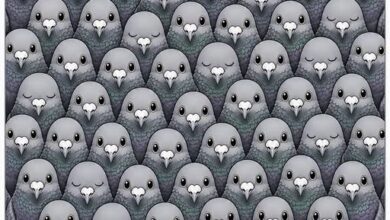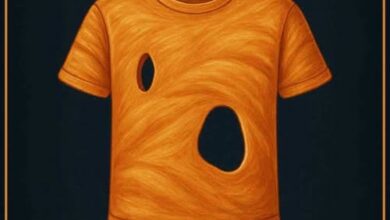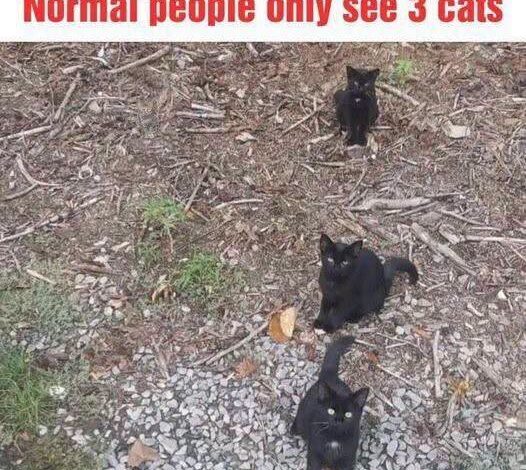
At first, it seems like a simple challenge. You scan the picture with confidence, certain you’ll find every hidden cat in just a few seconds. One appears almost immediately. Then another catches your eye. Before long, you’ve spotted a third and begin to think you’ve solved the puzzle.
Then everything changes.
No matter how many times you look, that elusive fourth cat refuses to reveal itself.
You zoom in. You tilt your head. You trace every corner of the image with growing determination. What began as a casual game quietly becomes a test of patience, observation, and persistence. The obvious details fade into the background as your brain shifts from quick scanning to careful searching.
That’s where the real challenge begins.
The first few cats usually reveal themselves without much effort. A familiar pair of pointed ears resting on a windowsill, a curled tail tucked beside a chair, or two bright eyes peering from a darker corner naturally draw your attention. Your brain is wired to recognize familiar shapes, making those discoveries feel almost effortless.
The final cat, however, plays by different rules.
It blends seamlessly into its surroundings, hiding in plain sight among patterns, colors, and everyday objects. Finding it requires something most of us rarely practice in our fast-moving lives: slowing down. Instead of racing across the picture, you begin examining every detail with intention. Shadows become possibilities. Ordinary objects deserve a second look. Areas you were certain you’d already checked suddenly seem worth exploring again.
And that’s precisely what makes puzzles like this so rewarding.
They’re never just about finding hidden cats.
Without realizing it, you’re exercising the same mental skills you rely on every day. Observation, concentration, pattern recognition, and visual attention all come into play as your brain filters information, tests possibilities, and gradually pieces together what it initially overlooked. It’s a gentle reminder that seeing isn’t always the same as noticing.
Modern life often encourages us to move quickly. We scroll through photos in seconds, skim headlines without reading them fully, and glance at our surroundings instead of truly taking them in. Our minds become accustomed to processing information at high speed, often sacrificing detail along the way.
A hidden-object puzzle quietly reverses that habit.
For a few minutes, nothing else matters except the image in front of you. Your attention narrows. Distractions fade. The search becomes almost meditative as your focus settles entirely on the present moment. Every small discovery brings a spark of satisfaction, encouraging you to keep looking just a little longer.
Sometimes, after several unsuccessful attempts, someone points out the final cat.
The reaction is almost always the same.
“How did I miss that?”
Once you’ve seen it, it suddenly feels impossible to overlook. Your brain instantly reorganizes the image, making the hidden shape appear obvious. It’s a fascinating reminder that perception often depends less on eyesight than on where our attention happens to land.
That lesson reaches far beyond puzzles.
In everyday life, remarkable details often surround us unnoticed. A kind gesture from a stranger, a familiar face needing encouragement, a beautiful sunset we almost walked past, or an opportunity hidden inside an ordinary conversation—many of life’s most meaningful moments are visible only when we slow down enough to notice them.
Hidden-picture challenges also have a wonderful way of bringing people together. What begins as an individual search often turns into laughter shared across a table or playful competition among friends and family. Someone proudly announces they’ve found all four cats, while everyone else insists one must still be missing. The room fills with pointing fingers, friendly debates, and delighted reactions as each new discovery unfolds.
In those moments, the puzzle becomes something larger than the image itself.
It creates connection.
People celebrate each other’s discoveries, tease one another about overlooked clues, and experience the simple joy of solving something together. Long after the final cat is found, it’s often the laughter and conversations that remain the strongest memory.
And perhaps that’s the greatest reward these little challenges offer.
Yes, finding every hidden cat feels satisfying. Solving the puzzle brings a sense of accomplishment. But the true value lies in everything that happens along the way—the sharpened focus, the patience you didn’t realize you possessed, the smiles shared with others, and the reminder that the world is full of details waiting to be discovered.
Sometimes the most extraordinary things aren’t hidden because they’re impossible to find.
They’re hidden because we’re moving too fast to truly see them.
The next time a puzzle asks you to search for one last hidden cat, don’t rush toward the answer. Give yourself permission to look a little longer, think a little differently, and enjoy the process. You may discover that the greatest prize isn’t finding the final cat at all—it’s remembering that curiosity, patience, and wonder still have the power to turn an ordinary picture into an unforgettable moment.