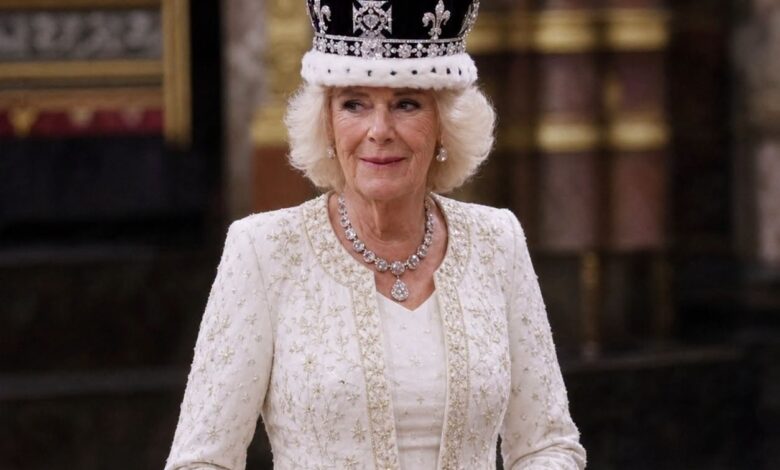
The headline looked important.
That was the point.
“Buckingham Palace confirms…”
Then nothing.
No clear announcement.
No complete sentence.
No specific event.
Just enough authority to make the reader stop, and just enough emptiness to make the imagination rush in.
That is not reporting.
It is bait.
The trick works because people dislike unfinished information.
When a sentence stops before the crucial detail, the mind instinctively tries to complete it.
Buckingham Palace confirms what?
An illness?
A resignation?
A death?
A family rupture?
A secret nobody was supposed to know?
The publisher does not need to make the most dramatic claim directly.
The reader will often generate one on their behalf.
That is what makes the tactic so effective.
It outsources exaggeration to the audience.
And once curiosity takes over, the click becomes much easier.
Royal stories are perfect material for this kind of manipulation.
The people involved are globally recognizable.
Their private lives are already treated as public property.
The institution itself carries history, secrecy, ceremony, and symbolism.
Readers are conditioned to believe that any sentence beginning with “Buckingham Palace confirms” must contain something significant.
That authority can be borrowed even when the underlying story is weak.
A routine appearance becomes a “major development.”
An old interview becomes a “new revelation.”
A minor schedule change becomes a “palace crisis.”
A familiar photograph is republished beside language designed to make it feel current.
Then comes the ellipsis.
That tiny row of dots does enormous work.
It creates suspense without providing evidence.
It suggests that the missing information is too shocking to reveal in the headline.
It makes the article feel like a locked door.
Click, and perhaps you get the key.
Usually, you get something far more ordinary.
A recycled quote.
An unrelated royal update.
An old story repackaged.
Or a piece of content that spends several paragraphs circling the supposed revelation without ever establishing the dramatic claim implied at the beginning.
The problem is not merely annoying headlines.
It is the erosion of the distinction between information and emotional manipulation.
A real announcement from Buckingham Palace does not need to behave like a cliffhanger.
If the Palace confirms something important, there will normally be something concrete to confirm.
A date.
A statement.
A named person.
A scheduled event.
A health update.
An official communication.
And genuine major royal news rarely exists in only one suspicious corner of the internet.
It leaves a trail.
That is one of the easiest ways to test a sensational claim.
Search for the exact event, not the dramatic headline.
If the claim says Buckingham Palace has confirmed something about Queen Camilla, look for the actual confirmation.
Does it appear on an official royal website or verified account?
Do established news organizations report the same basic fact?
Are they citing named spokespeople, an official statement, or identifiable sources?
Do the dates line up?
If a supposed palace bombshell exists only on a few websites repeating nearly identical vague wording, caution is warranted.
Authority should be traceable.
That does not mean every true story will appear instantly everywhere.
News develops.
Smaller outlets sometimes report things first.
But the more extraordinary the claim, the more reasonable it is to expect stronger evidence.
A palace confirming an ordinary engagement is one thing.
A palace allegedly confirming a dramatic change to the monarchy, a serious health development, or a major family crisis should generate multiple independent reports very quickly.
That is how real information behaves.
It spreads through verification.
Rumor spreads through repetition.
Those can look similar if you are scrolling quickly.
Ten websites may repeat the same claim.
That feels like ten sources.
But if all ten copied one unverified article, you still have only one source.
This is why counting headlines is not the same as checking evidence.
The same principle applies to social media.
A screenshot of a headline is not confirmation.
A video narrator confidently reading the headline is not confirmation.
A photograph of Queen Camilla beside giant red text is not confirmation.
An account saying “BREAKING” in capital letters is definitely not confirmation by itself.
The question is always:
Where did the underlying fact come from?
That simple question cuts through an extraordinary amount of noise.
Royal misinformation thrives partly because people already expect secrecy.
If information is missing, the absence itself can be interpreted as proof.
“Of course the Palace won’t say everything.”
“They’re covering it up.”
“The mainstream media is avoiding the story.”
This creates a trap.
The lack of evidence becomes evidence.
Once a claim reaches that stage, it becomes nearly impossible to disprove because every contradiction gets absorbed into the theory.
Responsible skepticism works differently.
It does not begin with:
“This must be false.”
It begins with:
“What would I expect to see if this were true?”
That is a much better question.
If Buckingham Palace officially confirmed a major development, you would expect an identifiable statement.
You would expect serious journalists to obtain or quote it.
You would expect the wording to be clear enough that different outlets could report the same central fact.
If none of those things exist, the dramatic headline has not earned certainty.
The date is another powerful clue.
Royal clickbait often survives by recycling old material.
An interview from years ago resurfaces as though it happened yesterday.
A health update that was resolved months earlier becomes “breaking.”
A photograph from a previous event is attached to a new rumor.
The casual reader sees familiar faces and current-looking formatting and assumes the story is fresh.
So check the date of the event, not merely the publication date.
A website can publish an old story today.
That does not make the underlying event new.
Then read past the headline.
This sounds obvious, but sensational publishers rely heavily on people not doing it.
Sometimes the opening paragraphs reveal the trick immediately.
The headline says:
“Buckingham Palace confirms…”
The article says:
“Fans were shocked after an old comment resurfaced…”
Those are not the same thing.
Or the headline implies that Queen Camilla is at the center of a crisis while the article ultimately discusses something unrelated, such as a public appearance, a wardrobe choice, or remarks made by someone outside the Palace.
This is often called a curiosity gap.
A headline withholds key information so the reader feels compelled to click.
Curiosity gaps are not automatically dishonest.
A feature story can legitimately create suspense.
But when the withheld detail is the entire factual basis of a supposed news event, the technique becomes much more questionable.
News should clarify before it dramatizes.
The headline should tell you enough to understand what happened.
If the complete sentence would sound disappointingly ordinary, that may be why the publisher avoided completing it.
Try this test.
Take the headline and finish it plainly.
“Buckingham Palace confirms Queen Camilla will attend an event next week.”
Not very explosive.
“Buckingham Palace confirms a minor schedule adjustment.”
Probably not worth a viral thumbnail.
“Buckingham Palace confirms nothing remotely resembling what the headline implied.”
Now the strategy becomes obvious.
A good headline survives clarification.
A manipulative one depends on ambiguity.
This is especially important with royal health stories.
Health misinformation has consequences.
People deserve privacy.
Families deserve accuracy.
And public figures should not be declared seriously ill, dying, hospitalized, or dead because a content farm discovered that panic generates engagement.
When legitimate health announcements are made, responsible outlets typically distinguish confirmed information from speculation.
They say what is known.
They say what is not.
They attribute the information.
They avoid diagnosing from photographs.
That restraint can feel less exciting than rumor.
It is also what trust looks like.
Royal coverage has always contained gossip.
That is not new.
What has changed is the speed and economics of distribution.
A rumor once had to survive editors.
Now one person can create a dramatic thumbnail, attach a famous name, and distribute it to millions within hours.
The financial incentives favor emotional intensity.
Shock keeps people watching.
Fear keeps people clicking.
Anger keeps people commenting.
And every interaction tells the platform that the content is interesting.
Accuracy may enter the calculation much later.
That means readers now carry more responsibility than previous generations did.
Not because the public should become professional fact-checkers.
Because a few habits can prevent most avoidable mistakes.
Pause before sharing.
Search the exact claim.
Check when the event supposedly happened.
Look for direct sourcing.
See whether reputable organizations independently confirm it.
Read beyond the headline.
Notice when the article repeatedly uses words such as “reportedly,” “apparently,” “fans believe,” or “sources claim” without ever identifying the source.
Those phrases are not always suspicious.
Sometimes legitimate journalism must protect sources.
But vagueness combined with extraordinary claims should increase your skepticism.
Also notice emotional pressure.
“Fans are devastated.”
“The Palace can no longer hide it.”
“Everyone is saying the same thing.”
“People were left speechless.”
None of those sentences proves anything.
They describe reactions—sometimes reactions the publisher may be manufacturing.
The real question remains:
What happened?
If you cannot answer that clearly after reading the story, the article may have succeeded at engagement while failing at journalism.
There is another reason this matters beyond Queen Camilla.
The same techniques are used everywhere.
Celebrity deaths.
Political rumors.
Health scares.
Crime stories.
Weather panic.
Financial claims.
“Doctors confirm…”
“Scientists finally admit…”
“The White House just revealed…”
“Family breaks silence…”
Then the sentence dangles.
The method works because authority plus incompleteness creates urgency.
Once you learn to recognize it, the spell weakens.
You begin seeing the architecture.
Famous institution.
Emotional verb.
Missing detail.
Dramatic photograph.
Ellipsis.
Click.
The best defense is almost boring.
Slow down.
Manipulative content needs speed.
It needs you to react before you verify.
Real information usually survives a five-minute delay.
If something truly enormous has happened to the Royal Family, it will still be true after you check another source.
You do not lose anything by waiting.
That is a useful principle for nearly all breaking news.
Truth does not become less true because you refused to be first.
In fact, the desire to be first is one of misinformation’s greatest allies.
People see a shocking claim and immediately send it to friends.
“Did you see this?”
Now the recipient experiences the same urgency.
The rumor spreads person to person long before anyone asks where it originated.
By the time a correction appears, the emotional impression may already be permanent.
That is why corrections struggle.
The original rumor arrives as drama.
The correction arrives as housekeeping.
One says:
“SHOCKING PALACE REVELATION.”
The other says:
“No, that did not happen.”
Guess which one people remember.
This is not an argument for cynicism.
Not every dramatic royal story is false.
Real crises happen.
Real announcements surprise people.
Palaces sometimes release unexpected news.
The answer is not to distrust everything.
It is to demand proportional evidence.
Ordinary claim, ordinary evidence.
Extraordinary claim, stronger evidence.
That standard protects against gullibility without turning skepticism into paranoia.
And perhaps that is the larger lesson hidden inside the Queen Camilla rumor.
The real story was not necessarily whatever the unfinished headline wanted you to imagine.
The real story was how easily emptiness can be turned into content.
A publisher did not need to provide the scandal.
It only needed to create enough space for readers to invent one.
That is a powerful form of manipulation because the reader participates unknowingly.
You become the author of the thing that frightened you.
The ellipsis gives you permission.
Your imagination supplies the rest.
Once you notice that, the solution becomes simple.
Refuse to finish the sentence for them.
Make the publisher do it.
What exactly did Buckingham Palace confirm?
When?
Where is the statement?
Who reported it independently?
What are the precise words?
If those questions produce clear answers, then you have information.
If they produce more suspense, more vague language, more recycled images, and another invitation to “keep reading,” you probably have something else.
Content designed to make uncertainty profitable.
Queen Camilla may be the name in the headline today.
Tomorrow it will be another royal.
Another celebrity.
Another politician.
Another supposed crisis.
The tactic will remain the same because the tactic works.
Unless the reader stops rewarding it.
That is the final power audiences still possess.
Attention.
Every click teaches publishers what succeeds.
Every share amplifies a claim.
Every pause interrupts the machine.
You do not have to solve the entire misinformation problem.
You only have to refuse one bad bargain:
I give you my fear, and you give me ambiguity.
A trustworthy headline should not need you to imagine the most dramatic ending.
A trustworthy report should tell you what happened.
Clearly.
Specifically.
With evidence you can follow.
If it cannot do that, the unfinished sentence has already told you something important.
Not about Queen Camilla.
About the source.
And sometimes the most revealing words in a headline are the ones it deliberately refuses to say.